Scouting & Observations
- Late Blight Risk Increasing for CT Tomatoes and Potatoes
- New England Vegetable & Fruit Conference Returns December 15-17 in Manchester, NH
- Upcoming Events & Opportunities
- September 23rd - Cover Crop Termination Strategies
- September 24th - USDOL Northeast Region Agricultural Seminar
- September 30th - Applications due for CT Agricultural Composting Program
- October 6th - 2026 UConn Extension Nursery and Perennials Workshop
- October 10th - Applications due for the Ready to Sell Farmer Cohort
- October 21st - Tractor Maintenance Training
- October 24th - Farmland Seeking Skill Share
- October 30th - Intro to Grants for Farmers
- Organic Certification Cost Share Program
- Winter Conference Dates
Late Blight Risk Increasing for Connecticut Tomatoes and Potatoes
Late blight was recently confirmed on tomatoes in a home garden in Fairfax, Vermont. Although it has not been confirmed in Connecticut, growers should scout tomatoes and potatoes closely and consider preventive protection where continued production is important.
The USPEST late blight model for many locations in Connecticut is currently showing an “infection possible” risk classification. The model calculates infection risk from temperature and consecutive hours of wetness—estimated directly from relative humidity or from temperature, dew point, and wind speed—and assigns cumulative risk points and a risk category. The model indicates whether weather favors infection; it does not confirm that the pathogen is present.
What to look for
Late blight is caused by Phytophthora infestans, an aggressive oomycete, or fungal-like pathogen, that can rapidly destroy tomato and potato crops during cool, wet weather. High-tunnel crops can also become infected.
Scout for:
- Irregular, water-soaked or greasy brown leaf lesions that enlarge rapidly.
- Pale green or yellow tissue around lesion margins.
- Gray-white sporulation around lesion edges on leaf undersides during humid conditions.
- Dark lesions on stems and petioles.
- Firm brown lesions on tomato fruit.
- Purple-brown surface lesions and reddish-brown decay beneath the skin of potato tubers.
Other diseases can resemble late blight, so seek confirmation before destroying a planting.
Management
If maintaining production through the remainder of the season is economically important:
- Scout fields and high tunnels frequently.
- Avoid overhead irrigation and working in plantings while foliage is wet.
- Remove lower tomato leaves where appropriate to improve airflow.
- Maintain preventive fungicide coverage during cool, wet weather.
- Apply protectants before forecasted rain when possible and restore coverage after substantial rainfall as permitted by the label.
- Rotate targeted fungicides among FRAC groups.
The New England Vegetable Management Guide’s tomato late blight recommendations include the protectants chlorothalonil, mancozeb, and copper. Listed targeted options include cyazofamid (Ranman), cymoxanil-containing products such as Curzate, mandipropamid + difenoconazole (Revus Top), fluopicolide (Presidio), ametoctradin + dimethomorph (Zampro), and oxathiapiprolin-containing products such as Orondis Opti. Consult the Guide’s potato disease-control section for potato-specific products, rates, and preharvest intervals.
Copper is an important preventive option for organic growers, but it must be applied before infection and with thorough coverage. Conventional growers- do not rely on mefenoxam (Ridomil Gold) alone because resistant late blight populations occur. Always confirm that a product is labeled for the crop, rotate FRAC groups, observe preharvest and restricted-entry intervals, and follow the pesticide label.
Because much of this season’s yield has already been determined, growers should weigh the cost of additional applications against the value of the remaining crop. Where continued management is not justified, harvest sound tomato fruit and terminate the planting. In potatoes, killing and removing infected top growth can help limit movement of the pathogen into tubers. Good thing is late blight doesn’t overwinter in Connecticut.
Report suspected late blight: If you suspect late blight, please send photos of the upper and lower leaf surfaces, stems, fruit, or tubers, along with the crop and town, to shuresh.ghimire@uconn.edu or 959-929-1031 — text or iMessage.
Continue protecting cucurbits
Cucumber and cantaloupe growers should continue preventive fungicide programs for cucurbit downy mildew and scout all cucurbit crops closely. Maintain protectant coverage, include a downy mildew-targeted fungicide, and rotate FRAC groups. See last week’s Vegetable Pest Message for details.
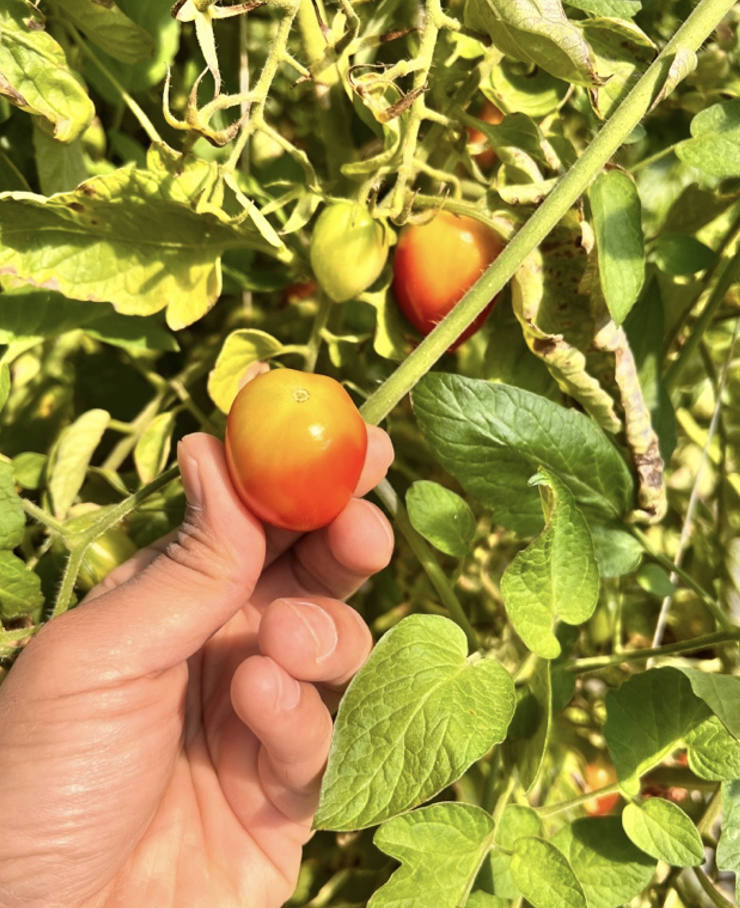
New England Vegetable & Fruit Conference Returns December 15-17, 2026
Join hundreds of fellow farmers for three days of learning, networking, and innovation featuring 31 educational sessions, daily farmer-to-farmer discussions, a research poster session, and more than 120 trade show exhibitors. Register by November 30 to take advantage of early bird rates.
Upcoming Events & Opportunities
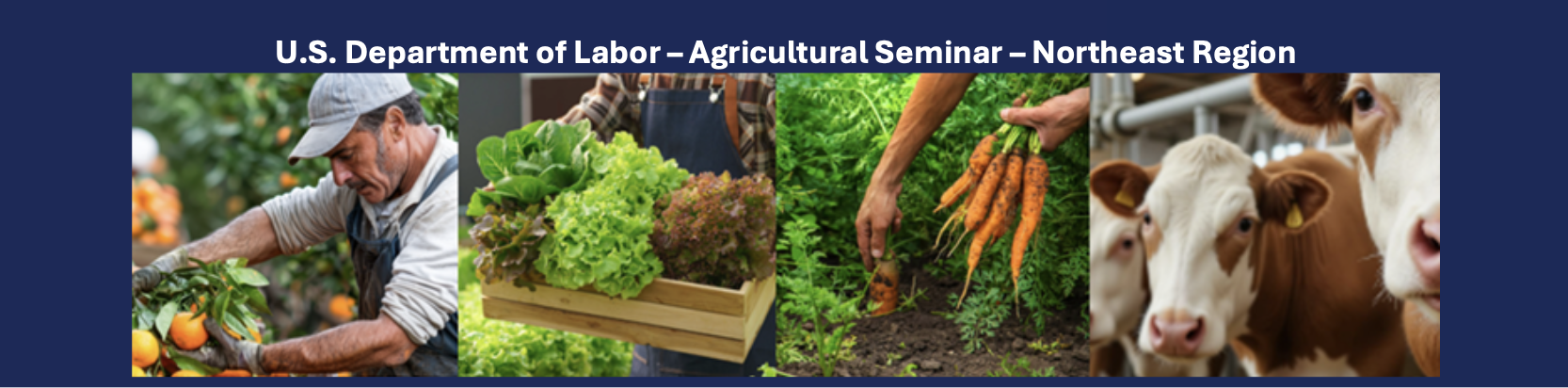
USDOL Northeast Region Agricultural Seminar
September 24, 2026
1:00 P.M. – 2:00 P.M. ET
Representatives from the U.S Department of Labor's Wage and Hour Division (WHD), Occupational Safety and Health Administration (OSHA), and Employment and Training Administration (ETA) will present on agricultural labor laws. Topics will include H-2A, compliance practices, farm labor, workplace safety, and more.
This seminar will be held both virtually and in person in Philadelphia, PA. The in-person address will be provided following registration. This event is free. Register to attend.
Cover Crop Termination Event
September 23, 3:30-5:30 PM
UConn Research Farm, Storrs
Join UConn Extension and CT RC&D for an afternoon exploring mechanical termination equipment, including roller crimpers and mowers, touring research plots, and discussing practical approaches to cover crop management.
Apply for the Connecticut Agricultural Composting Program
Applications due September 30th
CT RC&D is accepting applications for this new composting program. The program helps farmers and agricultural producers gain knowledge and tools to develop a successful on-farm composting system.
2026 UConn Extension Nursery and Perennials Workshop
Tuesday, October 6th | 9am - 3pm
Summer Hill Nursery, Madison, CT
This hands-on event is for commercial growers of woody ornamentals and herbaceous perennials who are looking to expand their knowledge of production practices and network with others in the industry. The event takes place at a local Connecticut nursery and includes a disease diagnostic training, insect identification presentation, and respirator training.
Ready to Sell Farmer Training Cohort Applications Open
With millions of dollars from the state flowing into public school districts for purchasing, we need more local farms to enter the school market now more than ever. We want farmers to understand that:
- It’s not about high volume, but consistency
- It’s not about complex bids or contracts, but good communication
- It’s not about needing expensive certifications, but proven experience
This is why we run the “Ready To Sell” farmer training cohort. Farmers in Ready to Sell learn about school buyer expectations, forward contracts, food safety considerations, and more. They get specialized technical assistance to up their school sales game.
Tractor Maintenance Training
October 21, 3:00-6:00 PM
UConn Research Farm, Storrs
Got a tractor that needs some TLC? In this workshop, we will tour UConn's Plant Research Farm machinery, perform a standard maintenance on one of their tractors, learn best practices for attachments/implements, post-season machine care and more.
Farmland Seeking Skill Share
October 24, 10:00am to 1:00pm
Join Kip Kolesinskas, Solid Ground Professional Soil, Conservation, and Land Use Consultant, for a farm tour and demonstration on how to go about assessing farmland potential for purchase or lease using key areas of interest such as property history, soil health, infrastructure, and water features.
Intro to Grants for Farmers
October 30th, 8:30am - 12pm
This 3.5-hour, in-person training is designed to help farmers navigate the grant landscape with confidence. You'll learn about available grant programs, determine which opportunities may be the best fit for your operation, understand what types of projects are commonly funded, identify sources of free technical assistance, and gain practical tips for reading and responding to grant program announcements.
Organic Certification Cost Share Program (OCCSP)
The USDA FSA’s Organic Certification Cost Share Program (OCCSP) helps certified organic producers and handlers pay part of the cost of obtaining or renewing organic certification. Eligible operations can receive up to 75% of certification costs, capped at $750 per certification scope, for costs such as application and administrative fees, inspection and travel, certification-related fees, state organic program fees, and related postage. December 31, 2026 is the deadline to apply for the 2025 and 2026 program years. Applications go through your local USDA Service Center or a participating state agency. More information can be found on the USDA's website.
Save These Dates!

2026 New England Vegetable & Fruit Conference
December 15, 16, 17, 2026
Manchester, New Hampshire

2027 UConn Extension Vegetable and Small Fruit Growers Conference
Tuesday, January 12th, 2027
UConn Student Union, Storrs, CT
Stay in touch with us
- Share what you see: We're here to assist with identification, management strategies, and guidance on best practices. Send us a photo/message via iMessage at 959-929-1031.
- Facebook Group: UConn Extension moderates a private Facebook group specifically for commercial vegetable producers. It is a space to share photos of insects and diseases you find in your fields, ask questions, share ideas, and stay engaged with growers across the state.
Join the "UConn Extension - Vegetable IPM" Facebook Group - Schedule a consultation: Would you benefit from meeting with an Extension Specialist at your farm to provide insight on pest or disease identification, management strategies, and more? If so, please contact our Vegetable Extension Specialist, Shuresh Ghimire, to setup a farm visit. Contact him at shuresh.ghimire@uconn.edu or 860-870-6933.
Contact Information
Shuresh Ghimire, Vegetable Extension Specialist: shuresh.ghimire@uconn.edu
Nicole Davidow, Vegetable Extension Outreach Assistant: nicole.davidow@uconn.edu
Vegetable IPM Office Phone Number:
860-870-6933
Vegetable IPM Cell Phone Number:
959-929-1031 (feel free to text/iMessage photos)
Any reference to commercial products, trade or brand names is for information only, and no endorsement or approval is intended. Always read the label before using any pesticide. The label is the legal document for product use. Disregard any information if it is in conflict with the label. UConn Extension does not guarantee or warrant the standard of any product referenced or imply approval of the product to the exclusion of others which also may be available. The University of Connecticut, UConn Extension, College of Agriculture, Health and Natural Resources is an equal opportunity program provider.