Quick Links
Scouting & Observations
- Squash Vine Borer
- Fulvia Leaf Mold
- Scarab Beetles
- Tomato Scouting & Online Resources
- Yellow Shoulders
- Early Blight of Tomatoes
- Tomato Hornworms
- Continue to be on the lookout for Allium Leafminers, Aphids, Colorado Potato Beetles, Corn Earworm, Flea Beetles, Potato Leafhoppers, Striped Cucumber Beetles, European Corn Borer, Cabbage Root Maggot, Onion Thrips and Mites
Upcoming Events & Opportunities
- 6/24 - Chicken Tractor Design Skill Share w/ Solid Ground
- 7/7 - Vegetable IPM Field Workshop
- 7/8 - Cut Flower Pests and Diseases Skill Share w/ Solid Ground
- 8/5 - Plant Science Day with CAES
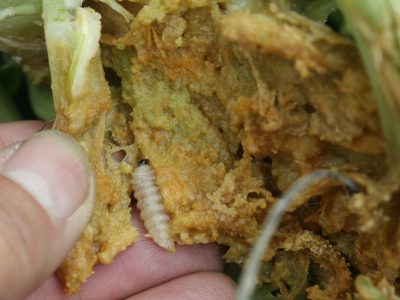
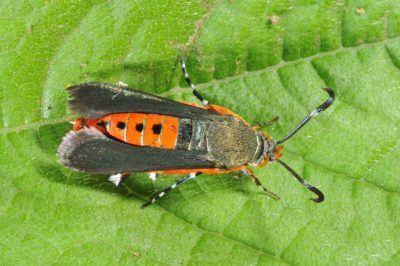
Squash Vine Borer
Adult Squash Vine Borers (SVB) emerge from the soil around mid- to late June. Egg laying begins soon after as the adult female moths find thick-stemmed cucurbit crops like summer squash, zucchini, pumpkins and select varieties of winter squash. Fortunately, thin-stemmed crops like cucumber, watermelon, and butternut squash are less habitable for the larvae and therefore less likely to be impacted.
Most of the damage from SVB is done by larvae tunneling and feeding within the stems or vines. An early indication of SVB being present includes plant wilting that disappears at night when transpiration slows. You can also scout for tiny larval entry holes near the base of the vine. You might also find sawdust-like frass near the holes that signal an infestation.
You can monitor SVB with Scentry Heliothis pheromone traps from June through early August. The threshold for spraying is 5 moths/trap for vining cucurbits. Once larvae have bored inside the stem, insecticide application will have little control, so begin protecting your crops promptly. Thoroughly treat the base of stems to target hatching larvae. Some selective materials used for caterpillars in squash, such as spinosyns and Bacillus thuringiensis aizawi, have demonstrated efficacy in trials. A late or second crop of cucurbits can be planted in early July to avoid peak egg laying activity.
See the New England Vegetable Management Guide for more information on insect control options for SVB.

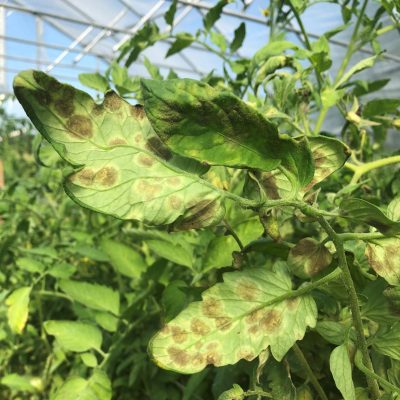
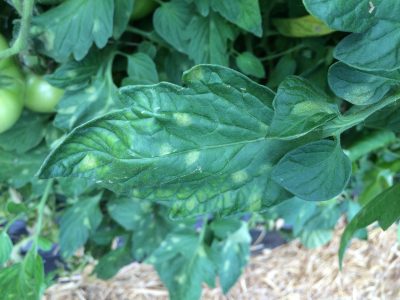
Fulvia Leaf Mold in High Tunnel Tomatoes
Recent hot, humid weather in combination with tomato plants rapidly growing in density creates the perfect environment for fungal diseases like leaf mold. It first appears as yellow or pale green spots that are not defined by leaf veins or margins. On the underside of leaves, olive green mold spots also forms. Over time, leaves may wither, die and drop. In more extreme cases, blossom and fruit infections can occur. Infected blossoms will turn black and fall off. For fruit, the stem will turn black and the leaf mold will progress to cause sunken, dry and leathery fruit rot
To control the spread of leaf mold, it is critical to improve airflow and reduce humidity by venting, pruning, and checking the placement of fans to ensure proper ventilation. Maintain night temperatures higher than outside air temperatures to reduce condensation You can also remove infected foliage to slow the spread of the disease. Sanitize tools and equipment, and when working within the crop, always begin in the healthiest sections first.
At the end of the crop cycle, remove and destroy all plant residue. Sanitize the tunnel before the next season and start with certified, disease-free seed or treat seed with hot water bath. Spray options for greenhouse and high tunnel tomatoes can be found using the New England Vegetable Management Guide.
Scarab Beetles
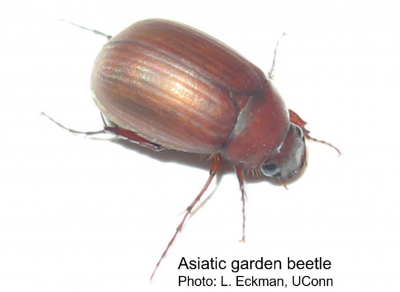
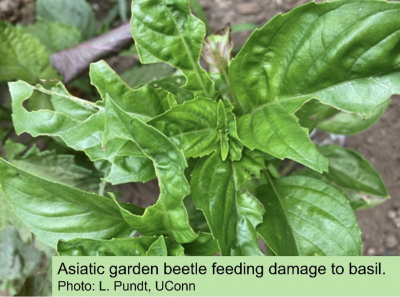
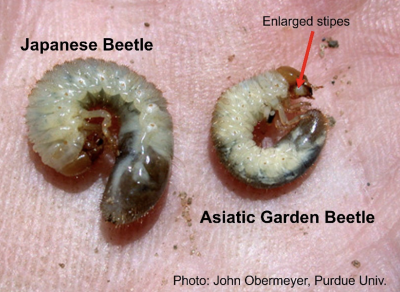
The white grub is a larva of a scarab beetle. The grubs will feed off the roots of grasses and weeds in early spring as they work their way towards the soil surface. There are several species of scarab beetles that the grubs will emerge as, including Asiatic garden beetles, Japanese beetles, June bugs, and Oriental beetles. The adults will feed on the foliage of many varieties of vegetables, herbs, and fruit crops including asparagus, basil, okra, and sweet corn.
Some scarab beetles are active at night so if you notice foliar feeding damage on plants during the day without signs of a culprit nearby, it might be due to an Asiatic garden beetle. For chemical control options, check the label of commonly used broad specturm synthetic pyrethroids carbamates, and neonicotinoids to see if scarab beetles are listed. Organic options include entomopathogenic fungus such as Isaria fumosorosea Apopka Strain 97 and beneficial nematodes such as Steinernema and Heterorhabditis species.
Tomato Scouting and Online Resources
Regular inspections of plants for early signs of pest or disease presence (yellowing, wilting, spots, feeding damage, etc.) can be critical when for monitoring the health of a crop and for determining when intervention might be necessary. Scouting involves taking a close look at a sampling of leaves, fruit, stems, new growth and older growth alike.
Matt DeBacco, Vegetable Specialist and UConn faculty member, has compiled a series of online resources for growers to use as they icorporate integrated pest management techniques into their production approach. Some of these resources include:
- Scouting Tomatoes For The Good and The Bad
- Regulating Heat and Humidity in Tunnel Structures
- Tomato Fact Sheets (more coming soon)
Recent reports from across our region have identified early season physiological, pest, and diseases in their tomato crops, specifically tomatoes grown in tunnels. Here is a brief overview of some symptoms to be on the lookout for.
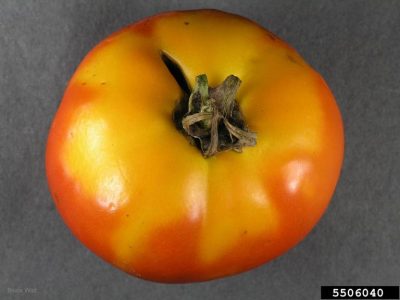
Yellow Shoulder on Tomatoes
There are several causal factors for yellow shoulder, the general discoloration of the tomato fruit in the area surrounding the stem. High temperatures (>90F), nutrient imbalances, and genotype/cultivar can all play a role. Unfortunately, letting the fruit hang longer to "color up" will not help. Often, the best practice to prevent yellow shoulder is to tissue test tomatoes from first flower cluster for calcium, potassium and magnesium. Based on this information, growers can apply Potassium Nitrate, Sulfate of Potash, Potassium Carbonate, Calcium Nitrate, Calcium Chelate, and Magnesium Oxide to reduce the potential for this disorder.
Both fertigated and foliar applied nutrients are necessary for prevention. Keeping the irrigation solution pH at 6.2-6.5 will greatly improve tomato plants ability to move potassium from the soil to plant tissue. To reduce pH conventionally, growers typically use Sulfuric acid; to do so organically growers can use powdered Citric acid.
Early Blight
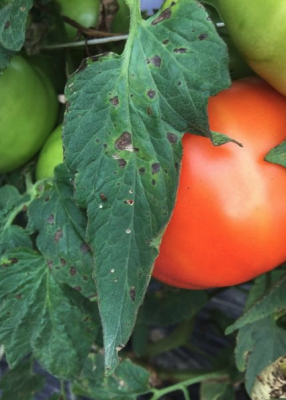
Early blight, also known as Alternaria, is a fungal disease. It typically starts on the lower leaves as dark brown spots that are small and grow larger. The presence of “tree rings” is a key distinguishing feature of this disease. The stems and fruit may develop symptoms with dark sunken lesions that also exhibit the concentric rings. On the stem, the infected area may be more elongated than would be seen on the leaves or fruit.
If you are planting in an area with a history of the disease, begin fungicide applications before disease is evident, usually when first fruits are half grown. New infections can be organically treated with copper-based products. Conventional products include protectant fungicides like chlorothalonil or mancozeb on a 7-10 day schedule.
Tomato Hornworms
A grower in New Hampshire has already reported a tomato hornworm found among their high tunnel tomatoes. When scouting your tomato crops, be sure to look for the pellet-like fecal droppings, defoliation of leaves, or feeding scars on green fruit. Caterpillar infestations typically begin in July but may be even earlier this year.
Spot treat areas within a high tunnel using selective insecticides to preserve natural enemies and avoid secondary pest outbreaks (i.e. aphids). Products containing BT (e.g. Dipel and XenTari) are effective and should be rotated for resistance management. These products must be ingested so apply in the evening or early morning before larvae are actively feeding. Adherence will improve with use of approved spreader-sticker.
For more information about greenhouse and high tunnel tomato diseases, insect control, and physiological disorders, along with corresponding management strategies, please reference the New England Vegetable Management Guide.

Continue to be on the lookout
The following pests that were covered in the previous pest alerts and are still relevant in current conditions:
- Allium Leafminer
- Aphids
- Colorado Potato Beetles
- Corn Earworm
- Cucumber Beetles
- European Corn Borer
- Flea Beetles
- Potato Leafhoppers
- Cabbage Root Maggot
- Onion Thrips
- Mites
Upcoming Events & Opportunities
Vegetable IPM Field Workshop
Tuesday, July 7th, 2026
3:30pm to 6:30pm
UConn Plant Science Research and Education Facility
This free workshop, led by UConn specialists, covers a range of agricultural topics and will include a cover crop and soil sampling demonstration, IPM monitoring using the NEWA system, update on squash variety trials and cucumber beetle management, hands-on white grub identification training, and report on sweet corn fertilizer trials. Pesticide recertification credits in PA and 1A categories are pending approval.
116th CAES Plant Science Day
Wednesday, August 5th, 2026
10AM to 4PM
Lockwood Farm, 890 Evergreen Ave, Hamden
The event will feature: Barn Displays, Field Plots and Exhibits, Technical Demonstrations, Plant Diagnosis and Plant Identification, Insect Identification, Questions Answered, Activities for Kids, Lockwood Farm Walking Tour, All About Apples Walking Tour, Connecticut Pesticide Credits Offered - All Categories and Private Applicator (PA) Categories: 3.75 Total Credit Hours.
Save These Dates!

2026 New England Vegetable & Fruit Conference
December 15, 16, 17, 2026
Manchester, New Hampshire

2027 UConn Extension Vegetable and Small Fruit Growers Conference
Tuesday, January 12th, 2027
UConn Student Union, Storrs, CT
Stay in touch with us
- Share what you see: We're here to assist with identification, management strategies, and guidance on best practices. Send us a photo/message via iMessage at 959-929-1031.
- Facebook Group: UConn Extension moderates a private Facebook group specifically for commercial vegetable producers. It is a space to share photos of insects and diseases you find in your fields, ask questions, share ideas, and stay engaged with growers across the state.
Join the "UConn Extension - Vegetable IPM" Facebook Group - Schedule a consultation: Would you benefit from meeting with an Extension Specialist at your farm to provide insight on pest or disease identification, management strategies, and more? If so, please contact our Vegetable Extension Specialist, Shuresh Ghimire, to setup a farm visit. Contact him at shuresh.ghimire@uconn.edu or 860-870-6933.
Contact Information
Shuresh Ghimire, Vegetable Extension Specialist: shuresh.ghimire@uconn.edu
Nicole Davidow, Vegetable Extension Outreach Assistant: nicole.davidow@uconn.edu
Vegetable IPM Office Phone Number:
860-870-6933
Vegetable IPM Cell Phone Number:
959-929-1031 (feel free to text/iMessage photos)
Any reference to commercial products, trade or brand names is for information only, and no endorsement or approval is intended. Always read the label before using any pesticide. The label is the legal document for product use. Disregard any information if it is in conflict with the label. UConn Extension does not guarantee or warrant the standard of any product referenced or imply approval of the product to the exclusion of others which also may be available. The University of Connecticut, UConn Extension, College of Agriculture, Health and Natural Resources is an equal opportunity program provider.