Connecticut Integrated Pest Management Program
2025 Annual Report
IPM Program contacts:
| IPM Team Leader
Victoria Wallace |
860-885-2826 |
|
| Diagnostics/Pathology Consumer Horticulture Nick Goltz |
860-486-6740 |
|
| Fruit IPM
Evan Lentz |
860-486-6449 |
|
| Greenhouse IPM
Charles Krasnow |
860-774-9600 | charles.krasnow@uconn.edu |
| Rosa Raudales | 860-486-6043 | rosa.raudales@uconn.edu |
| Hemp Program
Shuresh Ghimire |
860-875-3331 |
|
| Invasive Species IPM
Pollinator Program School IPM Turf & Landscape IPM Victoria Wallace |
860-885-2826 | victoria.wallace@uconn.edu |
| Pesticide Safety Education
Srikanth Kodati |
860-875-3331 | srikanth.kodati@uconn.edu |
| Urban Agriculture
Jacqueline Kowalski |
203-207-3267 | jacqueline.kowalski@uconn.edu |
| Vegetable IPM
Shuresh Ghimire |
860-875-3331 |
|
| Ana Legrand | 860-486-0869 | ana.legrand@uconn.edu |
This report was edited by Alyssa Siegel-Miles, Research Technician, and Victoria Wallace, IPM Team Leader.
For more information about the UConn IPM Program, please contact:
Victoria Wallace, IPM Team Leader, University of Connecticut
Department of Extension, 562 New London Tpke., Norwich, CT 06360
victoria.wallace@uconn.edu; 860-885-2826
Introduction
The Integrated Pest Management (IPM) Program is a collaboration between UConn Extension and the Department of Plant Science & Landscape Architecture. Since its inception in 1980, the UConn IPM Program has made great strides in developing and implementing sustainable methods for pest control throughout Connecticut. Integrated Pest Management applies multiple tactics in a variety of settings through the selection of appropriate tools and the education of agricultural industry members and Connecticut citizens to provide sustainable, science-based approaches for the management of plant pests (insects, mites, diseases, wildlife, and weeds, including invasive plants) and pathogens (fungi, bacteria, viruses).
The UConn IPM Program incorporates all possible crop management and pest management strategies through knowledgeable decision-making, utilizing the most efficient landscape and on-farm resources, and integrating cultural and biological controls. Program objectives include maintaining the economic viability of agricultural and green industry businesses, enhancing and conserving environmental quality and natural resources, educating participants on the effective use of cultural practices to mitigate pest problems, of biological control agents, and educating pesticide users about bee and other pollinator safe materials, the least toxic options, and the safe use and handling of organic and synthetic pesticide products.
The 2025 IPM Program Team includes Shuresh Ghimire (Vegetables and Hemp), Nick Goltz (Diagnostics, Consumer Horticulture), Srikanth Kodati (Pesticide Safety Education), Jacqueline Kowalski (Urban Agriculture), Charles Krasnow (Greenhouse), Ana Legrand (Vegetable Entomology), Evan Lentz (Fruit), Rosa Raudales (Greenhouse), and Victoria Wallace (School, Invasives, Pollinators, Turf and Landscape).
The goal of IPM is to enable agricultural producers, green industry professionals, municipal/ school ground managers, and Connecticut citizens to reduce their dependence on pesticide use, while maintaining or improving productivity, crop value, and quality of life. The IPM Program educates stakeholders throughout the state regarding the judicious and safe use of all pesticides (organic and synthetic), as well as alternative pest control methods.
Broader adoption of IPM practices increases responsible pest management; may reduce management and production costs; minimizes adverse environmental and economic effects from pests and pest management; results in improved ecosystem quality and plant performance; and improves plant health, quality, yields, and aesthetics. The use of IPM includes cultural controls; biological control agents; biological fungicides; physical and mechanical controls; the use of resistant cultivars; regulatory controls; behavioral modification; and, chemical controls, with a focus on the selection of the least toxic product. IPM partners and collaborators include State and Federal agricultural and environmental/non-governmental agencies and organizations; CT and regional fruit, greenhouse, grounds manager, nursery, turfgrass, landscape, and vegetable associations; industry suppliers/dealers; regional universities; educators; schools and municipalities; individual growers, farmers, and producers; Master Gardeners; and the general public.
We were able to conduct many in-person and virtual programs. IPM Program team members conducted intensive on-site educational training for fruit and vegetable producers, greenhouse growers, nursery producers, garden center retailers, and turfgrass and landscape professionals. Growers and green industry professionals received information on the current status of and recommendations for important plant pests and training via pest messages, email alerts, webinars, newsletters, articles in national trade journals, management guides, websites, and social media, as well as consultations and counseling via phone and text, site visits to their business operations, workshops, field demonstrations and research projects, conferences, exhibits, and short courses. IPM programs are evaluated through pre- and/or post- program surveys and evaluations, needs assessment surveys, testimonials, and unsolicited comments.
IPM Outcomes
- In 2025, there were 214,000 users of the IPM website (ipm.cahnr.uconn.edu). The total number of page views was 287,000.
- Vegetable integrated pest management education was delivered to 420 vegetable growers and stakeholders every week from April to October 2025 through 20 weekly vegetable pest alert emails focusing on pests, pest management and decision making, and safe pesticide use. Email open rate was 38%.
- Information regarding the latest developments in vegetable and fruit production was disseminated through Four Crop Talk newsletters to 648 growers and stakeholders. Email open rate was 43%.
- Sixty-three students enrolled in UConn Extension’s Online Vegetable Production Certificate course in the winter of 2025. The course had seven modules, each with a self-paced video, supplemental materials, and a short quiz. The students reported increases in their knowledge from an average of 48% before the course to 83% after the course.
- The 2025 UConn Extension’s Vegetable and Small Fruit Growers’ Conference and Tradeshow was attended by 227 people, representing commercial growers, non-commercial growers, service providers, Extension faculty and educators, researchers, students, arborists, and local cideries. Of the 74 evaluations collected from participants, 97% responded positively (73% “Yes” and 24% “Possibly”) to learning something from the conference that will help them with their business.
- The 2025 Vegetable IPM Field Workshop (Storrs, CT) instruction led to an overall knowledge increase reported by attendees who returned evaluations. They rated their overall before-program knowledge as 2.6 changing to 4.3 (1-5 rating scale with 5 being most knowledge) and noted a high likelihood of implementing recommended practices (score of 4.3 in a 1-5 ranking with 5 being the highest, n=14).
- The Urban Agriculture program trained 39 urban farmers, community gardeners and backyard growers to identify insect pests and how to develop management strategies.
- 597 fruit growers, related industry members, state officials, and other stakeholders were engaged 27 times with the UConn Extension Fruit IPM program through on-going email updates which include in-season phenology, weather, pest management, and cultural management updates; distribution of Extension publications; and industry event updates.
- Evaluations from the 2025 Connecticut Pomological Annual Winter Meeting revealed 100% of respondents (29) learned something new that would benefit their operation, 89.7% of respondents (26) intended to change something about their farming practices based on their newly acquired knowledge across their 2,408 acres, and 93.1% (27) said they have made changes to their farm based on past CT Pomological events.
- The Greenhouse IPM Program engaged 299 email subscribers 30 times through ongoing greenhouse pest messages focusing on pests, diseases, abiotic disorders and use of cultural methods, biological control agent and proper use of insecticides and fungicides to manage pests and diseases as well as alert the industry of upcoming events and webinars.
- The Greenhouse IPM program engaged with 70 growers in Connecticut (and two in Massachusetts). During these one-on-one site visits to greenhouses, Extension educators assisted with IPM implementation, providing technical assistance on monitoring for diseases and insects, abiotic disorders, fertilizer recommendations, and tissue sample analysis.
- The Greenhouse IPM team surveyed Botrytis in >20 greenhouses in CT greenhouse to help growers identify and manage Botrytis. The isolates were tested for sensitivity to two commonly used fungicides. This work will allow growers to improve their fungicide application timing and selection.
- The Greenhouse IPM team published four extension bulletins and delivered six presentations related to production of ornamental plants.
- The Greenhouse IPM team hosted the Spring Bedding Plants Meeting and the Annual Biological Control Conference and co-hosted the Northeast Greenhouse Conference. The vast majority of attendees (92%) who completed the evaluation form of the Annual Biological Control Conference indicated that they were taking with them at least three new action items to implement in their farm—with the two most common being adoption of biostimulants and the dollar store quality control method.
- Attendees of the Spanish session at the Northeast Greenhouse Conference indicated a 16% increase in knowledge across the presentations.
- The UConn Plant Diagnostic Laboratory received 263 physical plant samples in the reporting period. Additionally, diagnoses and/or recommendations were made for at least 500 digital inquiries submitted via email or AskExtension platform.
- The UConn Home Garden Education Office and Plant Diagnostic Lab provided a combined 20 talks/presentations to 836 participants at parks, libraries, garden clubs, and similar public spaces across the state.
- The UConn Home Garden Education Office responded to 1,608 stakeholder inquiries in 2025. Of these, 325 chose to complete an outcome survey at the time of service. 324 respondents (99.7%) indicated their intent to adopt recommended practices.
- The pesticide safety program has distributed 200 national pesticide core manuals and 102 Ornamental and Turf category manuals to the students who are willing to use the knowledge. Conducted 15 grower visits and attended approximately 100 email and phone call consultations related to pesticide safety information.
- The fifth biannual Native Plants and Pollinators Conference, held on November 13, 2025 at the University of Connecticut in Storrs, CT, provided education about pollinator biology, conservation, and how to use native plants to create aesthetically pleasing landscapes that also support pollinators (252 attendees). 147 evaluation respondents reported that attendee knowledge of soil microbial interactions with natives and Connecticut’s specialist bees increased 61% and 50%, respectively. Attendee knowledge of local native shrub cultivars and plant evaluation trials increased by 40%. Sixty-nine percent of respondents indicated that they are extremely likely to purchase the native plants covered in conference talks. Most respondents indicated that they are extremely likely to use the native plants covered in talks (73%) and seek out native cultivars with local origins (65%). Of respondents, 97% ranked the conference excellent or good, with 53% calling it excellent.
- A School and Municipal Turf/Grounds Workshop was held on July 17, 2025 at the Plant Science Research Facility in Storrs, CT. The program was attended by 75 turfgrass professionals, including municipal and grounds managers. 90% of respondents agreed that the workshops and information presented were relevant to their professional work (n=49). Attendee knowledge of “Turf Assessment Website and other UConn tools” increased by 44 %; of “Biofungicides for Turf Disease Control” increased by 32%; and overall knowledge of all workshop topics increased by 33%.
- Connecticut Invasive Plant Working Group (CIPWG) exhibits were displayed, invasive plant talks were presented, invasive plant educational materials were provided, and/or invasive plant management activities occurred at local, statewide, and regional events during 2025. Activities occurred in over 75 CT towns, as well as several out-of-state. At least 7,172 citizens directly and actively participated in the activities. A minimum of 12,958 hours were directly invested in invasive plant management, during intensive invasive plant training sessions and management activities, as well as educational outreach. Many (at least 7,800) were reached indirectly through articles, YouTube videos, social media, fact sheets, signs, and other educational mediums. During the 2025 calendar year, there were 83,000 page views on the CIPWG website, and 46,000 users participated in 57,000 sessions. The most visited pages are the Invasive Plant List (22,000) and the home page (8,000).
IPM Program Funding
The Connecticut IPM Program is a collaboration between UConn Extension and the UConn Department of Plant Science & Landscape Architecture in the UConn College of Agriculture, Health & Natural Resources. The IPM Program Team acknowledges support from the following Federal, State, and private funding sources:
- Connecticut Department of Agriculture
- Connecticut Department of Energy and Environmental Protection (DEEP)
- Connecticut Farm Bureau
- Multi-state Hatch Project NE-1032
- National Plant Diagnostic Network (NPDN)
- Northeast Plant Diagnostic Network (NEPDN)
New England Vegetable & Berry Growers’ Association Northeastern IPM Center (NEIPMC) - Northeast Organic Farming Association of Connecticut (NOFA)
- Northeast Sustainable Agriculture Research and Education Program (SARE)
- Rose Mill Company, Hartford, Connecticut
- The Connecticut Agricultural Experiment Station (CAES)
- The University of Connecticut
- US Department of Agriculture (USDA)
- USDA Agriculture and Food Research Initiative Education and Literacy Initiative (AFRI ELI)
- USDA Extension Risk Management Education Program (ERME)
- USDA Federally Recognized Tribes Extension Program (FRTEP)
- USDA National Institute of Food and Agriculture (NIFA)
- Beginning Farmer and Rancher Development Program (BFRDP)
- USDA NRCS Conservation Innovation Grants (CIG)
- USDA NIFA Crop Protection and Pest Management (CPPM)
- USDA NIFA Extension Implementation Program (EIP)
- USDA NIFA New Beginning for Tribal Students (NBTS)
- USDA NIFA Regional IPM Centers
- USDA NIFA Specialty Crop Research Initiative (SCRI) project
- USDA Northeast Region IR-4 Program
- USDA Organic Transitions
- USDA Specialty Crop Block Grant (SCBG) Program
UConn IPM Program Team Delivers Educational Outreach
Vegetable IPM
Program Leader: Dr. Shuresh Ghimire, Associate Extension Educator, UConn
2025 Vegetable and Small Fruit Growers’ Conference and Tradeshow
January 7, 2025, UConn Student Union, Storrs, CT
On Tuesday, January 7, UConn Extension hosted its annual Vegetable and Small Fruit Growers’ Conference at the UConn campus in Storrs. There were 227 attendees representing commercial growers, non-commercial growers, service providers, Extension faculty and educators, researchers, students, arborists, and local cideries. Amy Harder, Associate Dean and Associate Director for Extension, and Indrajeet Chaubey, UConn CAHNR Dean and Director, were also in attendance. Both spoke to the importance of these convenings and UConn’s historic connection to agriculture.
Seven presentations were made on the main stage throughout the day-long event. A packed trade show with 35 vendors also occurred simultaneously, as well as the opportunity to browse research poster presentations during the breaks. For many in attendance, the conference also served as an opportunity to gain pesticide recertification credits.
Of the 74 evaluations collected from participants at the close of the day, 97% responded positively (73% “Yes” and 24% “Possibly”) to learning something from the conference that will help them with their business. Recurring themes from examples of knowledge gained included information about:
- Winter growing and the benefits of high tunnels
- Growing strawberries and weed management in strawberry fields
- Effective strategies for incorporating value-added products
- Recommendations on sweet corn varieties and pest management strategies
- Farming in freight containers
- Agricultural trends for vegetable and fruit growers
- Farming in freight containers
- IPM strategies for disease prevention
There was optimism among growers with 79% of respondents indicating positively (24% “Yes” and 55% “Possibly”) that they would incorporate learnings from the conference into their farming operations. Some written feedback from attendees included: “Excellent mix of speakers“ and “Very informative“. We have also received great suggestions from the participants for topics and speakers for next year’s conference.
All talks and speakers can be found in the full 2025 Vegetable and Small Fruit Growers’ Conference program.
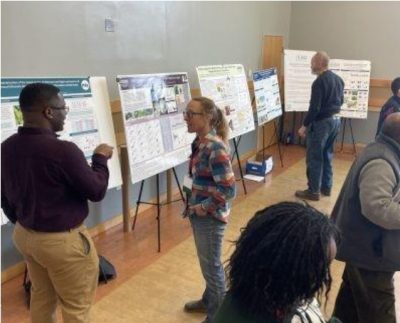
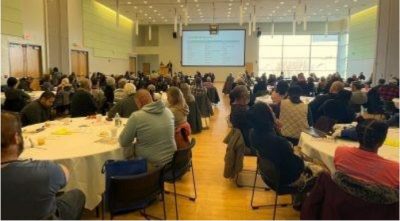
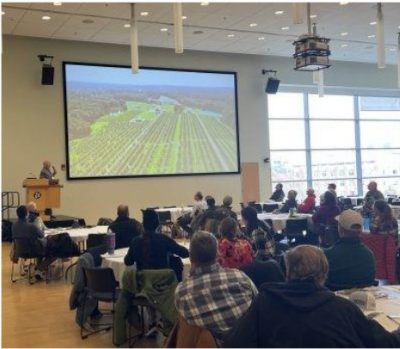
Participants at the 2025 UConn Extension’s Vegetable and Small Fruit Growers’ Conference and Tradeshow at the UConn Student Union in Storrs, CT, on January 7, 2025. Photos: Shuresh Ghimire.
Agritourism Webinar: Harvesting Prosperity (Jan 2025)
On Thursday, January 30th, UConn Extension hosted a webinar for farmers looking to establish, diversify or expand their business through agritourism.
86 participants attended the live webinar, providing the opportunity for them to ask questions directly to the presenting farmers and agricultural service providers. Of the 36 post-webinar survey participants, 100% responded positively (selecting “yes” or “maybe”) that they learned something during the event. Examples of key learnings reported included topics such as insurance coverage, expanded offerings of agritourism, business planning, thinking about customer experience, and creating a culture of safety for employees and visitors alike.
94% of survey participants responded positively (selecting “yes” or “maybe”) that they intended to implement changes to their business based on information they learned from the webinar. Such action items included expansion of agritourism activities, review/updating insurance policy, updating/expanding business plan, making improvements to their infrastructure, and updating safety protocols.
General feedback from participants included:
- “Very informative”
- “Great webinar with valuable information for those considering starting agritourism and creative ideas for those already in the agritourism market”
- “Good speakers, nice variety of topics and examples”
For additional information on the presenters and access to the resources shared throughout the webinar, please visit agriculture.extension.uconn.edu/agritourism-resources.
2025 UConn Extension Vegetable Production Certificate Course
Sixty-three students enrolled in the UConn Extension online Vegetable Production Certificate course in the winter of 2025. The course had seven online modules, each module with a self-paced video, supplemental materials, and a short quiz. This course is designed to benefit beginner vegetable producers with 0-3 years of vegetable growing experience or no formal training in agriculture. The participants learned answers to the basic questions about farm business planning, planning and preparing for vegetable farm, warm and cool-season vegetable production techniques, season extension, identification of biotic and abiotic issues, and marketing. The students reported increases in their knowledge in the subject matter from an average of 48% before the course to 83% after the course.
Federally Recognized Tribes Extension Program (FRTEP) with Mashantucket Pequot Tribal Nation
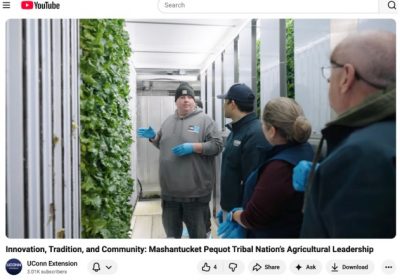
Screenshot of the YouTube video where A Tribal member, Jeremy Whipple, is consulting with UConn Extension educators about lettuce production in the Freight Farms units at Meechooôk Farm in Mashantucket, CT.
The University of Connecticut’s Federally Recognized Tribes Extension Program (FRTEP) began working with the Mashantucket Pequot Tribal Nation (MPTN) in 2017 through a USDA-NIFA grant to strengthen agricultural production, food security, and community health. Co-designed by MPTN and UConn Extension, the program integrates three core goals: agricultural production, cultural heritage, and nutrition. At Meechooôk Farm, this partnership has built a diverse agricultural enterprise that blends traditional Pequot stewardship with controlled environment agriculture. Shipping-container “freight farms” and hydroponic greenhouses use climate control, LED lighting, and automated irrigation to produce lettuce, tomatoes, herbs, and other crops year-round, using about 90% less water and achieving growth rates up to four times faster than conventional systems. This technology, grounded in Indigenous values of respect for land and future generations, allows the Nation to expand food production while reducing pesticide use, transportation distance, and waste.
Meechooôk Farm now serves as both a food hub and a workforce development site for the Tribal community. Youth and adults are employed on the farm, where they gain hands-on experience in hydroponics, greenhouse management, and farm business skills, supported by UConn Extension expertise in vegetable and fruit production, farm management, and nutrition education. Fresh produce from the farm is distributed through weekly community food boxes and other food assistance programs that prioritize Tribal households most in need, directly advancing MPTN’s goals for food security and food sovereignty. Freight-farm and greenhouse production also supply local markets and institutional buyers, contributing to the economic viability of the Tribal agricultural enterprise while keeping high-quality foods within the regional food system.
Health education and youth engagement remain central to the program. Extension educators and Tribal staff collaborate on nutrition workshops, cooking demonstrations, and fitness activities that connect the foods grown at Meechooôk Farm to healthier lifestyles for children, families, and elders. Evaluation data from earlier program years showed substantial gains in youth knowledge of physical activity, fruits and dairy, and healthy snack choices, and these successes continue to guide current programming. Integrated Pest Management (IPM) training for farm staff emphasizes pest monitoring, biological controls, and reduced-risk products, further lowering pesticide use while maintaining yield and quality. Together, the Mashantucket Pequot Tribal Nation and UConn FRTEP are demonstrating how traditional stewardship and modern innovation can work side by side to build a resilient, culturally grounded food system and strengthen Tribal health for future generations.
Weekly Pest Alert
Vegetable integrated pest management education was delivered to 420 vegetable growers and stakeholders every week from April to October 2025 through 20 weekly vegetable pest alert emails focusing on pests, pest management and decision making, and safe pesticide use. Email open rate was 38%.
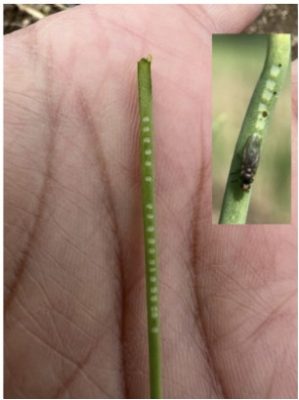
Oviposition marks from allium leafminer on chives. Photo: S. Ghimire, UConn Extension.
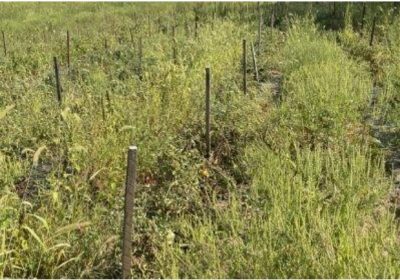
Weedy pathways between rows of tomatoes. Preventing weeds from reaching seed maturation is crucial for long-term success.
Photo: N. Davidow, UConn Extension.
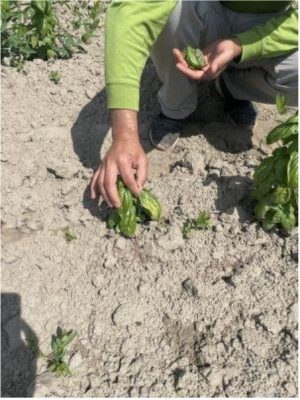 The most noticeable symptom of basil downy mildew is chlorosis (yellowing of leaves) on the upper side of the leaf and black, fuzzy growth due to spores on the underside of the leaf. Photo: N. Davidow, UConn Extension.
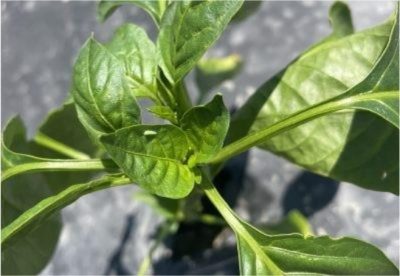
A potato leafhopper seen gliding sideways across the leaves of a pepper plant. Photo: N. Davidow, UConn Extension.
Urban Agriculture
Program Leader: Jacqueline Kowalski, Associate Extension Educator
Urban agriculture IPM is a new component to the University of Connecticut IPM team.
Urban Farmer Training Program
The Urban Farmer Training Program (UFTP) was offered in collaboration with Green Village Initiative, Bridgeport, CT. The purpose of this program is to provide intensive training for those who want to become for-profit urban farmers. Seventeen students graduated from the program, and 3 students continued to complete a full season of in-field training. The training site provided the opportunity for IPM training for both the participants and the community gardeners who grow at Reservoir Farm, Bridgeport, Connecticut. Three workshops were held at the site during the season. Class topics were: Introduction to IPM, IPM for high tunnels, and Spotted Lantern Fly identification and lifecycle.
Solid Ground Consultations
Kowalski served as a consultant for the urban agriculture focus area for the UConn Solid Ground program. Kowalski provided two one-on-one on-farm consultations with new/beginning urban farmers to assist in site evaluation, soil health, production planning, varietal selection, and IPM program development.
Community Garden IPM Workshops
Two in-garden IPM workshops were held (May 3 and May 8, 2025, in New Haven and Bridgeport, CT). These workshops provided community gardeners with the opportunity to ask questions and learn more about managing pests and increasing natural enemies in a communal growing situation.
Vegetable Entomology
Program Leader: Dr. Ana Legrand, Assistant Extension Professor
Potato Leafhopper Monitoring & Remote Sensing Project
A multi-disciplinary team at the University of Connecticut completed work on detecting potato leafhopper damage using remote sensing. The goal was to detect the presence and early plant damage caused by the potato leafhopper (PLH) on green beans. PLH is a significant pest in several horticultural systems. This work has the potential to benefit multiple commodities through early detection of the insect with minimal labor inputs by growers. Dr. Bivek Bhusal successfully defended his dissertation based on his research of Potato Leaf Hopper and this project. In addition to determining the potential to detect PLH damage, the project results also indicated that it is possible to detect PLH damage separate from nitrogen deficiency stress using drones to capture spectral images from the field.
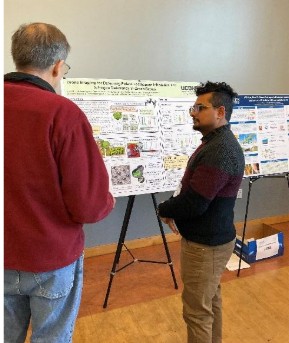
Dr. Bivek Bhusal discussing potato leafhopper project results with a stakeholder during the 2025 UConn Extension CT Vegetable and Fruit Growers Conference. Project experiments set at the Plant Science and Landscape Architecture Research and Teaching Facility. Photo: Heather Zidack
Brassica Trap Crops Project
Efforts to develop a ‘push-pull system’ for diamondback moth management in cabbage continued. Trap crops attract the pest away from the main crop, thus concentrating pest infestations in a smaller area that could be treated or destroyed. Project results indicated the strong potential of glossy collards as trap crops when planted together with tomatoes as the repellent crop to create the ‘push-pull’ system. Repellent plants act as the ‘push’ factor and complement the trap crops providing the ‘pull’ effect to reduce pest pressure on the cash crop. Maussi Arrunategui, PhD student in Dr. Legrand’s lab, continues work on this project.
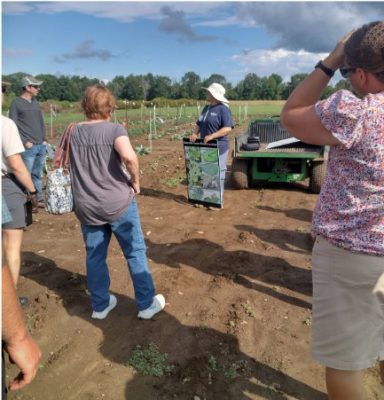
Maussi Arrunategui presenting on cabbage caterpillar pests and trap crops during the 2025 Vegetable IPM Field Workshop at the Plant Science and Landscape Architecture Research and Teaching Facility. Photo: Ana Legrand.
Vegetable Entomology Outreach
The goal of entomology outreach work is to increase proficiency in insect pest and beneficial insect identification, as well as to increase implementation of IPM monitoring and conservation biocontrol practices. Dr. Legrand gave several presentations on vegetable insect pest management and co-organized the 2025 Vegetable IPM Field Workshop with Dr. Shuresh Ghimire. The workshop, attended by 30 people, was conducted at the Plant Science Research and Teaching Facility in Storrs on July 9, 2025. The field workshop covered diverse topics of importance to vegetable growers including plant disease management, seed sanitation, insect pests, brassica trap crops, cucurbit IPM, and cover crop and fertilizer trials. Attendees rated their overall before- and after-program knowledge change to be 2.6 to 4.3 (1-5 rating scale with 5 being most knowledge). The overall rating on likelihood of implementing the suggested practices was on average 4.3 using a 1-5 rating scale with 5 being most likely (n=14). Dr. Legrand also participated in the planning committee for the 2026 UConn Extension CT Vegetable and Fruit Growers Conference.
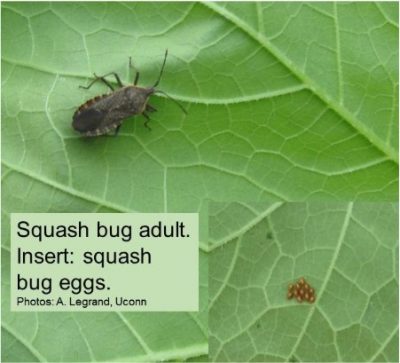
Fruit Production and IPM
Program Leader: Evan Lentz, Assistant Extension Educator
Operationalizing Drone Imaging Technology to Detect Nutrient Deficiencies in Fruit Orchards
This project is a continuation of our previous project “Drone Imagery for Early Detection of Fruit Crop Nutritional Deficiencies” funded through USDA SCBG via the CT Department of Agriculture. The first three-year project delivered 62 crop and nutrient specific predictive models. In this current three-year study, models are applied to inform foliar fertilizer applications in hopes of impacting the current year’s crop. This project includes 7 grower participants: Belltown Hills Orchard, S. Glastonbury, Blue Hills Orchard, Wallingford, Roger Orchard, Southington, Joseph Preli Farm and Winery, S. Glastonbury, Scantic Valley Farm, Somers, Old Bishops Orchard, Cheshire, and the Mashantucket Pequot Tribal Nation, N. Stonington. We’ve expanded participants to include new, woman, and BIPOC farmers. We concluded our final year of this project. With all the new data, our models have been vastly improved, and corrective action recommendations were provided to growers. We are still in the process of analyzing this data to see if this tool is useful for precision nutrient management. Our economic analysis is also still underway. Our publications are currently in progress as well and will be shared once completed. Funding: Northeast SARE Research for Novel Approaches
Solid Ground – New Farmer Training Sessions
In 2025, Lentz served as one of the focus area consultants (Fruit Production and IPM) for the Solid Ground New Farmer Training program. Lentz organized and led 3 one-on-one on-farm consultations with new/beginning fruit farmers to assist in site evaluation, planning, varietal selection, and IPM program development. Funding: USDA NIFA CPPM
One-on-one IPM Program Development
In 2025, Lentz worked closely with three farms to develop their IPM programs: Joseph Preli Farm and Winery, S. Glastonbury, Hickory Hill Orchard, Cheshire, and North Star Farm, Stonington. This included regular trapping via the Fruit IPM Internship, NEWA Model integration, and pesticide application consultation. Funding: USDA NIFA CPPM
Fruit IPM Messages
Fruit IPM messages are one of the most critical components of the UConn Fruit IPM program according to growers. These e-updates provide pertinent information during critical periods throughout the growing season. In these updates weather, phenology, management recommendations, local pest reporting (data gathered from across the state via the internship program), IPM strategies, programming updates, and event information are provided to growers in a direct, distilled manner. Updates are uploaded to the IPM website. Funding: USDA NIFA CPPM
Undergraduate Fruit IPM Internship
In 2025, Lentz continued an undergraduate Extension internship focused on Commercial Fruit Production and Integrated Pest Management. Two students were employed for 15 weeks, for a total of 50 hours per week between them. The students learned and employed IPM scouting and trapping techniques at a total of 17 fruit farms in the state, including both small and tree fruit. The students visited farms weekly, reported findings to growers, compiled data to be shared with the fruit growing community, and worked to develop educational factsheets on related insect pests. Funding: USDA NIFA CPPM
NC 140 Rootstock Trial – USDA Multistate Hatch
In 2025, Lentz joined the oldest Multistate Hatch project, NC-140 Rootstock Trail. This project evaluated the viability of newly developed apple tree rootstocks for use in industry. Most of the rootstocks provide a degree of pest resistance. UConn will serve as a site for this research, being the only southern New England site. Assuring that these rootstocks are adapted to and perform well in our region-specific soils is essential information for commercial tree fruit producers. Funding: USDA NIFA CPPM
Increasing Farm Resiliency Through Utilization and Promotion of Existing Critical Small Fruit Pest Management and Weather Monitoring Tools
This specialty Crop Block Grant, totaling $78,390, was secured through the CT Department of Agriculture. As the name suggests, the grant is focused on IPM, specifically promoting the use of the NEWA weather station network and its pest forecasting models. Funds were provided to establish a research and demonstration plot where diversified fruit crops can be used for pest monitoring and weather data integration. Funding was also provided for two undergraduate students to help establish and maintain plants as well as collect pertinent data to be shared with local commercial fruit producers. Funding: CT DoAg SCBG
Improving Fruit Safety of Blossom Protect for Organic Fire Blight Management in the East
The goal of this multi-state grant, totaling $982,921, is to identify an alternative to repeated antibiotic applications in orchards struggling with fire blight. Organic materials are being tested for their efficacy in reducing and preventing fire blight infections. More importantly, the project seeks a way to reduce the russeting that is caused by organic control materials, which affects the marketability of fruit. Although there are few organic tree fruit producers in the state, this research serves as a basis for encouraging others to adopt organic production practices by addressing one of the most significant concerns of organic fire blight control. Funding: USDA Organic Transitions
Building Capacity
In 2025, Lentz continued efforts to build capacity within the UConn Fruit and UConn Fruit IPM programs. Since the last report, Lentz has helped to secure $1,061,311 in grant funding to establish a functioning Fruit IPM research program at UConn. Fundraising efforts continue as the research orchard is still in need of essential materials and equipment including a sprayer, well-servicing, and trellising. Funding: USDA NIFA CPPM; Other
Events
Three major educational meetings were planned and put on in collaboration with the Connecticut Pomological Society, UConn Extension, and other stakeholders: UConn Extension Vegetable and Fruit growers Conference (227 attendees), CT Pomological Society Annual Summer Twilight Meeting and Field Day (125 attendees) and the CT Pomological Society Annual Winter Meeting (108 attendees).
Other Programming
In 2025, Lentz delivered a total of five presentations: San Jose Scale in Apples – Idaho State Horticultural Society 129th Annual Convention (62 attendees), University of Connecticut Extension Fruit Program – Yale School of the Environment: Careers in Extension (32 attendees), Novel Nutrient Management Tools for Small Fruit and Vine Crops – Connecticut Grape Growers Symposium (35 attendees), Drone Imaging and Nutrient Management in Small Fruit Operations – New England Vegetable and Berry Growers Association (72 attendees), and Speak Green: Mastering Client Communication for IPM Success – Connecticut Groundskeepers Association (253 attendees).
Lentz served as the content area expert and instructor for the Tree and Small Fruit sessions of UConn Extension’s Master Gardener Program, delivering 4 separate day-long talks to stakeholders (198 attendees). He also led a fruit-specific session during the Farm Risk Management Climate Adaptation Field Day (12 attendees).
In 2025, Lentz and the Northeast Extension Fruit Consortium developed and hosted a Winter Webinar Series for regional fruit growers with the following sessions:
- Londo and Moran. 2025. Understanding Cold Hardiness Risks in Fruit Crops. Cornell AgriTech and University of Maine. (36 attendees)
- Acimovic, S. 2025. Biology and Environmental Conditions for Bitter Rot in Apples. Virginia Tech University. (85 attendees)
- Wallis and Cox. 2025. Why Did my Scab Program Fail in 2024? Cornell AgriTech. (86 attendees)
- Gannett, M. Basic Orchard Weed ID and Management. UMass Extension. (65 attendees)
- Moyer, B. 10 Common Marketing Mistakes. Penn State Extension. (41 attendees)
- Lentz also contributed to an online course, UConn Extension Farm Risk Management: Climate Adaptation Online Course. (21 attendees)
In 2025, Lentz authored 6 articles for fruit producers in the CT IPM Crop Talk Newsletter and other outlets: Spotted Lanternfly: What CT Growers need to Know, Strawberry Renovation, Pruning Brambles, Managing Flood Risks on Vegetable and Fruit Farms, Guide to Pruning Blueberries, and Dialing in Nutrient Management for Fruit Production and Beyond: Deficiencies, Excesses, and Current Technologies.

Four recent UConn PSLA graduates at the 2025 CT Pomological Society Summer Field Day. All now work in the industry.
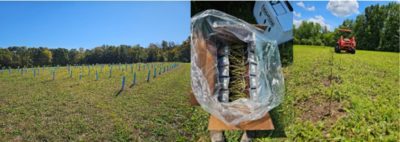
Establishment of the UConn Fruit IPM research and demonstration plot at the UConn PSLA Research Farm.
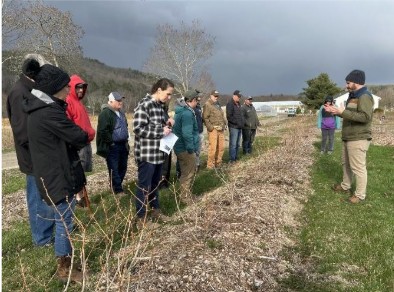
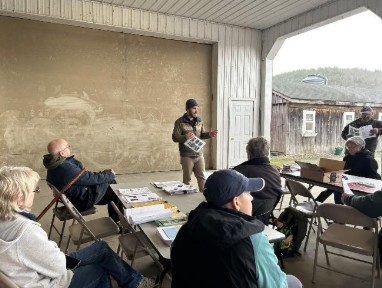
Discussion and demonstrations during the 2025 RMA Climate Adaptation Workshop. Photos: E. Lentz
Greenhouse IPM
Program Leaders: Rosa Raudales (Associate Professor of Horticulture & Greenhouse Extension Specialist); Charles Krasnow (Associate Extension Educator, Controlled Environment Agriculture). Activities conducted by Nadya Granda, Rosa Raudales, and Charles Krasnow
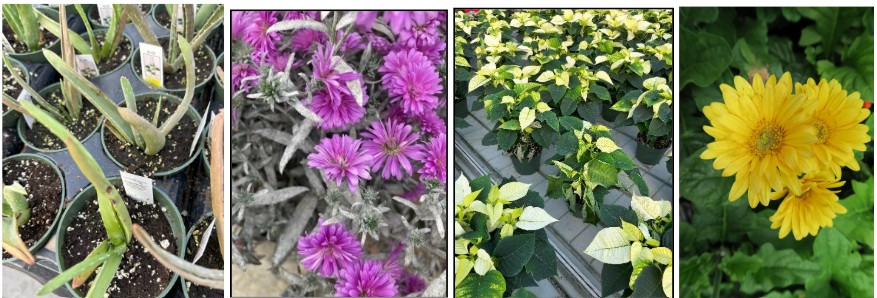
Photos: C. Krasnow.
| # | Sponsored Education Program | Type of
event |
Focus | # of sessions | Attendees |
| 1 | Mattson, N., C. Villouta, and R.E. Raudales. Northeast Greenhouse Conference. Manchester, NH. Nov 8-9, 2025 | Workshop
|
Regional | 44 | 650 |
| 2 | R.E. Raudales, N. Granda, and C. Krasnow. Greenhouse Biological Control Conference. New Haven, CT. September 18, 2025 | Workshop
|
In-State
|
5 | 78 |
| 3 | Dickson, R. and RE Raudales. Root Alliance. Innovating Root Zone Solutions for Controlled Environment Horticulture National Webinar. Jun 9 – Aug 7, 2025 | Webinars | National | 4 | 90 |
| 4 | Krasnow, C. and RE Raudales. Bedding Plant Meeting Spring 2025. New Haven, CT. Feb 11, 2025 | Workshop | In-State | 3 | 32 |
Bedding Plants Spring 2025
A full-day Bedding Plants program was held at the CT Agricultural Experiment Station in New Haven, CT on February 18, 2025. Speakers included experts from UConn, UMass, CT State, and Griffin Co. Presentation topics included: Plant Growth, Chemical and Cultural Options; Recap 2024; Bedding Crop Diseases to Prepare for 2025, and Hot Topics in Insect and Mite Management. Thirty-four attended from CT and MA. Of those that completed evaluation forms (25), 100% rated Hot Topics in Insect and Mite Management as very useful. 100% rated Plant Growth, Chemical and Cultural Options, and Bedding Plant Crop Diseases as useful to very useful. Of those that filled out evaluation forms, 87% were moderately to very likely to adopt a new practice.
Comments from participants:
“Very much appreciated the opportunity to reinforce my knowledge base.”
“Thank you for providing the information and resources.”
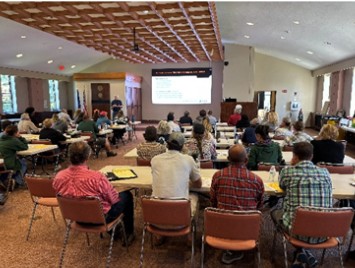
Participants at Spring Bedding Plant Meeting. Photo: C. Krasnow.
The 2025 UCONN Extension Nursery and Garden Center Tours on September 30 and October 1 were a success. This was a two-day tour of nurseries and garden centers in central CT and Eastern CT. Over 20 growers were in attendance. The tour included discussion of potting mixes, disease and insect control, propagation, grafting, and demonstrations of IPM methods and pesticide calibration and application techniques. This tour was designed so that participants were able to share their practices. Growers responded to a survey that the meeting would result in improved sales and save them money in the upcoming season.
Botrytis Survey: May 1–September 15. A survey of botrytis in CT was conducted. Over 20 greenhouses were surveyed, the botrytis collected and tested for sensitivity to two commonly used fungicides. This work will allow growers to improve their fungicide application timing and selection.
AAS Gardens: May 21–October 1. The AAS Trial Gardens at the University of Connecticut were grown on campus at the PSLA Research Farm. Faculty and staff worked to implement the trials. UConn research farm staff were responsible for growing the plants and working to manage the trials. UConn sophomore Alex Jeziorski was trained as a summer employee and assisted with the evaluation of the plots. The objective of the trials is to observe the performance of new and recently introduced annual cultivars under the environmental conditions of Connecticut to provide local growers with information about new cultivars.

UConn sophomore Alex Jeziorski assisted with AAS plots. Photo: C. Krasnow.
Biological Control Conference for Ornamentals
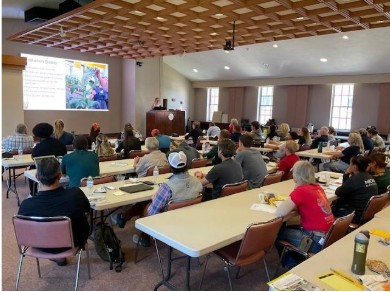
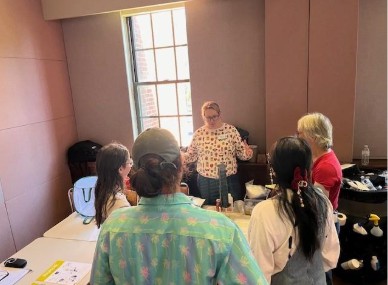
2025 Biological Control Conference included presentations and demonstrations. New Haven, CT. Photos: R. Raudales
A full day Biological Control Conference was held at the CT Agricultural Experiment Station in New Haven, CT on September 18, 2025. Presentation topics were: Biostimulants; Seek & Find: Scouting for pests and beneficials in crops; Biocontrol Programs for House Plants and Succulents; Bug Math: Counting your tiny workforce; and From Roots to Shoots. 80 attended from CT, NY, MA, and PA. Of those that completed evaluation forms, 92% said that they would adopt a new practice such as adopting biostimulants in their production or using the dollar store quality control method.
Comments from participants:
“Thank you so much. This was really cool and thought-provoking. Great opportunity for meeting people and sharing info.”
“Loved the talk on biostimulants.”
Consultations to Members of the Commercial Greenhouse Industry
Weekly or biweekly pest messages were posted on the UConn Greenhouse IPM website (ipm.cahnr.uconn.edu/greenhouse).
The Greenhouse IPM Program engaged 299 email subscribers 30 times through ongoing greenhouse pest messages focusing on pests, diseases, abiotic disorders and use of cultural methods, biological control agent and proper use of insecticides and fungicides to manage pests and diseases as well as alert the industry of upcoming events and webinars.
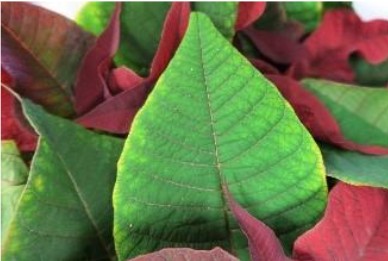
Copper deficiency on poinsettia.
Disease Diagnosis: 19 Diseased plant sample analyzed providing accurate disease ID results to growers to make IPM decisions.
Tissue and Soil Analysis: 36 individual samples of nutrient deficient plants brought to the UCONN Soil testing center for analysis, greatly assisting growers in making decisions on nutrition. These included hard to identify nutritional disorders on major crops.
Pest messages were sent out to the greenhouse industry. There were 12 sent out in 2025 (ipm.cahnr.uconn.edu/greenhouse-pest-messages).
February 25, 2025 Cutting dips
March 20, 2025 Viruses
April 1, 2025 Fogging
April 21, 2025 Orchids
May 12, 2025 Botrytis
May 29, 2025 Abiotic disorders
July 21, 2025 Powdery mildew
Aug 27, 2025 Recent Diseases
Sept 29, 2025 Mum disorders
Oct 9, 2025 Poinsettia lateral stem breakage
Nov 1, 2025 Pest update
Dec 1, 2025 Pest update
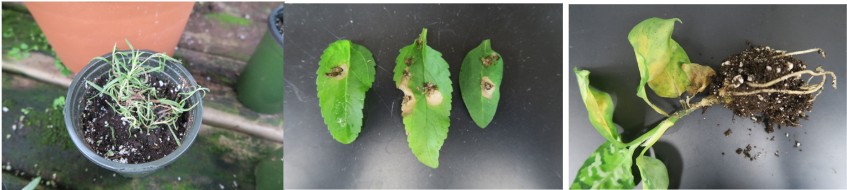
Examples of photos shown in pest messages. Botrytis stem rot of rosemary, leaf spot of veronica, and fusarium stem rot. Photos: C. Krasnow.
- Krasnow, C. 2025. Easter lily primer. This updated guide provides disease management tips, as well as a complete production timeline. Greenhouse Magazine: November 2025. https://www.greenhousemag.com/article/easter–lily-primer-
- Krasnow, C. 2025. Factsheets on common diseases of ornamentals were posted to the UConn IPM page and UConn Extension factsheets website.
- Krasnow, C. 2025. Managing Phytophthora in the Greenhouse. https://ipm-ahnr.media.uconn.edu/wp-content/uploads/sites/3216/2025/03/Phytophthora-Factsheet.pdf
- Krasnow, C. 2025 Managing Botrytis on Poinsettia. https://ipm-cahnr.media.uconn.edu/wp-content/uploads/sites/3216/2025/02/Botrytis-on-Poinsettia-Fact-Sheet.pdf
- Krasnow, C. 2025. 2026 Easter Lily Schedule. Krasnow, C. 2025 Finish Times of Connecticut Bedding Plants. https://doi.org/10.61899/ucext.v2.147.2025
- Bedding Plant Fungicides for Connecticut – In press
Comments from participants:
“Loved getting your emails because they were so helpful and often included some of the best conferences/seminars for pesticide credits and IPM information.”
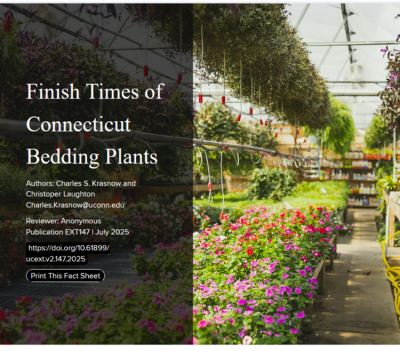
Cover page of the Finish Times of Connecticut Bedding Plants factsheet. Photo C. Krasnow.
Pollinator Program
Program Leader: Victoria Wallace, Senior Extension Educator. Activities conducted by Victoria Wallace and Alyssa Siegel-Miles.
Supporting pollinator health is a high priority for the UConn Extension Sustainable Landscapes program. Declining pollinator populations are a great concern in all habitats, including those in managed landscapes. Green industry professionals can support pollinator health by incorporating more native plants in managed landscapes. Meadows are one viable option for expanding the use of native plants in managed landscapes.
Many municipalities and school grounds managers have expressed interest in developing meadow areas that can be used to provide biodiverse habitats for pollinators. A meadow on a school/municipal property is an opportunity to reduce inputs, particularly mowing. Many in the municipal sector have limited budgets, manpower, and tools; they cannot use EPA registered pesticides to aid in meadow establishment. It is critical that managers understand the challenges with establishing and maintaining a meadow.
Native Plants and Pollinators Conference
Conference Planning Committee: Jessica Lubell-Brand, Victoria Wallace, Alyssa Siegel-Miles, and Mark Brand
The fifth biannual Native Plants and Pollinators Conference was held on November 13, 2025 at the University of Connecticut in Storrs, CT. The conference provides education about using native plants to create aesthetically pleasing landscapes that also support pollinators. In addition, the conference provides education about pollinator biology and conservation. An important component of the educational programming is the inclusion of research-based information in presentations. Conference attendees include landscape professionals, growers, conservationists, land and municipality managers, master gardeners, and garden consumers. Presentation topics for the 2025 conference included Connecticut’s specialist bees, soil microbes in managed systems, top performing natives from Mt. Cuba Center’s research trials, plant and pollinator interactions in nature, and native shrub cultivars with New England origins.
There were 252 conference attendees and 147 of them responded to our evaluation survey. Based on conference evaluations, attendee knowledge of soil microbial interactions with natives and Connecticut’s specialist bees increased 61% and 50%, respectively. Attendee knowledge of local native shrub cultivars and plant evaluation trials increased by 40%. Sixty-nine percent of respondents indicated that they are extremely likely to purchase the native plants covered in conference talks. Most respondents indicated that they are extremely likely to use the native plants covered in talks (73%) and seek out native cultivars with local origins (65%). Of respondents, 97% ranked the conference excellent or good, with 53% calling it excellent. Read more about the conference at UConn’s Native Plants and Pollinators Conference Draws Strong External Engagement (today.uconn.edu/2025/12/uconns-native-plants-and-pollinators-conference-draws-strong-external-engagement).
Comments from participants:
“I love this symposium day and will continue to look forward to attending the next one!! Thank you!!” (Conference attendee)
“Knockout Natives and Jessica Lubell-Brand’s talks were excellent. Andy’s talk and photos were amazing and inspiring.” (Conference attendee)
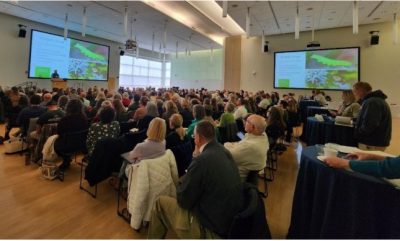
Native Plants and Pollinators Conference. Photo: A. Siegel-Miles
A small meadow area was established at the UConn Plant Science Research Facility in 2022 to serve as a demonstration and educational resource that will help address questions related to meadow establishment and maintenance. In 2025, we maintained the meadow plots and compiled data related to the plant growth, including recording stem counts of each species present in both the spring-seeded and the fall-seeded plots to compare rates of establishment. We continue to evaluate meadow establishment practices, planting methods, and weed management strategies.
Connecticut Native Plant Availability List
Victoria Wallace and Alyssa Siegel-Miles, Research Assistant, continue to produce Extension documents that benefit constituents and add them to the IPM website. The Native Tree, Shrub and Perennial Availability List, a partnership with CT DEEP Wildlife Division, was updated again this year. The Availability List is an extension publication designed to connect consumers with local nurseries and educational resources to broaden the use of native species in Connecticut landscapes. It is available online as a printable document to landowners, town planners, conservation groups, and landscape professionals who are interested in creating wildlife habitat using native plant material. This resource supports the marketing of ecologically beneficial CT specialty crop nursery producers to enhance their economic viability and connect consumers with native plants that are important to pollinator health and diversity, as well as cultivating resilient ecosystems. We will continue to work with the CT DEEP Wildlife Division to update this important resource and foster knowledge of CT native plant producers.
A survey of participating nurseries and end-users was conducted to evaluate the impacts of the Connecticut Native Plant Availability List (NPAL). Users indicated an awareness of new native plant species, increased the number of native plants purchased for personal or professional work, and saved time locating native plants. Nurseries and end-users had positive opinions of the NPAL content quality. The resource was somewhat or highly relevant for most end-users relative to their personal or professional work and increased native plant knowledge for many. Nursery representatives indicated that the NPAL had indirect and direct value for their businesses, and many made or planned to make changes to their native plant inventory because of the List. Findings were published in the National Association County Agricultural Agents (NACAA) Journal (nacaa.com) and will be used to inform resource improvement.
Comments on the Connecticut Native Plant Availability List:
“I believe it has made more of the general gardening population look into and research native plants for their yard. I see the List being shared online on Facebook in the native plant groups a lot, so I am glad we are listed.” (Nursery Representative)
“It gives me a reputable, authoritative source for my native plants, and one I feel I can strongly recommend.” (Home Gardener/Land Trust Volunteer)
“As a Planning Tech/Zoning Enforcement Officer we promote the planting of native plants. This has been a very helpful resource to share with the public as well as in my personal gardening.” (Home Gardener, Land Use Volunteer, Other: Municipal Land Use Employee)
We shared native plant information and fact sheets with over 2000 constituents through our Native Plant email listserv, as well as reached over 1300 through our Invasive Plant email listserv and over 700 through our school IPM email listserv. Many others also receive the information via UConn Extension and other partners who share our information. We also translated several pollinator health factsheets into Spanish.
Pollinator health was included as part of online UConn ornamental & turf short course program held in winter (63 enrolled) and fall 2024 (42 enrolled).
Invasive Species IPM Program
Program Leader: Victoria Wallace, Senior. Extension Educator. Activities conducted by Victoria Wallace, Alyssa Siegel-Miles, and Lauren Kurtz
Invasive Plants: A Growing Concern
IPM methods can be used to manage invasive plants in residential properties, communities, and natural and managed landscapes. The UConn Invasive Species Outreach specialist, Lauren Kurtz, led the effort to educate CT residents about invasive plants as a member of the Sustainable Landscapes Program and the UConn Home and Garden Education Center. Invasive plant education has been conducted with constituents, including CIPWG members, during the growing season. The activities of the Connecticut Invasive Plants Outreach Specialist have provided administrative support for the Invasive Plants Council (IPC) and helped to guide invasive plant education through public outreach, education, and training. The invasive species program will continue to educate CT residents and businesses about their role in managing invasive plants.
An invasive plant certificate program is being developed by the Sustainable Landscapes Team to equip stakeholder groups of varied experiential backgrounds with the information needed to evaluate, manage, and mitigate populations of invasive species in Connecticut. This program will consist of seven asynchronous modules. The audience for this program includes land managers, conservation commission members, green industry professionals, municipal staff, advanced volunteers and homeowners interested in learning more about invasive plants and effective management strategies. Registration for this certificate program will begin in late 2024 and the program will launch in February 2026.
An invasive plant survey was developed in 2025 that replicated a 2007 survey of the Connecticut Nursery and Landscape Association (CNLA) membership to assess changes in knowledge, practices, and policy preferences regarding invasive ornamental plants. The results of this survey were published in the journal HortTechnology at Connecticut Nursery and Landscape Industry: Evolving Viewpoints on the Sale and Use of Invasive Plants. Results revealed an increase in self-reported knowledge about invasive plants and substantial declines in sales of prominent invasive plants. Industry support grew for native plant promotion, point-of-sale invasive plant labels, and voluntary removal of invasive plants from inventories, with openness to statewide bans and allowing for the development and sale of sterile cultivars. These findings signify a substantial shift toward proactive invasive plant management in Connecticut’s green industry.
The Connecticut Invasive Plant Working Group (CIPWG) is a consortium of members of environmental organizations and affiliates of municipal and state agencies whose mission is to promote awareness of invasive plants and their non-invasive alternatives. CIPWG’s news and events listserv has over 1460 members. The CIPWG website (cipwg.uconn.edu) provides information on invasive plant identification and management, the Connecticut list of invasive plants, photos, native plant and other non-invasive alternatives, and legislative updates. Wallace serves as a co-chair and member of the steering committee and Symposium Planning Committee for CIPWG.
Connecticut Invasive Plant Working Group (CIPWG) exhibits were displayed, invasive plant talks were presented, invasive plant educational materials were provided, and/or invasive plant management activities occurred at local, statewide, and regional events during 2025. Activities occurred in over 75 CT towns, as well as several out-of-state. At least 7,172 citizens directly and actively participated in the activities. A minimum of 12,958 hours were directly invested in invasive plant management, during intensive invasive plant training sessions and management activities, as well as educational outreach. Many (at least 7,800) were reached indirectly through articles, YouTube videos, social media, fact sheets, signs, and other educational mediums. During the 2025 calendar year, there were 83,000 page views on the CIPWG website, and 46,000 users participated in 57,000 sessions. The most visited pages are the Invasive Plant List (22,000) and the home page (8,000).
Wallace, Siegel-Miles, and Kurtz supported the CIPWG Invasive Plant Review Subcommittee. The committee reviewed plants to be added to the CIPWG Invasive Plant Research List and included a discussion about sterile cultivars of invasive species.
Victoria Wallace also served as the UConn CAHNR Dean Representative and Chair of the Invasive Plants Council (IPC), a state-legislated committee mandated by the CT Legislative Environment Committee, for the 2025 term. In response to recommendations made in the 2024 IPC annual report, the Environment Committee in 2024 submitted HB 5013 to include nine additional invasive plants to be prohibited from sale:
- Star-of-Bethlehem (Ornithogalum umbellatum L.) was immediately prohibited from sale when the bill became PA 25-126 in October 2025, without a phase out period.
- Japanese barberry (Berberis thunbergii), winged euonymus (Euonymus alatus), Glossy buckthorn (Frangula alnus), reed canary grass (Phalaris arundinacea), European privet (Ligustrum vulgare), black locust (Robinia pseudoacacia), and miscanthus (Miscanthus sinensis) will be prohibited from sale with a 3-year phase out period; commencing on October 1, 2028.
- Norway maple (Acer platanoides) will be prohibited from sale with a 5-year phase out period; it will be prohibited from sale as of October 1, 2030.
No recommendations are being provided by the IPC to the Environment Committee for the next legislative session in 2026.
School IPM Program
Program Leader: Victoria Wallace, Extension Educator
The Connecticut School IPM Program was formed to support and provide in-person educational programs for School and Municipal Grounds Managers with turf care and landscape practices following the statewide ban of pesticides on daycare and K-8 school properties. Assessment tools and recommendations for school grounds and athletic fields that support management practices have been developed.
To increase awareness of IPM tactics and programs through the development & promotion of IPM materials a School and Municipal Turf/Grounds Workshop was held on July 17, 2025 at the Plant Science Research Facility in Storrs, CT. The program was attended by 75 turfgrass professionals, including municipal and grounds managers. A presentation about the finalized UConn Turf Assessment tool and its Website location within the school grounds section of the IPM website was showcased by Wallace and Siegel-Miles. Invited presenter Dr. Kyle Wickings, from Cornell University, provided an update about his biological control research related to insect pest management strategies. Dr. Jason Henderson and Tessa Hospod discussed their research related to autonomous mowing and Dr. John Inguagiato and Joseph Howard updated the group about biofungicide strategies to manage turfgrass diseases. 49 attendees responded to our evaluation survey, indicating that attendee knowledge of “Turf Assessment Website and other UConn tools” increased by 44 %; of “Biofungicides for Turf Disease Control” increased by 32%; and overall knowledge of all workshop topics increased by 33%. 90% of respondents agreed that the workshops and information presented were relevant to their professional work. 100% of respondents rated the workshop “good” or “excellent” (n=31).
Comments from participants:
“Thanks for offering sessions like this. I learned a lot.”
“Great session all around.”
“Thank you for all your hard work and dedication!”
“Really enjoyed and appreciated this experience. Great event!”

Vickie Wallace leads attendees in their first use of the UConn Turf Assessment App. Photo: A. Siegel-Miles.
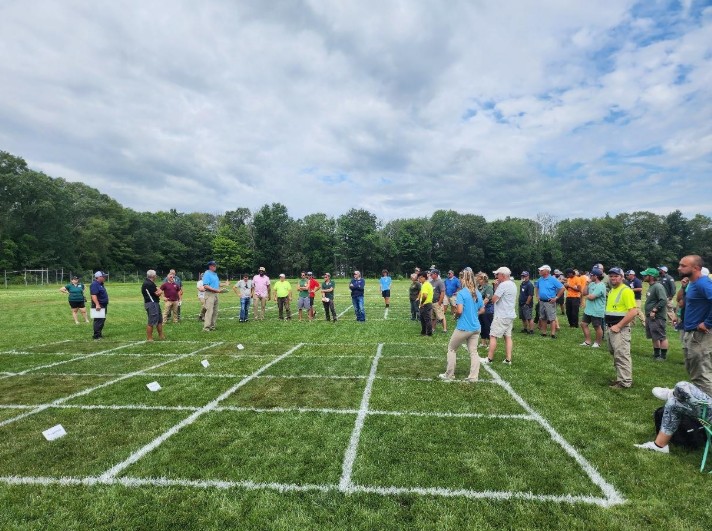
Jason Henderson leads an outdoor workshop on autonomous mowers. Photo: A. Siegel-Miles.
Athletic Field Assessment Tool Released
UConn software engineers completed development of the Athletic Field Assessment App programming. The online tool was deployed in June 2025. Wallace is actively promoting and publicizing the website as a tool for school grounds managers. The online tool was showcased on July 17, 2025 at the School IPM Workshop. Time was devoted to explaining how to use the app. A fact sheet with instructions to enter field health data was developed and distributed to workshop attendees. The tool is available at ipm.cahnr.uconn.edu/assessment-tool. Weather stations previously placed at Connecticut schools and used to assist with critical IPM decision-making on athletic fields and school grounds management has continued.
Additionally, Wallace continued her teaching responsibility for the Turf Management section of the Master Gardener Curriculum; created three modules for the turfgrass section and presented five corresponding live in-person classes on pollinator-friendly turfgrass management. Presentations showcase differences and similarities between various sustainable turfgrass management options and viable turfgrass management systems.
Wallace continues to provide lectures of Turfgrass Management, Weed Management and Federal/CT Laws for the UConn Custom Grounds Supervisory Review Course that was offered in winter and fall of 2025.
Wallace provided one lecture on turfgrass management for CT Nursery & Landscape Association’s CT Certified Horticulturalist Program. She also participated in Ag Day at the Capital, UConn’s Legislative Reception, and the CAES Plant Science Day.
Wallace provided one-on-one consultation and support for Landscape Professionals. 40 one-on-one consultations were completed via phone, text, and email. Wallace provided Sustainable Landscape expertise, including pollinator health via periodic email and phone consultations.
Sustainable Landscapes Program
Program Leader: Victoria Wallace, Senior Extension Educator
To support turfgrass selection efforts of school grounds managers and landscape professionals, Wallace collaborates with the National Turfgrass Evaluation Program (NTEP) and evaluates turfgrass genotypes intended for the commercial seed market. Wallace is also the UConn cooperator for the Alliance of Low Input Sustainable Turf (A-List), a program that evaluates turfgrass species maintained with a regime of minimal input. Her previous experience as an agronomist in the turfgrass seed industry enables the effective connection of the value of these turfgrass evaluation programs to program stakeholders. Both programs are nationally recognized and valuable to the program stakeholders, who practice IPM and manage turfgrasses with reduced inputs of fertilizers, water, or pesticides. These turfgrass varieties are showcased at UConn’s biennial Turfgrass Field Day, which is attended by turfgrass professionals, seed company representatives, and product suppliers from throughout the northeast.
Ongoing evaluation of turfgrass cultivars under low maintenance regimes was conducted. UConn is a cooperator evaluation site for the National Turfgrass Evaluation Program (NTEP) and the Alliance for Low Input Sustainable Turfgrass (A-LIST). Selection of sustainable turfgrass varieties is important for all turfgrass professionals, including turfgrass managers who must manage non-irrigated, pesticide free school athletic fields with a limited budget and few resources. Use of turfgrass seed mixtures that include improved cultivars that perform well with fewer inputs is an important management strategy for school and municipal grounds managers.
National Turfgrass Evaluation Program
Fineleaf Fescue Test
Year 5 data was collected for a 5-year evaluation test of fineleaf fescue cultivars. UConn serves as an evaluation location for this national turfgrass evaluation program.
Perennial Ryegrass
Year 3 data was collected for a 5-year evaluation test of perennial ryegrass cultivars. UConn serves as an evaluation location for this national turfgrass evaluation program.
Tall Fescue
Year 1 data was collected for a 5-year evaluation test of tall fescue cultivars. UConn serves as an evaluation location for this national turfgrass evaluation program.
Alliance for Low Input Sustainable Turfgrass (ALIST) Evaluation
Perennial Ryegrass
Year 2 data was collected for the two-year evaluation test of perennial ryegrass cultivars.
Conference Programs
Presentations were conducted virtually and in person (nationally, regionally and in state). Victoria Wallace was an invited presenter at the Connecticut College SALT Conference, the Waterford Public Library, a University of Tennessee turfgrass webinar, and the national Sports Field Managers Association. Presentation topics included meadow maintenance, sound invasive plant practices, integrating environmentally sound best practices in athletic field maintenance programs, turfgrass selection and establishment considerations impacted by weather, and turfgrass management strategies related to pollinator health.
Cornell “Short Cutts”
Wallace serves as UConn representative for a regional extension turfgrass conference call and newsletter (33-35 weeks/year; April-October), hosted by Cornell Extension faculty. IPM recommendations for turfgrass managers’ discussions about current turfgrass research and weather forecasting for the Northeast are reported weekly during season.
Pesticide Safety Education
Program Leader: Srikanth Kodati, Assistant Extension Educator
Ornamental and Turf Short Course
The Ornamental and Turf Short Course aids in the preparation for the CT’s category 3A supervisory licensing exam. The course provides an in-depth online educational program that reviews the information necessary to fulfill the requirements of the Ornamental and Turf/Golf Course Superintendents State of Connecticut Supervisory Pesticide Applicator Certification exam. There are eight modules for this educational program. Class topics are: CT and Federal Pesticide Laws, Regulations and Safety; Botany; IPM Principles; Plant Pathology and Ornamental Plant Diseases; Entomology and Insect Pests of Woody Ornamentals; Area and Dosage Calculations; Turfgrass Management; and Weed Management. Each class begins with a brief overview of the topic, then continues with an in-depth discussion of pests, their biology and control.
Dr. Kodati coordinated the online “Ornamental and Turf Short Course,” designed to help participants prepare for Connecticut’s Category 3A supervisory licensing exam. The course was offered in Spring 2025 and Fall 2025. During the Spring term, 63 participants registered, and 42 registered in the Fall, with approximately 80 percent attending classes each week. He introduced an updated module on tick management and provided supplementary study materials to support learning. Instructors included: Nick Goltz, Srikanth Kodati, Victoria Wallace, and Laura Harrington (Cornell University).
Dr. Kodati taught the pesticide safety course in both Spring and Fall 2025 as one of the modules in the Arboriculture 101 course offered by the Connecticut Tree Protective Association (CTPA), which helps prepare participants for Arborist certification. There were 95 students enrolled in the class, and most rated the pesticide safety module as very informative. During the review session of Arboriculture 101, Dr. Kodati discussed the practical application of basic pesticide safety principles in decision-making.
Dr. Kodati also presented five sessions of the Basics of Entomology and Pest Management module for the UConn Master Gardener Program.
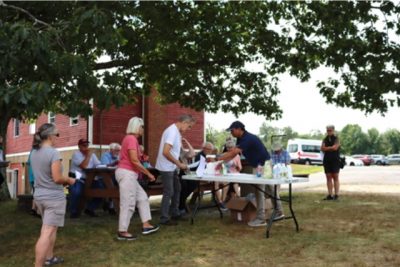
Dr. Kodati demonstrated pesticide formulations, applications and safety at the Annual IPM Seminar.
Plant Science Research and Educational Facility, Storrs, CT.
Dr. Kodati organized the Nursery and Garden Tour 2025, a two-day program held September 30–October 1, 2025, which included visits to four nurseries across the state. 20 participants gained practical experience in plant production and protection. Dr. Kodati provided a live demonstration on pesticide sprayer calibration. The tour was conducted in collaboration with Assistant Extension Educator Charlie Krasnow.
Dr. Kodati also presented at the Annual IPM Seminar at the Plant Science Research and Education Facility on August 14, 2025. During this seminar, Dr. Kodati delivered a demonstration on pesticide timing, application, and safety to an audience of 20 attendees.
At the Annual Tobacco Research Meeting (state level) held in Somers on March 12, 2025, Dr. Kodati presented a session on pesticide calculations for pesticide applicators. This program reached 65 attendees and supported improved understanding of accurate and safe pesticide use.
In addition, Dr. Kodati participated in Ag Day at the Capitol on March 19, 2025, promoting the importance of pesticide safety education and highlighted the work of the UConn IPM team as part of UConn Extension.
Diagnostics and Consumer Horticulture
Program Leader: Dr. Nick Goltz, DPM, Assistant Extension Educator
Between January 1 and December 9, 2025, the UConn Plant Diagnostic Laboratory (PDL) processed a total of 263 physical samples. Additionally, the lab directly responded to at least 500 stakeholder plant health inquiries via phone, email, and walk-in. The lab also directly supported the efforts of the UConn Home & Garden Education Center (HGEC), which responded to more than 1,608 additional stakeholder inquiries in 2025. At least 196 towns in Connecticut and neighboring states were represented in these numbers.
Plant samples were accepted from both home gardener and commercial clients from all eight Connecticut counties, as well from counties in Florida, Maine, Massachusetts, Minnesota, New York, and Rhode Island (Table 1). Sample types submitted this year included agronomic field crops, landscape ornamentals, ornamentals from nurseries and greenhouses, plants grown for the purpose of conducting research, and specialty fruit, ornamental, and vegetable crops. Diagnostic services rendered included plant disease identification, abiotic disorder diagnoses, plant identification, and insect identification. More than 1,399 diagnostic procedures were performed to determine the diagnoses provided. A cost-recovery sample processing fee of $20.00 per sample for 88 samples from Connecticut commercial growers (of 100 budgeted) was covered by a USDA NIFA CPPM grant.
As of Dec. 1st, 2025, UConn Home Garden Education Office and Plant Diagnostic Lab personnel and volunteers wrote 48 blog posts (uconnladybug.wordpress.com) and 48 newspaper articles for the Hartford Courant, the Willimantic Chronicle, and similar publications on the topics of plant health and IPM. Goltz contributed to the 2025-2026 edition of the New England Vegetable Management Guide (nevegetable.org), covering diseases of Globe Artichoke, Leek, Lettuce/Endive/Escarole, Okra, Onion/Scallion/Shallot, Parsley, and Cilantro.
Goltz presented two modules for the pesticide applicator certification course, five plant pathology classes for the UConn Master Gardener program, and five times as a guest lecturer for UConn courses. He taught SAPL 810 and SAPL810L: Plant Pest Control and Plant Pest Control Lab, in which he covered IPM strategies for the management of weeds, plant diseases, and insects of agronomic importance.
As of Dec. 1st, 2025, UConn Home Garden Education Office and Plant Diagnostic Lab staff gave a combined 20 presentations on Integrated Pest Management, conservation, and sustainable agriculture topics with 836 participants attending. Home Garden Education Office personnel provided 9 media interviews for Connecticut radio and news stations and nationally distributed podcasts. In 2025, our programs had 5669 Facebook users interact with our content (an increase of 731 users, or approximately 15%), 1163 Instagram users interact with our content (an increase of 158 users, or approximately 16%), 3,226 active newsletter subscriptions, and approximately 80,800 page views of our WordPress blog (uconnladybug.wordpress.com).
The UConn Plant Diagnostic Lab is part of the National Plant Diagnostic Network, an internationally recognized consortium of plant diagnostic laboratories funded in part by the USDA National Institute of Food and Agriculture and the US Department of Homeland Security.
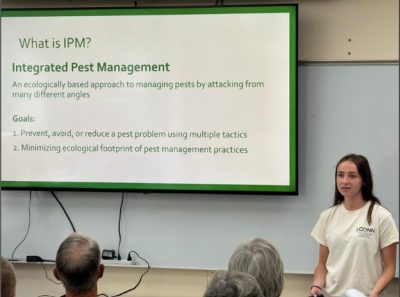
Extension intern Holly McNamara discusses IPM principles with participants at the 4th annual IPM Seminar for Home Gardeners event.
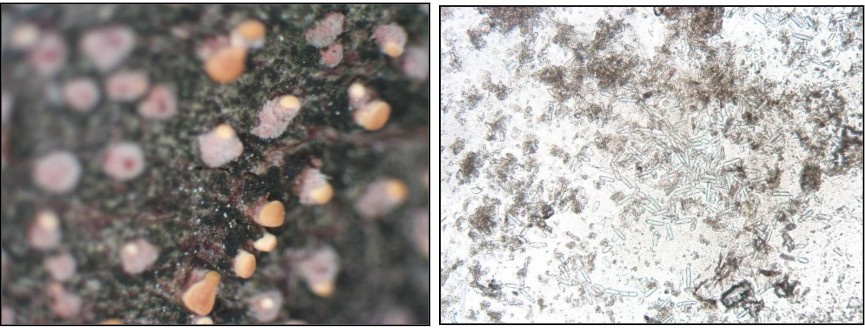
Salmon-colored, erumpent pads produced by Nectria cinnabarina (left), and hyaline endoconidia of Thielaviopsis basicola (right) are just some of the signs observed and used to provide diagnoses this year. Photos: Nick Goltz.
2025 IPM Projects and Publications
Refereed Journal Articles
Ghambhir, N., S. Kodati, A. O. Adesemoye, and S. E. Everhart. 2025. Fungicide sensitivity and non-target site resistance in Rhizoctonia zeae isolates collected from corn and soybean fields in Nebraska. Plant Disease, 109, 2025, 217-227
Kenderdine, C, RE Raudales. 2025. Continuous recirculation of hydroponic-nutrient solutions shifts bacterial communities and induces plant-defense gene expression in lettuce. Applied and Environmental Microbiology. Accepted pending minor changes.
Kurtz, L.E., M.H. Brand, A.J. Siegel-Miles, V.H. Wallace. 2025. Connecticut Nursery and Landscape Industry: Evolving Viewpoints on the Sale and Use of Invasive Plants. HortTechnology. DOI 10.21273/HortTech05785-25 online publication 08 Dec 2025.
Pantoja-Benavides, AD, RE Raudales. 2025. Amelioration of copper-induced phytotoxicity by silicon is crop dependent. Acta Horticulturae DOI pending. In press.
Tomis, S., B. Campbell, J. Henderson, A. Siegel-Miles, and V. Wallace. 2025. Impacts of the 2010 Connecticut School Grounds Pesticide Ban a Decade Later: Part 1. Grounds Maintenance Changes. HortTechnology 35(3)267-273. doi.org/10.21273/HORTTECH05587-24
Tomis, S., B. Campbell, J. Henderson, A. Siegel-Miles, and V. Wallace. 2025. Impacts of the 2010 Connecticut School Grounds Pesticide Ban a Decade Later: Part 2. Grounds Quality. HortTechnology 35(3)274-280. doi.org/10.21273/HORTTECH05588-24
Tomis, S., B. Campbell, J. Henderson, A. Siegel-Miles, and V. Wallace. 2025. Impacts of the 2010 Connecticut School Grounds Pesticide Ban a Decade Later: Part 3. Potential Transitions to Synthetic Turf. HortTechnology 35(3)281-285. doi.org/10.21273/HORTTECH05589-24
Tomis, S., A. Siegel-Miles, and V. Wallace. 2025. Impacts of the Connecticut Native Plant Availability List – An Extension Resource in Action. National Association County Agricultural Agents (NACAA) Journal. https://www.nacaa.com/journal/d12787e1-9888-44ea-bacc-acc2c6397a7f.
Toro-Herrera, MA, RE Raudales. 2025. Cytokinin B-Mo-based Product Influences the Source-to-sink Dynamics and Nonstructural Carbohydrate Contents in Hydroponic Lettuce Plants. HortScience 60(2): 202-229. https://doi.org/10.21273/HORTSCI18281-24
Factsheets, Newsletters, and Publications
Ghimire, S. 2025, Nov 14. Why biodegradable plastic should be on the menu! Opinion article. https://ctmirror.org/2025/11/14/why-biodegradable-plastic-should-be-on-the-menu/
Ghimire S., G. Puerto, L. DeVetter, and C. Miles. 2025. Soil-biodegradable plastic mulches (BDMs) commercially available in the U.S. Washington State University Extension factsheet. 6p. https://smallfruits.wsu.edu/documents/2025/09/soil-biodegradable-plastic-mulches-pdms-commercially-available-in-the-us.pdf/
Ghimire, S. 2025. Managing Flood Risks on Farms. UConn Extension EXT142. https://publications.extension.uconn.edu/publication/managing-flood-risks-on-farms
Stearns, S., S. Ghimire, and E. Lentz. 2025. Best practices in agritourism: Business planning and risk management for farmers, Publication No. EXT098. University of Connecticut Extension. https://doi.org/10.61899/ucext.v2.098.2025
Ghimire, S. and E. Lentz. 2025. Managing Flood Risk on Vegetable and Fruit Farms. Crop CT IPM Crop Talk 21:2. https://doi.org/10.61899/ucext.v2.142.2025
Ghimire, S. and D. Dorfer. 2025. Buying Vegetable Seeds: Do’s and Don’ts. Crop Talk Nov 2025. UConn Extension and Department of Plant Science and Landscape Architecture- Crop Talk newsletter 22(4):10-13.
Ghimire, S. and C. Miles. 2025. Commercially Available Soil-Biodegradable Mulches in the U.S.: What Growers Need to Know. Crop Talk Nov 2025. UConn Extension and Department of Plant Science and Landscape Architecture- Crop Talk newsletter 22(2):16-17.
Ghimire, S. 2025. Managing Stemphylium gray leaf spot of tomato. UConn Extension and Department of Plant Science and Landscape Architecture- Crop Talk newsletter 23(3):2-3.
Legrand, A. 2025. Using Beneficial Nematodes for Insect Pest Management. Crop Talk, Volume 22, Issue 4, November 2025. https://ipm-cahnr.media.uconn.edu/wp-content/uploads/sites/3216/2025/11/Crop-Talk-November-2025a.pdf
Legrand, A. 2025. The Endangered Monarch Butterfly Migration. Crop Talk, Volume 22, Issue 3, September 2025. https://ipm-cahnr.media.uconn.edu/wp-content/uploads/sites/3216/2025/09/Crop-Talk-September-2025-4.pdf
Legrand, A. 2025. They Do Not Stink All the Time: Recognizing the Spined Soldier Bugs. Crop Talk, Volume 22, Issue 1, February 2025. https://ipm-cahnr.media.uconn.edu/wp-content/uploads/sites/3216/2025/02/Crop-Talk-February-2025.pdf
Legrand, A. 2025. Beneficial Insects: Spined Soldier Bug. IPM Program Fact Sheet.
Legrand, A. 2025. Beneficial Insect Predators educational poster for public distribution. IPM Program. July, 2025.
Legrand, A. 2025. Common Insect Predators. Workshop Guide. UConn IPM Program. July, 2025. 4 pg.
Lentz, E. 2025. Strawberry Renovation. CT IPM Crop Talk 21:4. DOI PENDING
Davidow, N. and E. Lentz. 2025 Spotted Lanternfly: What CT Growers Need to Know. CT IPM Crop Talk 21:4. DOI PENDING
Lentz, E. 2025. Pruning Brambles. CT IPM Crop Talk 21:3. DOI PENDING.
Lentz, E. 2025. Guide to Pruning Blueberries. CT IPM Crop Talk 21:2. DOI PENDING
Lentz, E. 2025. Dialing in Nutrient Management for Fruit Production and Beyond: Deficiencies, Excesses, and Current Technologies. CT IPM Crop Talk 21:1. DOI PENDING
Lentz, E. 2025. Fruit Updates. (27 messages). https://fruit.cahnr.uconn.edu
Siegel-Miles, A., S. Tomis, V. Wallace, and P. Picone. 2025. Native Tree, Shrub, and Perennial Availability List. 20 pp. ipm.cahnr.uconn.edu
Wallace, V., A. Siegel-Miles, and T. Hospod. 2025. Athletic Field Assessment Tool User Guide. Univ. of Connecticut, Storrs, CT. ipm.cahnr.uconn.edu
Presentations, Webinars, and Workshops
Arrunategui, M. and A. Legrand. 2025. Trap crop demonstration field talk. Vegetable IPM Workshop. July 9, 2025. Storrs, CT. 30 attendees
Bhusal, B., A. Legrand, and C. Witharana. 2025. Drone Imaging for detecting Potato leafhopper infestation and Nitrogen deficiency in green beans. 2025 UConn Extension Vegetable and Small Fruit Growers’ Conference. University of Connecticut, Storrs, CT. January 7, 2025.
Dickson, R. and RE Raudales. 2025. Root Alliance Webinar Series: Innovating Root Zone Solutions for Controlled Environment Horticulture. Jun 9 – Aug 7, 2025. (National Webinar Series, four sessions and 90 attendees)
Ghimire, S., N. Davidow, C. Miles, and L. DeVetter. 2025. Soil-Biodegradable Plastic Mulches: Linking Sustainable Crop Production, Soil Health, and Environmental Resilience. Poster. One Health Conference. University of Connecticut. 100 participants. Nov 14, 2025.
Ghimire, S. and N. Davidow. 2025. Integrated pest management of industrial hemp in the Northeast. In Bantu Industrial Hemp Education Training Series. Webinar. 14 participants. Nov 4, 2025.
Ghimire, S. 2025. Integrated pest management of cucurbits. In IPM field day workshop. Storrs, CT. 30 participants. July 9, 2025
Ghimire, S. 2025. Identifying the Problem and Possible Solutions. In Workshop: Mulch Matters! Lessons learned on improving end-of-outcomes of plastic mulch. American Society of Horticultural Science Conference, New Orleans, LA July 28-Aug 3, 2025.
Ghimire, S. 2025. Urban farming for the future: The Mashantucket Pequot & UConn Extension partnership. National Urban Extension Leaders (NUEL) Northeast Regional Conference, Hartford, CT. Jun 5, 2025.
Ghimire, S. 2025. Resiliency through diversity- Mashantucket Pequot Tribal Department of Agriculture Panel. Northeast Association of State Department of Agriculture, Mystic, CT. June 8-11, 2025.
Ghimire, S. 2025. Climate mitigation and vegetables. In Climate Mitigation Field Day. New Hartford, CT. 15 participants. Apr 15, 2025.
Ghimire, S. 2025. Cultivating trust and collaboration between the Mashantucket Pequot Tribal Nation and UConn Extension. In Lunch & Learn Seminar, Washington State University, Mount Vernon, WA. 40 participants. Mar 28, 2025.
Ghimire, S. 2025. Demystifying organic and conventional farming: terminology, certification, practices. In 2025 Market Managers Conference. Connecticut Department of Agriculture, New Haven, CT. 35 participants. Mar 13, 2025.
Legrand, A. 2025. Biological control and pollinator conservation. Climate smart adaptation strategies for CT farmers. UConn Extension Solid Ground Program online class recording.
Legrand, A. 2025. Staying One Step Ahead: Tips for Insect Pest Scouting in Vegetables. CT NOFA Winter Conference. March 1, 2025. ECSU, Willimantic, CT. 20 attendees
Legrand, A. 2025. Identification of Beneficial Insects. 2025 Field Vegetable IPM Workshop, July 9, 2025. Storrs, CT. 30 attendees
Kodati, S. 2025. Invited seminar, research updates on boxwood blight management to Boxwood Blight Initiative Group (BBIG), August 20.
Kodati, S., and J.A. LaMondia. 2025. Duration of protection offered by fungicides against boxwood blight, Plant Health 2025, August 1-5.
Kowalski, J, 2025. Extension IPM Engagement for Community Urban Agriculture Spaces. Poster presentation. International IPM Symposium, March 1, 2025, San Diego, CA.
Kowalski, J., Ghimire, S., Goltz, N., Kodati, S., Krasnow, C., Lentz E., Legrand, A., Raudales, R., and Wallace, V. 2025. Meeting IPM needs in a Highly Urbanized New England State. Poster presentation. International IPM Symposium, March 1, 2025, San Diego, CA.
Krasnow. C. 2025. Connecticut Agriculture Expo 2024, Diseases of Woody Ornamentals and Their Control in Nurseries, Southington. 75 attendees. 1/22/2025
Krasnow. C. 2025. Spring Bedding Plant Workshop. Know the Common Diseases of Greenhouse Ornamentals, New Haven. 25 attendees. 2/18/2025
Krasnow. C. 2025. OneHealth UConn Podcast on Greenhouse Extension. Online. 5/2/2025
Krasnow. C. 2025. Online Farm Risk Management Course, Greenhouse Integrated Pest Management. https://online.uconn.edu/non-credit-programs/farm-risk-management/modules. 10/1/2025
Krasnow. C. 2025. New England GH Conference, Winning Against Root Rots and Wilts: Management Strategies for Greenhouse Ornamentals. 75 attendees. 11/6/2025
Kurtz, L. and D. Nelson. 2025. Invasive Plants Update. CNLA Winter Symposium, Plantsville, CT. January 22, 2025. 200 attendees.
Lentz, E. 2025. San Jose Scale in Apples – Idaho State Horticultural Society 129th Annual Convention. (62 attendees)
Lentz, E. 2025. University of Connecticut Extension Fruit Program – Yale School of the Environment: Careers in Extension. (32 attendees)
Lentz, E. 2025. Novel Nutrient Management Tools for Small Fruit and Vine Crops – Connecticut Grape Growers Symposium. (35 attendees)
Lentz, E. 2025. Drone Imaging and Nutrient Management in Small Fruit Operations – New England Vegetable and Berry Growers Association (72 attendees)
Lentz, E. 2025. Speak Green: Mastering Client Communication for IPM Success – Connecticut Groundskeepers Association. (253 attendees)
Lentz, E. 2025. Northeast Extension Fruit Consortium. 2025. Winter Webinar Series (Organizer/Partner).
Londo and Moran. 2025. Understanding Cold Hardiness Risks in Fruit Crops. Cornell AgriTech and University of Maine. (36 attendees)
Acimovic, S. 2025. Biology and Environmental Conditions for Bitter Rot in Apples. Virginia Tech University. (85 attendees)
Wallis and Cox. 2025. Why Did my Scab Program Fail in 2024? Cornell AgriTech. (86 attendees)
Gannett, M. Basic Orchard Weed ID and Management. UMass Extension. (65 attendees)
Moyer, B. 10 Common Marketing Mistakes. Penn State Extension. (41 attendees)
Lentz, E. 2025. UConn Extension Farm Risk Management: Climate Adaptation Online Course. Presenter. (21 attendees)
Lentz, E. 2025. UConn Extension Farm Risk Management: Climate Adaptation Field Day. Presenter. (12 attendees)
Mattson, N., C. Villouta, and RE Raudales. 2025. Northeast Greenhouse Conference. Manchester, NH 8-9 Nov 2025. (Conferences) (44 sessions and approx. 650 attendees)
Pantoja-Benavides, AD and RE Raudales. 2025. Gray Water Footprint as a Strategy for Evaluating Greenhouse Irrigation and Fertilization in an Ornamental Crop (Poster). University of Connecticut Graduate Student Research Symposium. Presentation. April 23, 2025. Storrs, CT.
Pantoja-Benavides, AD and RE Raudales. 2025. Gray Water Footprint of Irrigation and Fertilization Practices in Production of Petunias in Greenhouses University of Connecticut, College of Agriculture, Health and Natural Resources. Presentation. April 26, 2025. Storrs, CT.
Pantoja-Benavides, AD and RE Raudales. 2025. Chitosan Effect on Petunia Plants Growing Under Different Deficit Irrigation Regimes. Annual Conference of the American Society for Horticultural Science, New Orleans, Louisiana, United States. HortScience. Presentation. (Publication of abstract proceedings pending).
Pantoja-Benavides, AD and RE Raudales. 2025. Assessing the Environmental Impact of Irrigation and Fertilization Practices in Greenhouses Using the Gray Water Footprint (Poster). Annual Conference of the American Society for Horticultural Science, New Orleans, Louisiana, United States. HortScience. Presentation (Publication of abstract proceedings pending).
Pantoja-Benavides, AD and RE Raudales. 2025. Silicon ameliorates phytotoxicity caused by copper in Torenias, but not in Coleus. ASHS Northern Region 2025 Meeting, Online, United States. Presentation. January 9, 2025. HortScience (Publication of abstract proceedings pending).
Raudales, RE., N. Granda, and C. Krasnow. 2025. Greenhouse Biological Control Conference. New Haven, CT. September 18, 2025 (In-state workshop with six sessions and 78 attendees)
Raudales, RE. 2025. Water Treatments Theory and Practice. Northeast Greenhouse Conference. Manchester, New Hampshire. Presentation. Nov 11, 2025
Raudales, RE. 2025. Identificación de enfermedades en cultivos ornamentales comúnmente producidos en invernaderos. Northeast Greenhouse Conference. Manchester, New Hampshire. Presentation. Nov 11 2025.
Toro-Herrera, MA and RE Raudales. 2025. Cytokinin B-Mo- based Product Influences the Source-to-sink Dynamics and Nonstructural Carbohydrate Contents in Hydroponic Lettuce Plants. Presentation. HortScience 60(2): 202-229 https://doi.org/10.21273/HORTSCI18281-24
Wallace, V. Low Maintenance and Alternative Lawn Options for Home Lawns. April 8, 2025. Waterford Public Library. Waterford, CT. State. 25 attendees.
Wallace, V. IPM Booth. CT Groundskeepers Association Conference. February 18, 2025. 400 attendees.
Wallace, V. and T. Carr. “The Connection Between User Health, Environmental Impact and Economic Investment” January 15, 2025. SFMA Conference, Palm Springs, CA. 40 attendees.
Wallace, V. 2025. Master Gardener Course. Instructor. Developed new turfgrass modules and delivered in-person lectures (Stamford, CT 3/17/25, Haddam, Ct 3/18/25, Vernon, CT 3/27/25, Brooklyn, CT 3/28/25, Farmington, CT 3/29/25.
Wallace, V. 2025. Fundamentals of Home Gardening Master Gardener Course. Instructor. Developed turfgrass module for asynchronous class. 14 in attendance.
Wallace, V. CNLA CT Certified Horticulturist (CCH) Program. Instructor. 10/1/25. Lawns/Turf Management, Bloomfield, CT.
Wallace, V. Ornamental & Turf Short Course. 2025 Winter Session. Instructor: Taught 3 classes (Weeds/Turf Management/Federal Laws). 63 attendees. (2/19/25, 2/26/25, 3/12/25)
Wallace, V. Ornamental & Turf Short Course- 2025 Fall Session. Instructor: Taught 3 classes (Weeds/Turf Management/Federal Laws). 42 attendees. (11/5/25, 11/12/25, 12/3/25)
Videos, Websites, Social Media, and Apps
Ghimire, S. 2025. Early season vegetable pest management. UConn Extension YouTube video. Apr 30, 2025.
Wallace, V., A. Siegel-Miles, and J. Salisbury. 2025. Athletic Field Assessment App. Univ. of Connecticut, Storrs, CT. https://ipm.cahnr.uconn.edu/assessment-tool.
Wallace, V. and J. Henderson. 2025. 10 Years After a Pesticide Ban in CT. Tennessee Turf Tuesday Webinar. UT Turfgrass You Tube Channel.
Media and Interviews
Lentz, E. 2025. Crisp Destinations: 2025’s Top 20 States for Apple Lovers – Love Lawn. https://lawnlove.com/blog/top-states-for-apple-lovers/#expert=benjamin-ringling
Legrand, A. 2025. Interview with Jennifer Ahrens, CT Public Radio WNPR on spring insect conservation. March 18, 2025.
Legrand, A. 2025. Interview with Jennifer Ahrens, CT Public Radio WNPR on Spring Tiphia. May 27, 2025
Legrand, A. 2025. Interview with Sherri Ribbey for Regional Pest Roundup article in Garden Gate Magazine, No. 185.
Wallace, V. Interviewee. 2025. UConn’s Native Plants and Pollinators Conference Draws Strong External Engagement. UConn Today. https://today.uconn.edu/2025/12/uconns-native-plants-and-pollinators-conference-draws-strong-external-engagement
Wallace, V. Interviewee. 2025. UConn Programs Support Turfgrass Sustainability. UConn Today. https://today.uconn.edu/2025/05/uconn-programs-support-turfgrass-sustainability
Stearns, S. and V. Wallace (Interviewee). 2025. UConn’s Turf Assessment Online Tool. UConn Today. https://today.uconn.edu/2025/06/scorecard-for-safer-play-athletic-field-assessment-form-updated-for-mobile-use
V. Wallace (Interviewee). 2025. Web-based field assessment tool from UConn. Sports Field Management Online. https://sportsfieldmanagementonline.com/2025/07/28/web-based-field-assessment-tool-from-uconn/18282/?oly_enc_id=9453J0030134I8D
Berg, A. and V. Wallace (Interviewee). 2025. UConn Releases Online Version of Field Safety Assessment Tool. Athletic Business. https://www.athleticbusiness.com/operations/safety-security/article/15749192/uconn-releases-online-version-of-field-safety-assessment-tool
Reports
Siegel-Miles, A. and V. Wallace. 2025. CIPWG Annual Accomplishment Report. December 31, 2025. 18 pp.
Kurtz, L., V. Wallace, and A. Siegel-Miles. 2025. IPC Annual Report. December 31, 2025. 5 pp.
Siegel-Miles, A. and V. Wallace (eds), N. Goltz, S. Ghimire, A. Legrand, E. Lentz, S. Kodati, J. Kowalski, C. Krasnow, and R. Raudales. 2025. Connecticut Integrated Pest Management Program 2025 Annual Report. Univ. of Connecticut, Storrs, CT. 55 pp.
Applied Research
Krasnow, C. 2025. Botrytis survey in ornamental greenhouses – Year 1
Krasnow, C. and R. Raudales. 2025. Pythium root rot on lettuce – Year 1
Raudales, R. 2025. Efficacy of sanitizers to control algae and waterborne pathogens – Year 1
Wallace, V. 2025. National Turfgrass Evaluation Program – Fine Fescue Test, Year 5
Wallace, V. 2025. National Turfgrass Evaluation Program – Perennial ryegrass, Year 3
Wallace, V. 2025. National Turfgrass Evaluation Program – Tall Fescue, Year 1
Wallace, V. 2025. Alliance for Low Input Sustainable Turf – Perennial Ryegrass Test, Year 2
Wallace, V. and A. Siegel-Miles. 2025. Pollinator Demonstration Meadow Trial, Year 3
Other
Wallace, V. 2025. Co-Chair, Environment Committee. Sports Field Managers Association (SFMA)
Wallace, V. 2025 ECSU SustainableCT Program, Reviewer
Wallace, V. 2025. Invasive Plants Council, Member, Chair
Wallace, V. 2025. CT Invasive Plant Working Group (CIPWG). Co-Chair, Steering Committee Member, Symposium Planning Committee Member.
Public Outreach
UConn. IPM Booth. Connecticut State Legislative Reception. May 25, 2025. 300 attendees.
UConn. IPM Booth. CAES Plant Science Day. August 6, 2025. 400 attendees.
Kurtz, L. and A. Siegel-Miles. 2025. IPM Booth and Invasive Plant Survey Collection. CNLA Winter Symposium. Plantsville, CT. January 22, 2025. 300 attendees.
Spanish Translations
Kurtz, L., V. Wallace, and A. Siegel-Miles. Traducción C. Caballero. 2025. Hoja informativa sobre plantas invasoras: Hydrilla. Univ. of Connecticut, Storrs, CT. ipm.cahnr.uconn.edu/hoja-informativa-hydrilla
Wallace, V., A. Siegel-Miles, and T. Hospod. Traducción C. Caballero. 2025. Guía del usuario de la herramienta de evaluación del campo deportivo. Univ. of Connecticut, Storrs, CT. ipm.cahnr.uconn.edu/spanish-resources
Awards
Wallace, V., A. Siegel-Miles, S. Tomis, and P. Picone. 2025. National Association County Agricultural Agents (NACAA) Northeast Regional Publication Award – 2024 Native Plant Availability List
IPM Program Partners
Many individuals, organizations, and groups were instrumental in the success of many IPM Program efforts. The UConn IPM Program Team is grateful for their cooperation and assistance. In addition, the IPM Program Team acknowledges the assistance of municipal staff (departments of public works, parks and recreation, conservation commissions, inland wetlands commissions, and Town Mayors/Managers/First Selectman) from many Connecticut towns.
Acer Gardens, Deep River, CT
The Alliance for Low Maintenance Sustainable Turfgrass (A-LIST)
American Phytopathological Society, Northeastern Division
Audubon Society of Connecticut
Nancy Barrett, Scantic Farm, Somers, CT
Chip Beckett, Beckett Farm, Glastonbury, CT
Steve Bengtson, Cold Spring Brook Farm, Berlin, CT
Evan Brand, Prides Corner Farms, Lebanon, CT
Richard Calarco, Former Director, Town of Hebron Parks and Recreation Department, Hebron, CT, Advisor
John Caldwell, Parks Superintendent, South Windsor Parks and Recreation
Alex Carpenter, Assawaga Farm, Putnam CT
Tyler Carr, The Ohio State University
Spencer Cartabiano, Willow Valley Farm, Willington, CT
Casertano’s Greenhouse & Farms, Inc., Cheshire and Wallingford, CT
Cecarellis Harrison Hill Farm
CK Greenhouses, Cheshire, CT
Jeff Cole, The Carrot Project
The Connecticut Agricultural Experiment Station (Dr. Jatinder Aulakh, Greg Bugbee, Dr. Carole Cheah, Dr. Richard Cowles, Katherine Dugas, Robert Durgy, Dr. Kelsey Fisher, Dr. Jeremiah Foley, Rose Hiskes, Dr. Yonghao Li, Dr. Robert Marra, Felicia Millett, Dr. Victoria Smith, Jacob Ricker, Dr. Quan Zang, Tracy Zarrillo)
Connecticut Conference of Municipalities
Connecticut Department of Agriculture
Connecticut Department of Energy and Environmental Protection (DEEP)
Connecticut Environmental Council (CTEC)
Connecticut Farm Bureau
Connecticut Greenhouse Growers Association (CGGA)
Connecticut Grounds Keepers Association (CGKA)
Connecticut Horticultural Society
Connecticut Invasive Plants Council
Connecticut Invasive Plant Working Group (CIPWG)
- Emmett Varricchio, CIPWG co-chair
- Rose Hiskes (CAES), CIPWG co-chair
- Victoria Wallace, CIPWG co-chair
- Lisa Brodlie, Weston Land Trust
- Bryan Connolly, Eastern CT State University
- Joshua Tracy, South Central Connecticut Regional Water Authority
- Dave Laiuppa, Town of Manchester, CT
- Todd Mervosh, TM Agricultural and Ecological Services, LLC
- Peter Picone, CT DEEP
- Charlotte Pyle, Retired (NRCS)
Connecticut Nursery and Landscape Association (CNLA)
- Lisa Stevens
Connecticut Nursery, Christmas tree, orchard, and berry producers participating in commodity surveys
Connecticut Outdoor & Environmental Education Association
Connecticut Pomological Society
Connecticut Recreation & Parks Association (CRPA)
Connecticut River Coastal, Eastern, North Central, Northwest, and Southwest Conservation Districts Connecticut School Building and Grounds Association
Connecticut Tree Protective Association
Cornell University and Cornell Cooperative Extension
Eli Drazen, Drazen Orchards, Cheshire, CT
Andrea Duarte, CT Department of Mental Health, Prevention & Addiction Services
Nancy DuBrule-Clemente, Natureworks Garden Center
Mark Dwyer, Owner, Landscape Prescriptions by MD
Donny Dzen, Dzen Brothers Farm, East Windsor, CT
Farm Credit East
Gather New Haven, Asili Gardens, Zion Jones, New Haven, CT
Green Village Initiative, Bridgeport, CT
Gregory Foran, Parks Superintendent and Tree Warden, Town of Glastonbury, CT
Hector Gerardo, Seamarron Farmstead, LLC, CT
Geremia Greenhouses, Wallingford, CT
Daniel Gilrein, Cornell Cooperative Extension, Suffolk County
Becky Goetsch, Running Brook Farms, CT
Michael Goodenough, Sweet Heal, CT
Peter Gorman, Atlantic Golf & Turf
Green Village Initiative
Bruce Gresczyk Jr., Gresczyk Farms, New Hartford, CT
Grower Direct Farms, Somers, CT
Dr. Vern Grubinger, University of Vermont
Trevor Hardy, Brookdale Fruit Farm, NH
Peter Hayward, Hayward Farm, New Hartford, CT
Jim Heilman, Kogut Nursery LLC, Wallingford, CT
Eric Henry, Blue Hills Orchard, Wallingford, CT
Zachary Holm, CSFM, Turf Care Manager, Central Park Conservancy, NYC
Rick and Russ Holmberg, Holmberg Orchards, Gales Ferry, CT
Bryan Hurlburt, Commissioner, CT Department of Agriculture
Jon Jaffe, Farm Credit East
Jamie Jones, Jones Family Farms, Shelton, CT
Diane Jorsey, CT Department of Energy and Environmental Protection
Kogut Nursery, Meriden, CT
Paul Larson, Sprucedale Gardens, Woodstock, CT
Bob Leonard, Sam Bridge Nursery and Garden Center, Greenwich, CT
Mashantucket Pequot Tribal Nation
Matthew Masiunas, East Windsor’s SiteOne
Massachusetts Tree Fruit Growers’ Association
Sarah Michehl, The Land Conservancy of McHenry County
Andy Meek, Stone Acres Farm, Stonington, CT
Michaels Greenhouses, Cheshire CT
George Motel Sr. and George Motel Jr., Sunset Meadow Vineyard, Goshen, CT
Monrovia Nursery, Granby, CT
Steve Munno, Massaro Community Farm, Woodbridge, CT
National Plant Diagnostic Network (NPDN)
The National Turfgrass Evaluation Program (NTEP)
Dustyn Nelson, Frank’s Landscape Construction
Kathleen Nelson, Mad Gardeners, Inc.
New England Floriculture, Inc.
New England Invasive Plant Group
New England Small Fruit Management Guide editing committee
New England Sports Field Managers Association (NESFMA)
New England Tree Fruit Management Guide editing committee
New England Vegetable & Berry Growers’ Association
New England Vegetable & Fruit Conference Steering Committee
New England Vegetable Management Guide Editing Committee
Darryl Newman, Planters’ Choice Nursery, Newtown and Watertown, CT
Northeast Organic Farming Association of Connecticut (CT NOFA)
Northeast Extension Fruit Consortium
Peter Picone, CT Department of Energy and Environmental Protection
Ryan Plante, Lovewell Farms, RI
Don and Mike Preli, Belltown Hill Orchards, South Glastonbury, CT
Peter Rogers and Greg Parzych, Rogers Orchards, Southington, CT
Rose Mill Company, Hartford, Connecticut
Jeff Sandness, Buell’s Orchard, Eastford, CT
Jerry Savino, Savino Vineyards, Woodbridge, CT
Steve Sawyer, Preston Ridge Vineyards, Preston, CT
Southwest Conservation District, Hamden, CT
Susan Scheufele, UMass Vegetable Program
Karen and Tom Scott, Scott’s Yankee Farmer, East Lyme, CT
Dr. Becky Sideman, University of New Hampshire
Heather Spade, CT NCSP
Grai St. Clair Rice, Bee Joy
Peter Stave, Town of Manchester, Manchester, CT
Tom Steen, Steen Consulting, Simsbury, CT
Yoko Takemura, Assawaga Farm, Putnam, CT
Dr. Lisa Tewksbury, University of Rhode Island
Tolland County Agricultural Center Trustees
Tolland County Extension Council
John Torello, Bishops Farms, Cheshire, CT
UConn College of Agriculture, Health and Natural Resources:
- Dr. Indrajeet Chaubey, Dean
- Dr. Kumar Venkitanarayanan, Interim Dean
UConn Department of Natural Resources and the Environment:
- John Bartok, Jr., Faculty Emeritus
- Dr. Chandi Witharana, Assistant Professor
UConn Department of Plant Science and Landscape Architecture faculty and staff:
- Dr. Mark Brand, Professor
- Travis Clark, PSLA Research Facility Manager, Farm Services
- Mary Concklin, Extension Educator (Retired) Emeritus
- Shelley Durocher, UConn Greenhouse Staff
- Dr. Julia Kuzovkina, Professor and Head
- Dr. Karl Guillard, Professor (Retired)
- Dr. Jason Henderson, Professor
- Dr. John Inguagiato, Associate Professor
- Dr. Yi Li, Professor
- Dr. Jessica Lubell-Brand, Professor
- Dr. Avishesh Neupane, Director of the Plant and Soil Health Center
- Fredercik Pettit, UConn Greenhouse Manager
UConn Extension faculty and staff:
- Joseph Bonelli, Extension Educator Emeritus
- Bonnie Burr, Assistant Director and Department Head
- Dr. Amy Harder, Associate Dean and Associate Director
- Alyssa Siegel-Miles, Program Aide
- Stacey Stearns, Program Specialist
- Sara Tomis, One Health Assistant Extension Educator
- Jean Madden-Hennessy, Educational Technologies Specialist
- Joel Salisbury, Assistant Professor, Web & Interactive Media Design
UConn Extension Master Gardener Program
UConn Home & Garden Education Center staff
- Pamm Cooper
- Heather Zidack
UConn Plant Diagnostic Laboratory staff
- Laurel Humphrey
- Emily Leahy
UConn Plant Science Research and Education Facilities
UConn Soil Nutrient Analysis Laboratory
University of Delaware
University of Maine
University of Massachusetts
University of New Hampshire
University of Rhode Island
University of Tennessee
University of Vermont
USDA APHIS: Charles Baker
USDA Natural Resources Conservation Service (NRCS)
Washington State University
Waterfield Farms, Bethany CT
Dan Welch, Cornell University
Michaele Williams, Bishop’s Orchards, Guilford, CT
Daniel Wood, Stone Acres Farm, Stonington, CT
Doug Young, Woodstock Orchards, Woodstock, CT