Quick Links
Scouting & Observations
- Colorado Potato Beetles
- Striped Cucumber Beetle
- Aphids in Greenhouses or High Tunnels
- Continue to be on the lookout for flea beetles, cabbage root maggot, thrips, and mites especially on transplants
Upcoming Events & Opportunities
- 5/31 - Solid Ground Caterpillar Tunnel Build Skill Share
- 5/31 (Submissions Due) - Small Farms Innovation Project
- 7/7 - Vegetable IPM Field Workshop
Colorado Potato Beetles
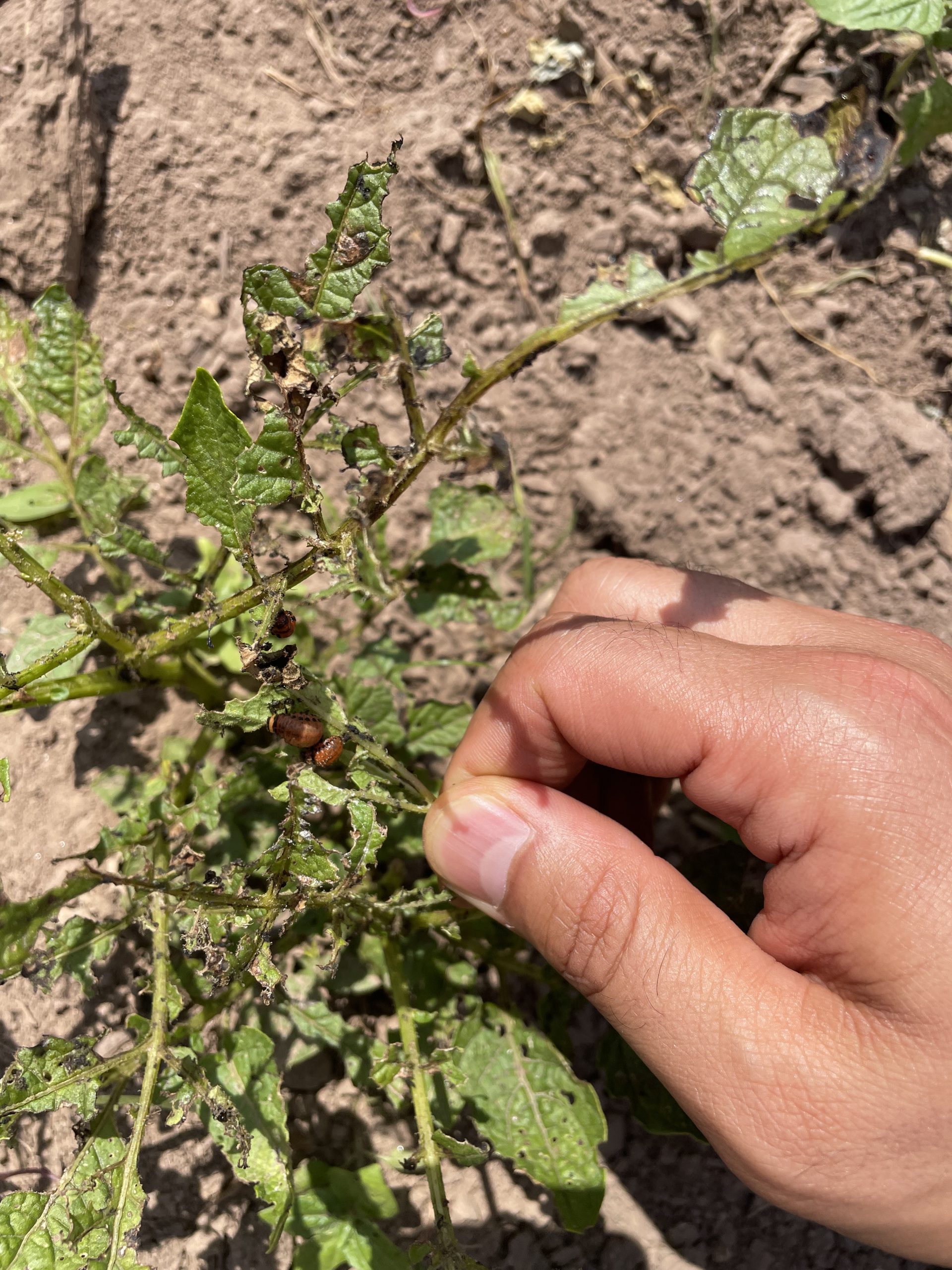
Colorado Potato Beetles (CPB) adults are starting to emerge from their overwintering sites, as well as last year’s eggplant and potato fields. It is a good idea to start scouting and looking for clusters of yellow eggs on the undersides of leaves and to get ready to treat when larvae begin to hatch.
Integrated pest management strategies can reduce the threat of CPB populations. CPB adults are poor flyers and primarily walk from their overwintering sites into new host crops. Cultural controls like crop rotation and physical barriers including trench traps surrounding fields, early-planted trap crops, and mulching beds with straw can significantly delay and reduce infestation.
CPB eggs look similar to lady beetle eggs, although lady beetle eggs tend to be lighter yellow and slightly smaller (~1mm), compared to CPB eggs that are orange and slightly larger (~1.8mm). If you see lady beetles around your potato or eggplant crop while scouting for CPB eggs, keep this distinction in mind. It is important to preserve the eggs of natural CPB enemies which include the twelve-spotted lady beetle.
Do not try to kill every CPB as crops such as potatoes can withstand 15% defoliation without impacting crop yield. This defoliation percentage even increases later in the season. Use action thresholds to determine if chemical intervention is necessary. CPB can become resistant to any chemical it is exposed to continuously for six generations. It is known to have developed resistance to multiple classes of insecticides. See the New England Vegetable Management Guide website for more information on current spray recommendations.
Striped Cucumber Beetles
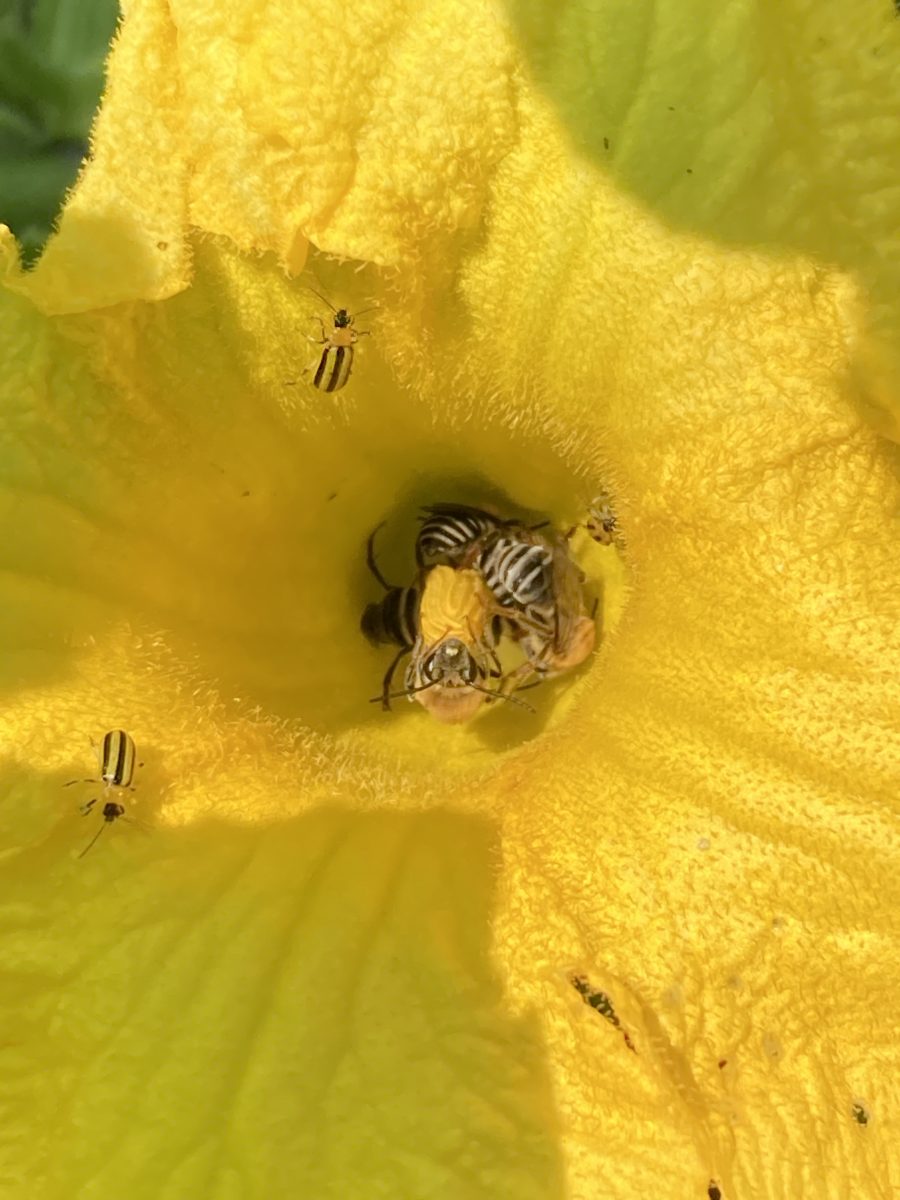
Striped Cucumber Beetles (SCB) pose a threat to cucumber, melon, summer squash, winter squash, and pumpkin crops. Adults primarily overwinter in field edges near last year’s crop, with a small proportion remaining in the field. High tunnel and greenhouse cucumbers draw beetles first, followed by early field crops.
Feeding damage from SCB is widespread. Adult feeding damages cotyledons, leaves, and wounds and scars the base of the stem. Stem wounds allow entry of soil-borne pathogens. Once flowering begins, beetles congregate in flowers. Adults may feed directly on fruit in high numbers, causing pits and scars. Larval root feeding, hidden but important, reduces plant vigor and yield. SCB are also a vector for devastating diseases like bacterial wilt and squash mosaic virus. Non-infected beetles can become infected from feeding on an infected plant.
Scout twice per week from emergence to 3-leaf stage, then continue to scout weekly. The economic threshold depends on the crop. Less wilt-susceptible crops (butternut, watermelon, most pumpkins) will tolerate 1 or 2 beetles per plant without yield losses. Spray within 24 hours after the threshold is reached. Early control will also be a benefit to the plants and pollinators. The most effective OMRI-listed material ar pyrethrins (e.g. Pyganic). Small plants can also be protected using kaolin clay (e.g. Surround), which needs to be reapplied to protect new growth. For more control measures, please consult the New England Vegetable Management Guide.
Aphids on Greenhouse and High Tunnel Crops
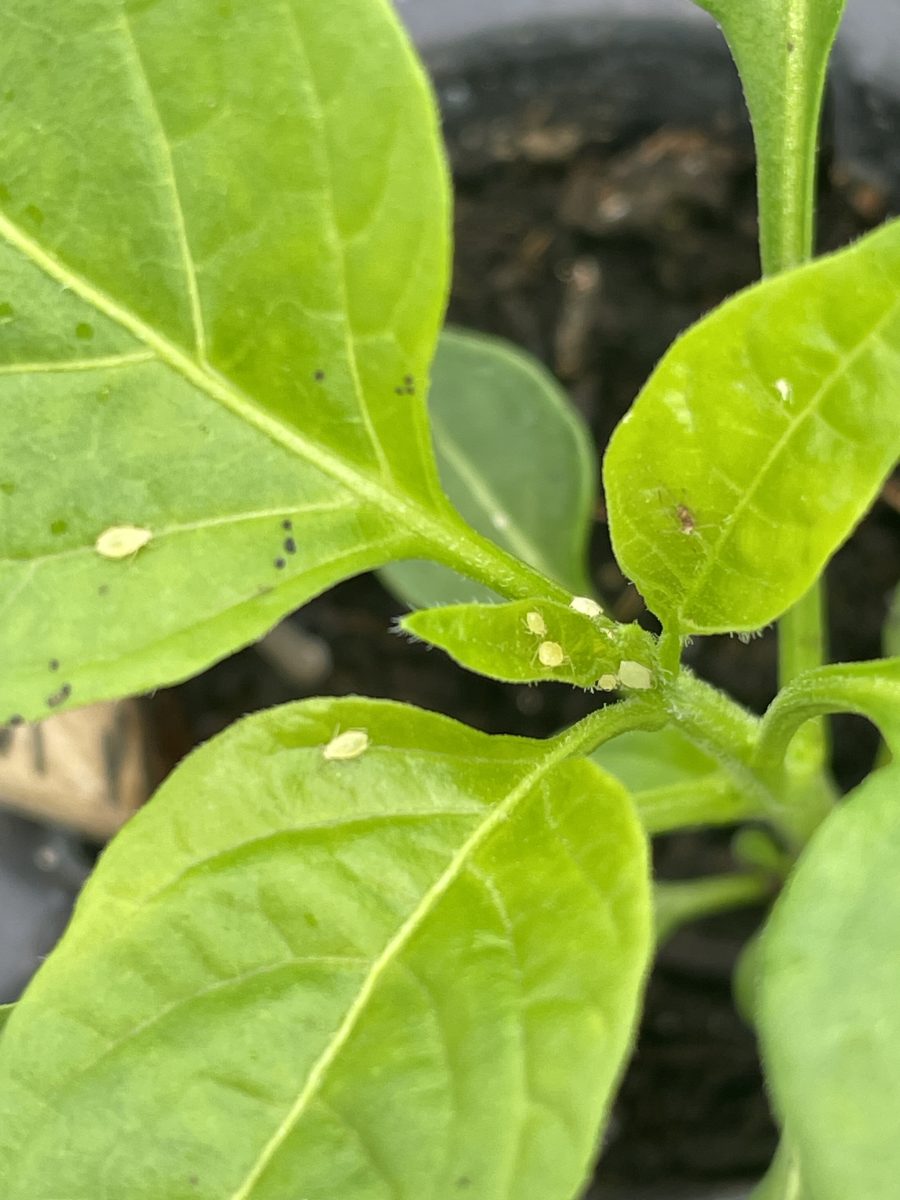
While there are many species of aphids that target different hosts, generally speaking, aphids feed by inserting their stylet-like, sucking mouth parts directly into the phloem and removing plant sap. Many aphids populating and feeding off one plant will stunt its growth and can cause curling and twisting of young leaves. Some aphids also transmit viral plant diseases as they feed. A sugary plant sap known as “honeydew” is excreted as their waste. This can attract ants and promote black fungi called sooty mold.
Most of the aphids found in greenhouses reproduce asexually. Unmated adult females give birth to live nymphs, all of which are also female. An adult female may live for up to one month, giving birth to 60 - 100 aphid nymphs. They mature quickly, in as little as 7-10 days, making it possible for populations to increase rapidly. This is especially true in greenhouses and high tunnels where natural predators might not be present.
Regular, weekly scouting is important to detect aphids early and before populations explode. Conduct random plant inspections as you scout for wingless aphid nymphs. Look for the whitish cast skins and honeydew on plants, especially Cole crops, leafy greens, peppers, and eggplant.
Maintaining a weed-free greenhouse or high tunnel will help with control as weeds under greenhouse benches or along the edges of the structure are often aphid-infested and lead to recurring aphid problems. Excess nitrogen in beds also promotes lush plant growth and creates soft plant tissues that are favorable to aphid development. Thoroughly inspect all incoming plants and spot treat as necessary.
Parasitic wasps are one of the best biological controls as they kill their host (aphid) as they grow and mature. This is often more effective than other natural predators such as green lacewing and ladybugs. However, these parasitoids are host specific so be sure to properly identify the type of aphid infestation before purchasing. If aphids are abundant then you must reduce their numbers before releasing natural enemies to make the population more manageable.
Chemical options for aphids and other greenhouse pests can be found on the New England Vegetable Management Guide website.
Continue to be on the lookout
The following pests that were covered in the previous pest alerts and are still relevant in current conditions:
- Flea Beetles
- Cabbage Root Maggots
- Thrips
- Mites
Upcoming Events & Opportunities
Caterpillar Tunnel Build
Solid Ground Skill Share
May 31st, 2026, 9AM - 1PM
Hillyndale Road Farm, Mansfield, CT
Work alongside fellow growers as we go from bare ground to finished tunnel — discussing everything from choosing the right site and orienting your tunnel, to driving hoops, securing plastic, and troubleshooting along the way. You'll leave with real skills, practical know-how, and new connections in your farming community. Lunch included!
Small Farms Innovation Project
Financial and Technical Support for Tools, Infrastructure, and Environmental Impact Ideas
Submissions due May 31st, 2026
The Small Farms Innovation Project, put forward by the UConn Engineering Department in partnership with CT RC&D and NCTFA, is looking for farmers interested in problem-solving or prototyping their innovative farm ideas by teaming up with engineering students. Participation and supply stipends available for accepted farmers.
Vegetable IPM Field Workshop
Tuesday, July 7th, 2026
3:30pm to 6:30pm
UConn Plant Science Research and Education Facility
This free workshop, led by UConn specialists, covers a range of agricultural topics and will include a cover crop and soil sampling demonstration, IPM monitoring using the NEWA system, update on squash variety trials and cucumber beetle management, hands-on white grub identification training, and report on sweet corn fertilizer trials. Pesticide recertification credits in PA and 1A categories are pending approval.
Save These Dates!

2026 New England Vegetable & Fruit Conference
December 15, 16, 17, 2026
Manchester, New Hampshire

2027 UConn Extension Vegetable and Small Fruit Growers Conference
Tuesday, January 12th, 2027
UConn Student Union, Storrs, CT
Stay in touch with us
- Share what you see: We're here to assist with identification, management strategies, and guidance on best practices. Send us a photo/message via iMessage at 959-929-1031.
- Facebook Group: UConn Extension moderates a private Facebook group specifically for commercial vegetable producers. It is a space to share photos of insects and diseases you find in your fields, ask questions, share ideas, and stay engaged with growers across the state.
Join the "UConn Extension - Vegetable IPM" Facebook Group - Schedule a consultation: Would you benefit from meeting with an Extension Specialist at your farm to provide insight on pest or disease identification, management strategies, and more? If so, please contact our Vegetable Extension Specialist, Shuresh Ghimire, to setup a farm visit. Contact him at shuresh.ghimire@uconn.edu or 860-870-6933.
Contact Information
Shuresh Ghimire, Vegetable Extension Specialist: shuresh.ghimire@uconn.edu
Nicole Davidow, Vegetable Extension Outreach Assistant: nicole.davidow@uconn.edu
Vegetable IPM Office Phone Number:
860-870-6933
Vegetable IPM Cell Phone Number:
959-929-1031 (feel free to text/iMessage photos)
Any reference to commercial products, trade or brand names is for information only, and no endorsement or approval is intended. Always read the label before using any pesticide. The label is the legal document for product use. Disregard any information if it is in conflict with the label. UConn Extension does not guarantee or warrant the standard of any product referenced or imply approval of the product to the exclusion of others which also may be available. The University of Connecticut, UConn Extension, College of Agriculture, Health and Natural Resources is an equal opportunity program provider.