Scouting & Observations
Upcoming Events & Opportunities
- Solid Ground Farmland Seeking Skill Share
- Ground Covers and Mulches for Small Scale Urban Producers
- Small-Scale Poultry Processing Webinar
- UConn Extension Diversified Livestock Conference
- FSMA Produce Safety Rule/PSA Grower Training Course
- Small Farms Innovation Project
Allium Leafminer
The first flight of overwintering populations of Allium leafminers is expected to start next week. The second flight does not typically begin until September and extends into early October.
According to lab and field-based research at Penn State University, the best prediction for the emergence of adult ALM is based on the accumulation of 350 growing degree days (GDD), at GDD base temperature of 1°C starting January 1. For predicting site-specific adult emergence, weather data from NEWA (Network for Environment Weather Applications) can be extracted and calculated for the site. For April 20th the forecasted GDD at 1°C base is 352 in Storrs and 373 in Bridgeport.
Allium crops, including leek, onion, shallot, chives, garlic, and green onion are susceptible to this pest. Some species of wild onion and ornamental alliums may be hosts as well, but the full host range is currently unknown.
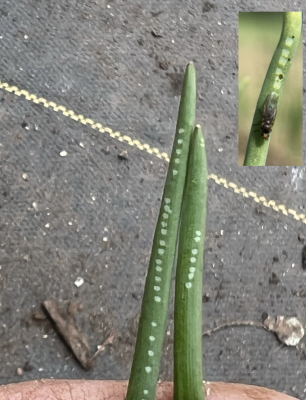
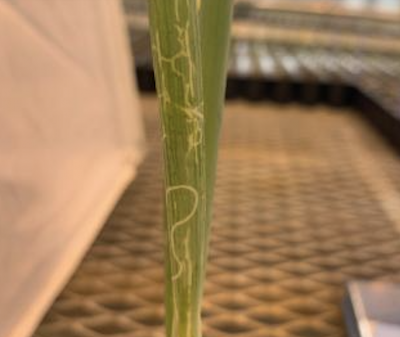
Adults lay eggs in the top of an allium leaf making punctures. Scout for characteristic oviposition marks, as displayed in the image on the right.
The larva mine the leaves, creating tunnels of damage as they eat. These tunnels provide good entryways for fungal and bacterial pathogens to cause more damage to the plant. Larva will move down to the bulb, where they pupate either in the plant or drop into the soil.
The removal of infected host plants and other allium residues from earlier harvested alliums is an important practice for reducing potential outbreaks in fall allium crops. Insect exclusion netting or other types of row covers can effectively exclude ALM flies if securely applied before flight begins. Reflective mulch can reduce infestation levels, but is unlikely to provide enough protection to avoid economic damage. Foliar chemical applications have also been shown to be effective for reducing ALM damage. Two or three well-timed applications of an insecticide should provide an acceptable level of ALM control as long as the first application is 2- 3 weeks after initial detection of ALM flies and subsequent sprays are timed at 1–2-week intervals. Examples of highly effective insecticides applied as a foliar spray include dinotefuran (e.g., Scorpion), spinetoram (Radiant) and cyantraniliprole (Exirel). One OMRI- labeled option that works well is spinosad (Entrust). Other insecticides such as abamectin (Agri-Mek) and cyromazine (Trigard) can also help reduce ALM densities.
Cabbage Root Maggot
Cabbage root maggot is a pest of all types of brassicas, but is particularly damaging in cabbage, broccoli, Chinese cabbage, radish, turnips, and rutabaga. The first flight in April and May damages early spring brassicas, while a late summer flight from mid-August into September primarily injures fall root crops. Flies overwinter as pupae near roots of fall brassica crops and weeds.
Adult flies become active at about 288 growing degrees days (GDD, base temperature 40°F), which occurs 1-2 weeks after forsythia starts to bloom and when yellow rocket (winter cress, Barbarea vulgaris) blooms. GDD has just crossed this limit in Bridgeport, and forecasted to reach only 364 in Storrs on April 20. Fifty percent emergence (peak flight) occurs at about 450 GDD.
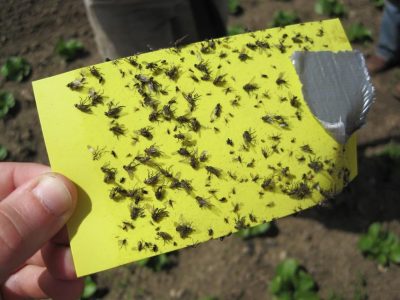
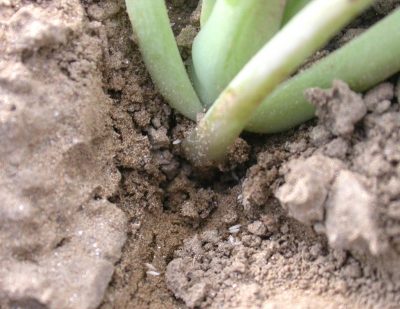
Scout transplant trays before setting out plants in the field. A pencil is a good tool to gently stir the soil at the base of the plant and look for eggs. Yellow sticky cards placed near brassicas capture adult flies. In the field, finding an average of 1egg per plant can indicate a damaging population. Damage includes wilting, leaf discoloration, and plant death in leafy and heading crops and tunneling in root crops.
Row covers will protect the crops from cabbage maggots, flea beetles, and many other pests as long as the pests are not emerging from the same location. So, crop rotation is important. Soil drenches of Coragen, Verimark, Radiant, or Entrust can control the cabbage root maggot if applied when eggs are first seen at the base of plants. Research done in Cornell University found Verimark applied as a tray drench resulted in excellent control, but directed sprays at the base of the plant were the least effective. Verimark application as a soil drench also controls brassica flea beetles. Once larvae have been feeding in roots for several weeks, chemical control is difficult. See New England Vegetable Management Guide for pesticide options and restrictions in the application. For comparison of maggot fly biology for seed corn maggot, cabbage maggot and onion maggot, see Table 1.
| Table 1. Comparison of Maggot Fly Biology (Source: UMass Extension) |
| Seed Corn Maggot | Cabbage Maggot | Onion Maggot | |
| Host | 40 different plants, large germinating seeds, seedlings (including alluim and brassica!) | Brassicas | Alliums |
| First Peak Flight | 360 GDD base 40°F | 452 GDD base 40°F | 735 GDD base 40°F |
| Adult | Small: ~ 3mm, 3 stripes on the thorax | Medium: ~5mm, 2 stripes on the thorax. | Large: ~6mm. |
| Eggs | Hatch in 2-4 days | Hatch in 7-10 days | Hatch in 2-5 days |
| Larvae (Maggot) | Active for 3 wks | Active for 2-4 wks | Active for 2-3 wks |
| Pupae | In soil for 1-2 wks before next gen adults emerge (last gen pupae overwinter) | In soil for 2-3 wks before next gen adults emerge (last gen pupae overwinter) | In soil for 3-4 wks before next gen adults emerge (last gen pupae overwinter) |
| Notes | Short, 21-day lifecycle. 3 gen per year. Usually only spring gen is damaging. | Long, 60-day lifecycle. 4 gen per year. Spring and Fall gen most damaging. | Medium, 30-day lifecycle. 3 gen per year. Usually only spring gen is damaging. |
Hardening Off Transplants Reminder
Hardening off is the gradual process of getting transplants used to outdoor conditions before planting. It helps seedlings adjust to brighter light, wind, and cooler temperatures, and reduces transplant shock.
Start a week to 10 days before transplanting. Put plants outside in a protected, lightly shaded area at first, then increase their exposure to sun and outdoor conditions each day. A cold frame works well for this.
As plants harden off:
- reduce watering somewhat to slow growth, but do not let plants wilt
- protect seedlings from strong wind
- avoid setting plants out when temperatures are too low
Be careful not to harden plants too aggressively. The goal is to toughen them, not stop growth.
- Cool-season crops exposed to very low temperatures may bolt or, in broccoli and cauliflower, button.
- Warm-season crops should be hardened under milder conditions; cold can set them back and cause problems such as catfacing in tomato.
- Tender crops such as cucumbers and melons should not be left out overnight unless temperatures stay above 50°F
- Even hardy plants can be injured if exposed to freezing temperatures before they are fully acclimated
In general, ease transplants into outdoor conditions, keep them from drying out, and avoid damaging cold.
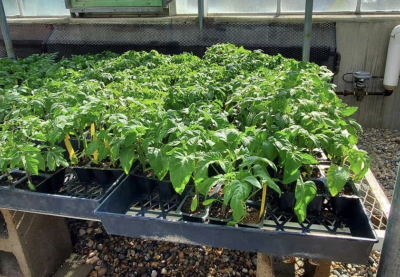
Upcoming Events & Opportunities
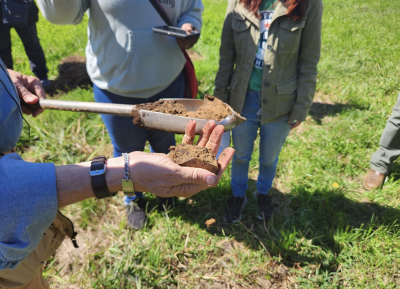
Solid Ground Skill Share for Farmland Seekers
Wednesday, April 29th
4PM to 6:30PM
Ives Farm, Cheshire
Join Solid Ground's Soil, Conservation and Land Use Consultant Kip Kolesinskas for a a farm tour and demonstration of how to go about assessing farmland using key areas of interest such as property history, soil health, infrastructure, water features.
The event will include a walk of the property, overview of farmland considerations, introductions to service providers, and more. Dinner will be provided. Cost to attend: $15.
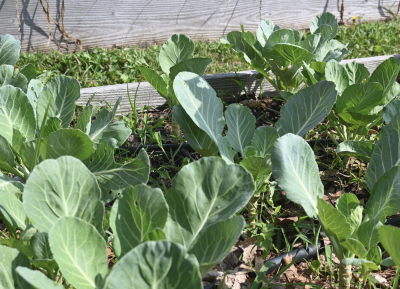
Ground Covers and Mulches for Small Scale Urban Producers
Thursday, April 30th
6:30PM to 7:30PM
Virtual Event
Hear from Shuresh Ghimire, UConn Extension Vegetable Specialist, on how ground covers and mulches can improve soil health, conserve moisture, suppress weeds, and boost productivity in small urban growing spaces.
This webinar will highlight practical, space-efficient strategies for using mulches and living ground covers in raised beds, containers, and compact garden plots—helping urban producers build healthier and more sustainable growing systems.
Small-Scale Poultry Processing Webinar
Thursday, May 7th
3:00PM to 4:00PM
Virtual Event
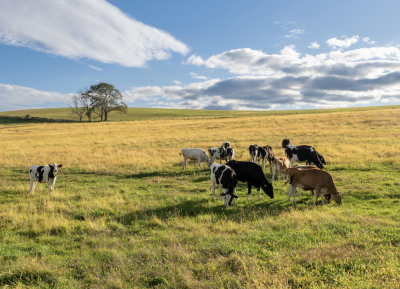
Many people are interested in opening a poultry processing facility to meet this need, but many things need to be considered before proceeding to do so. Dr. Indu Upadhyaya will discuss common issues and important considerations for small-scale processing.
UConn Extension Diversified Livestock Conference
Thursday, May 21st
9:00AM to 5:00PM
Tolland Agricultural Center
In partnership with Berkshire Agricultural Ventures, please join us for the first UConn Extension Diversified Livestock Conference! The day will feature presentations on meat processing, prescribed grazing, small-scale poultry production, sheep farming in CT, and a deep dive into product taste testing.
FSMA Produce Safety Rule/Produce Safety Alliance (PSA) Approved Grower Training Course
May 28th and 29th, 2026
9:00AM to 3:00PM
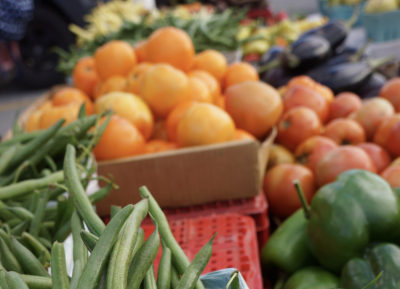
The Produce Safety Alliance (PSA) Grower Training Course has been designed to provide a foundation of Good Agricultural Practices knowledge that includes emphasis on co-management of food safety and environmental management goals, while outlining the requirements of the Food Safety Modernization Act (FSMA) Produce Safety Rule.
Cost to attend: $50. Technology required: Computer software for ZOOM, audio, video, and internet.
Small Farms Innovation Project - Financial and Technical Support for Tools, Infrastructure, and Environmental Impact Ideas
Submissions due May 31st, 2026
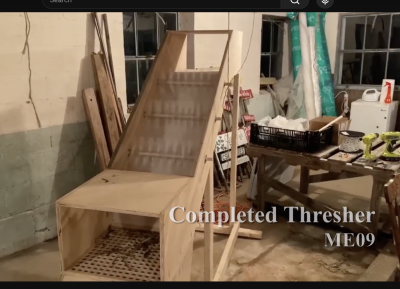
The Small Farms Innovation Project, put forward by the UConn Engineering Department in partnership with CT RC&D and NCTFA, is gearing up for its third year and is looking for farmers interested in problem-solving or prototyping their innovative farm ideas by teaming up with engineering students. Participation and supply stipends available for accepted farmers.
Save the Date!
UConn IPM Field Day
Tuesday, July 7th, 2026
3:30PM to 6:30PM
UConn Research Farm
2026 New England Vegetable & Fruit Conference
December 15, 16, 17, 2026
Manchester, New Hampshire
2027 UConn Extension Vegetable and Small Fruit Growers Conference
Tuesday, January 12th, 2027
UConn Student Union, Storrs, CT
Stay in touch with us
- Share what you see: We're here to assist with identification, management strategies, and guidance on best practices. Send us a photo/message via iMessage at 959-929-1031.
- Facebook Group: UConn Extension moderates a private Facebook group specifically for commercial vegetable producers. It is a space to share photos of insects and diseases you find in your fields, ask questions, share ideas, and stay engaged with growers across the state.
Join the "UConn Extension - Vegetable IPM" Facebook Group - Schedule a consultation: Would you benefit from meeting with an Extension Specialist at your farm to provide insight on pest or disease identification, management strategies, and more? If so, please contact our Vegetable Extension Specialist, Shuresh Ghimire, to setup a farm visit. Contact him at shuresh.ghimire@uconn.edu or 860-870-6933.
Contact Information
Shuresh Ghimire, Vegetable Extension Specialist: shuresh.ghimire@uconn.edu
Nicole Davidow, Vegetable Extension Outreach Assistant: nicole.davidow@uconn.edu
Vegetable IPM Office Phone Number:
860-870-6933
Vegetable IPM Cell Phone Number:
959-929-1031 (feel free to text/iMessage photos)
Any reference to commercial products, trade or brand names is for information only, and no endorsement or approval is intended. Always read the label before using any pesticide. The label is the legal document for product use. Disregard any information if it is in conflict with the label. UConn Extension does not guarantee or warrant the standard of any product referenced or imply approval of the product to the exclusion of others which also may be available. The University of Connecticut, UConn Extension, College of Agriculture, Health and Natural Resources is an equal opportunity program provider.