Cutworms: Spotted, Yellow Striped, or Variegated
Author: Matthew DeBacco
Reviewed by: Shuresh Ghimire, Ph.D.
Associate Extension Educator
Extension Vegetable Specialist
Date of Publication: June 29, 2026
Introduction
The tarnished plant bug (TPB), Lygus lineolaris, feeds on plant sap using a piercing and sucking mouth part on an extensive host range. It can be found feeding on flowers, stems and fruits which makes it an economically important insect for growers to be scouting for and controlling when found.
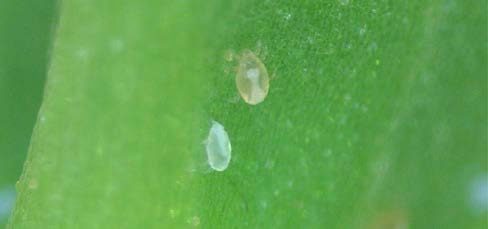
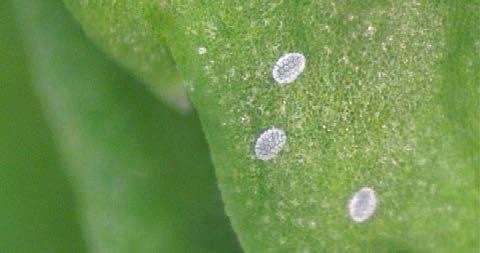
Symptoms
Tarnish plant bugs will cause indentations, bumps or yellowing discoloration of the flesh at the site of the physical damage from the mouthparts piercing the skin. Feeding on the stem can cause scaring and distortion, which is most common on pepper or basil and less likely to be seen on tomatoes. Lastly, feeding damage to the flowers can cause them to drop or abort.
Host Crops:
Wide host range
- Vegetables: Tomatoes, peppers, eggplants, potatoes, celery, lettuce, broccoli, cauliflower, snap beans, spinach,
- Fruit Crops: Strawberries, apples, peaches, pears, cherries, and raspberries.
- Weed Hosts: Wild carrots, redroot pigweed, lambsquarters, mustards, goldenrod, mullein, and dandelion.
Identification of Insects
Adults: About ¼ inch (5 mm) long, oval-shaped, and bronze to dark brown with a shiny appearance. Look for a distinctive triangular pattern on their backs, formed by overlapping wing covers, with white marks or lines behind the head. Adults are highly mobile, flying in short bursts, and have long, four or five segmented antennae and large compound eyes. Their piercing sucking mouthparts are held beneath the body when not in use.
Nymphs: Small, wingless, and green, with younger nymphs appearing yellowish. Older nymphs develop black spots on their backs which can move quickly when disturbed.
Not to Be Confused with:
Stink Bugs: Note that the damage on the fruit can resemble a stink bug, however there will be a lack of white pithy area located beneath the skin that is common with stink bugs.
Aphids: The nymphs can be similar in size, but will move quickly once disturbed and lack the cornicles “tailpipes” on the abdomen unlike aphids.
Management
Monitoring can be difficult due to the mobility of the insects and ability to hide in the foliage. Sticky traps placed above the canopy and sweep nets can help with detecting adults. For the nymphs tapping foliage over a clean flat sheet of white paper can be helpful.
Cultural
Remove weeds from with-in and around the perimeter of the field.
Plant rotations can be difficult due to the wide host range.
If planting tomatoes alfalfa or beans can be used as a trap crop since these are preferred over the tomato plants.
Biological
Natural enemies like the parasitic wasp Peristenus digoneutis, which can reduce TPB populations by up to 50% in some areas, though it may not fully prevent crop damage.
Mechanical Approaches
Row covers can protect young tomato plants especially during the egg laying and nymph emergence times of year which is spring and early summer in New England with only 1 or 2 generations likely.
Chemical Control
Consult New England Vegetable Management Guide for specific crop insect management section.
References
Center for Agriculture, Food and the Environment. (n.d.). Tarnished plant bug. University of Massachusetts Amherst. https://www.umass.edu/agriculture-food-environment/vegetable/fact-sheets/tarnished-plant-bug
Center for Agriculture, Food and the Environment. (n.d.). Tarnished plant bug in field-grown cut flowers. University of Massachusetts Amherst. https://www.umass.edu/agriculture-food-environment/greenhouse-floriculture/fact-sheets/tarnished-plant-bug-field-grown-cut-flowers
Cornell Cooperative Extension. (2014). Tarnished plant bug. Cornell University. https://ecommons.cornell.edu/server/api/core/bitstreams/f98ae9d5-8324-474a-a254-41370a2f85aa/content
Ontario Ministry of Agriculture, Food and Rural Affairs. (n.d.). Tarnished plant bug damage in vegetable crops. Government of Ontario. https://www.ontario.ca/page/tarnished-plant-bug-damage-vegetable-crops
Penn State Extension. (n.d.). Tarnished plant bug. Pennsylvania State University. https://extension.psu.edu/tarnished-plant-bug
University of Florida IFAS Extension. (n.d.). Tarnished plant bug, Lygus lineolaris (Palisot de Beauvois) (Insecta: Hemiptera: Miridae). University of Florida. https://edis.ifas.ufl.edu/publication/IN513
University of Maine Cooperative Extension. (n.d.). Tarnished plant bug. University of Maine. https://extension.umaine.edu/home-and-garden-ipm/fact-sheets/common-name-listing/tarnished-plant-bug/
University of New Hampshire Extension. (n.d.). Tarnished plant bug fact sheet. University of New Hampshire. https://extension.unh.edu/resource/tarnished-plant-bug-fact-sheet
Consult and follow pesticide labels for registered uses. To avoid potential phytotoxicity problems, spot test before widespread use. No discrimination is intended for any products not listed.
The information in this document is for educational purposes only. The recommendations contained are based on the best available knowledge at the time of publication. Any reference to commercial products, trade or brand names is for information only, and no endorsement or approval is intended. UConn Extension does not guarantee or warrant the standard of any product referenced or imply approval of the product to the exclusion of others which also may be available. The University of Connecticut, UConn Extension, College of Agriculture, Health and Natural Resources is an equal opportunity program provider and employer.