Tomato Phosphorous Deficiency
Author: Matthew DeBacco
Reviewed by: Shuresh Ghimire, Ph.D.
Associate Extension Educator
Extension Vegetable Specialist
Date of Publication: July 1, 2026
Introduction
Phosphorus (P) is a primary macronutrient essential for energy transfer, root development, flowering, and fruit production in tomatoes. While this is a key component of photosynthesis and protein synthesis, it can often be miss diagnosed as the cause for slow growth and poor fruit quality that is also associated with cold temperatures.
Symptoms
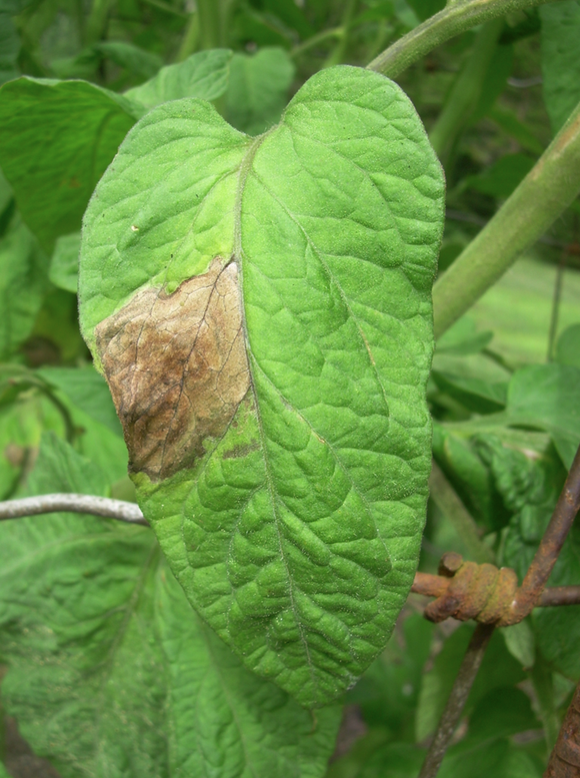
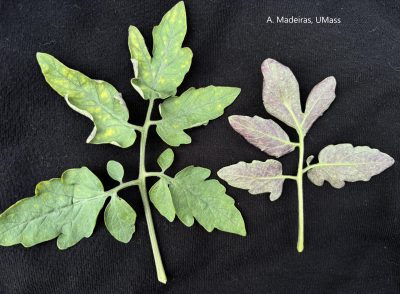
Typically, lower leaves and stems will show a dark green or purple-reddish discoloration which may be more prevalent on the undersides and veins of the plant, which indicates increased levels of anthocyanins. There will also be reduced root growth, delayed flowering, and premature bud drop.
Identification of Disease
A visual inspection is typically what is done first due to the dramatic change in coloration. However, growers need to also take into consideration other factors such as temperature and potential changes in environmental conditions.
True confirmation of a phosphorus deficiency would be confirmed with a soil and/or tissue test.
Not to Be Confused with:
Cold Soil Temperature- This is the most common look-a-like and has similar visual symptoms to a phosphorus deficiency.
Transplant Shock- Often times the plants can experience a large temperature change which can cause a stress response from the tomato plants resulting in a purple coloration to the leaves.
Prevention
Cultural
Test soil and amend for both pH and phosphorus levels.
Adding a phosphorus rich fertilizer such as rock phosphate or ammonium phosphate can be a method of increasing phosphorus levels, but be aware that these can take some time to breakdown to show up on a follow-up soil test.
Adjust soil pH to the 6.5 to 6.8 range to ensure high nutrient availability.
Animal manures are typically high in phosphorus so watch the number of additions of these to the soil phosphorus levels.
References
Aggie-Horticulture. (n.d.). Phosphorus deficiency. Texas A&M AgriLife Extension. Retrieved June 28, 2025, from https://aggie-horticulture.tamu.edu/vegetable/problem-solvers/tomato-problem-solver/leaves/phosphorus-deficiency/
Colorado State University Extension. (n.d.). Recognizing tomato problems. Retrieved June 28, 2025, from https://extension.colostate.edu/topic-areas/yard-garden/recognizing-tomato-problems-2-949/
Haifa Group. (n.d.). Tomato nutrient deficiency. Retrieved June 28, 2025, from https://www.haifa-group.com/online-expert/deficiency-pro/tomato-nutrient-deficiency
Missouri Botanical Garden. (n.d.). Nutrient deficiencies in tomatoes. Retrieved June 28, 2025, from https://www.missouribotanicalgarden.org/gardens-gardening/your-garden/help-for-the-home-gardener/advice-tips-resources/insects-pests-and-problems/environmental/nutrient-deficiencies-in-tomatoes
University of Massachusetts Extension. Greenhouse Updates: April 16, 2025. Retrieved July 1, 2026, from https://www.umass.edu/agriculture-food-environment/greenhouse-floriculture/greenhouse-updates-april-16-2025
Yara United States. (n.d.). Phosphorus deficiency - tomato. Retrieved June 28, 2025, from https://www.yara.us/crop-nutrition/tomato/nutrient-deficiencies/phosphorus-deficiency-tomato/
Consult and follow pesticide labels for registered uses. To avoid potential phytotoxicity problems, spot test before widespread use. No discrimination is intended for any products not listed.
The information in this document is for educational purposes only. The recommendations contained are based on the best available knowledge at the time of publication. Any reference to commercial products, trade or brand names is for information only, and no endorsement or approval is intended. UConn Extension does not guarantee or warrant the standard of any product referenced or imply approval of the product to the exclusion of others which also may be available. The University of Connecticut, UConn Extension, College of Agriculture, Health and Natural Resources is an equal opportunity program provider and employer.