Introduction
Root rot diseases caused by Pythium, Phytophthora, Rhizoctonia, and Thielaviopsis may attack a wide range of greenhouse crops. All are common inhabitants of field soil and form various survival structures enabling them to persist in soil, dust or crop debris in the greenhouse.
Scouting
General above ground symptoms of crown and root rots include stunting, wilting, yellowing of leaves. Regular inspection of root systems is needed to detect any early symptoms of root damage. White, well-branched roots are indications of a healthy root system.
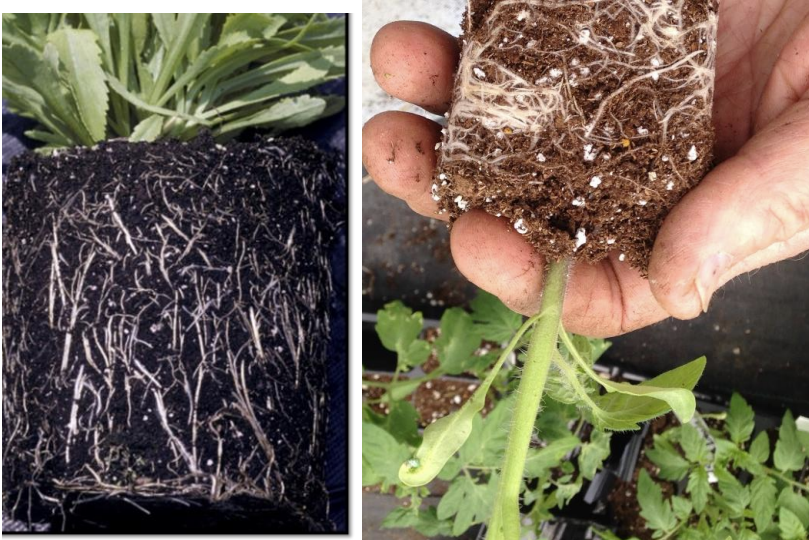
In addition to root rot pathogens, high soluble salts, ammonium toxicity, excessive moisture and lack of oxygen damage roots. To confirm the specific pathogen and appropriate fungicide program, plants need to be submitted to a plant diagnostic laboratory.
Pythium Root Rot
Pythium causes damping off, crown and root rots. Geraniums, snapdragons, Easter Lilies, mums and poinsettias are especially susceptible to this water mold. Excessive soil moisture, high fertilization rates, and temperatures that are not favorable for plant growth favor Pythium root rot. Some species of Pythium do well at temperatures greater than 95◦F whereas other Pythium species do well at less than 60◦F. Pythium generally has a broad host range and can survive as oospores or overwintering chlamydospores in dust or soil particles on carried over pots, on greenhouse floors and benches.
This is why it is important to keep hose ends off the greenhouse floor.
Adult shore flies can introduce disease inoculum into the growing media and fungus gnat larvae ingest and excrete oospores in their frass or droppings than remain viable. However, in a commercial greenhouse setting, it is not known
how much fungus gnats or shore flies contribute to disease spread.
Symptoms of infection include root and stem rots, yellowing or wilting of lower leaves, and water-soaked roots. The outer root easily sloughs off when pulled with fingertips, leaving the inner strand or cortex of the root (rat-tail symptom).
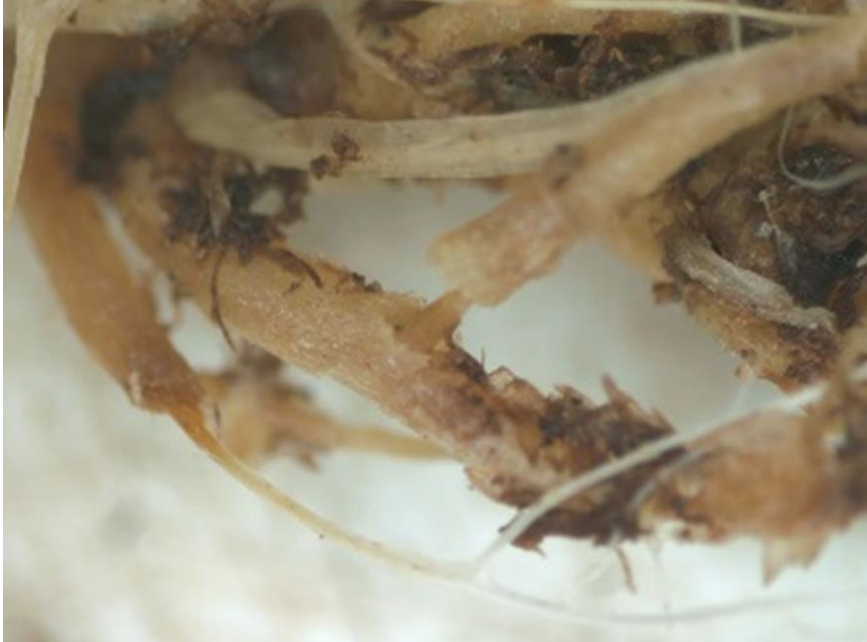
Management includes the use of a well-drained growing mix, regular monitoring of soluble salts, avoiding excessive ammonium levels and careful attention to greenhouse sanitation. Growers may use preventive biological fungicides in combination with proper cultural practices and good sanitation. Some strains of Pythium are insensitive to mefenoxam (Subdue Maxx). To avoid the development of resistance, rotate among the different active ingredients available according to FRAC code.
Phytophthora Root and Stem Rot
Phytophthora causes root and crown rots and foliar blights. Excessive moisture and fertility levels favor this water mold. The species of Phytophthora tend to be more aggressive than Pythium, more likely to be host specific and less commonly occurring in the greenhouse. The water molds Pythium andPhytophthora are favored by excessive moisture.
Symptoms include brownish-black cankers at the soil line and brown, diseased roots. In some cases, plant crowns at first infected. Some species of Phytophthora have marrow host ranges and others have wider host ranges.
Rhizoctonia Root Rot
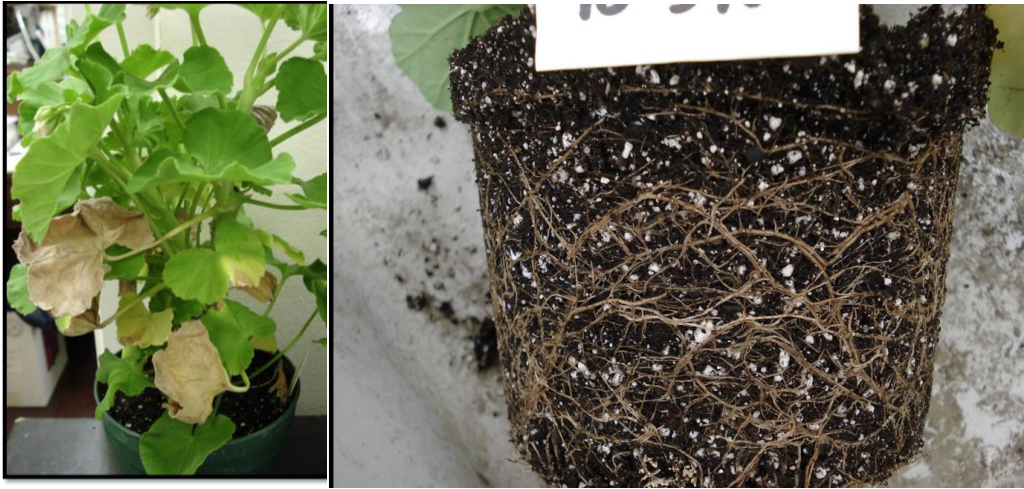
Rhizoctonia has a very wide host range and causes damping off, root, crown, stem rot, and web blight. Dust and soil mix from greenhouse walkways, floors and beds can be sources of this disease. Media that is evenly moist and warm (62◦ F-78◦ F) favors Rhizoctonia.
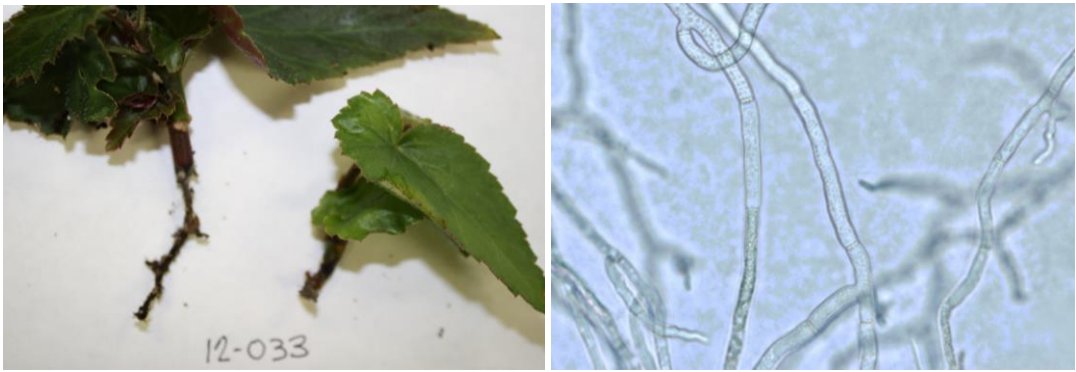
Symptoms include constricted stems with a sunken, wiry appearance (also known as wire stem). When cutting rot, there is a brown discoloration. Crown and stem rots develop with longitudinal cracking and have a drier appearance than Pythium root rots. Web blight develops during very humid conditions when plants are spaced very close together.
Thielaviopsis root rot
Thielaviopsis basicola causes black root rot. This root rot disease is most severe at cool temperatures (55◦F- 62◦F) and wet soils. Due to its highly resistant overwintering spores, black root rot can be difficult to eradicate from a greenhouse with a history of the disease.
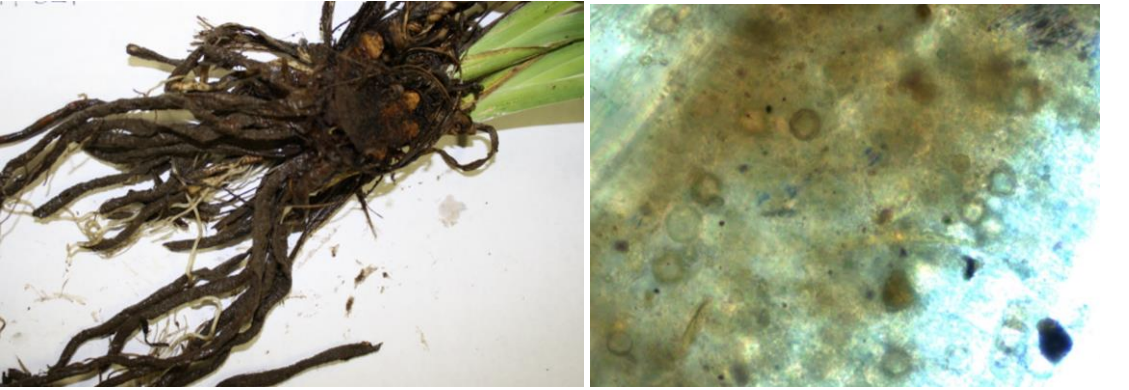
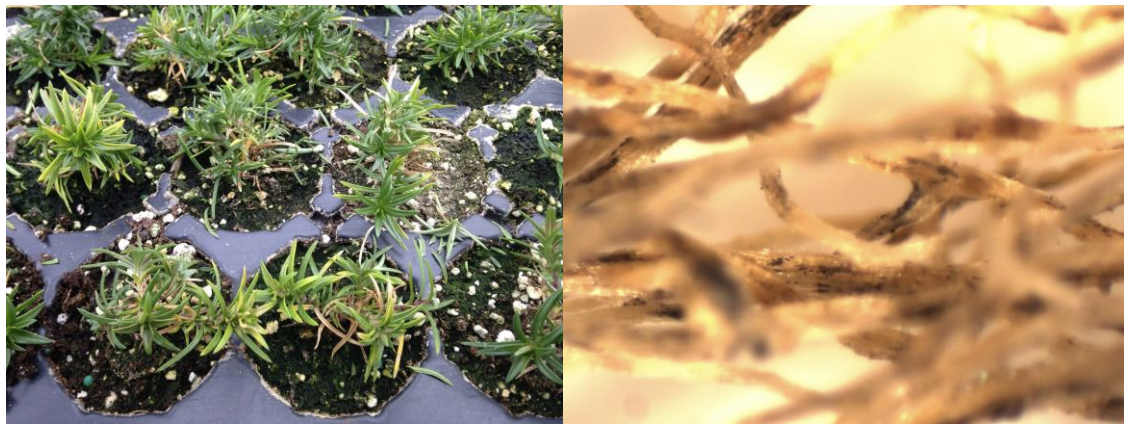
Aboveground symptoms include stunting, chlorosis and plant dieback. Roots become black and rotted, but are not as water-soaked as occur with Pythium infections. Plants looks yellow and off-color resembling a nitrogen deficiency, but symptoms are more random than with a uniform nutritional deficiency. Pansy, viola, vinca, petunia and calibrachoa are especially susceptible.
Wash off roots and look for black longitudinal areas and dark brown to black thick walled overwintering spores.
Management includes proper sanitation practices, growing less susceptible cultivars, growing plants at a lower pH (below 5.6 ) if they can tolerate it, and avoiding poorly drained soil mixes. Do not re-use plug trays or pots for growing the more susceptible crops. Control fungus gnats, which can help, spread this disease.
Management of Root Rot Diseases
Follow proper sanitation practices. Use a commercially available disinfectant to clean greenhouses between crops. If re-re-using pots and flats, clean and disinfect before use and avoid growing very susceptible crops with re-used pots.
Use a well-drained soilless mixes for container-grown plants. Avoid nesting trays and compacting media before use. Disinfest all flats, pots and tools. Plant healthy plugs at the proper depth. Avoid overwatering, excessive fertilizer, and planting too deeply. Use protectant biological fungicides in combination with good cultural practices. Keep hose ends off the floor.
Use appropriate fungicides in a preventive manner. To avoid the development of resistance, rotate among the different active ingredients available according to FRAC code.
Most fungicides labeled for use against Pythium and Phytophthora do not control Rhizoctonia, Thielaviopsis, and Fusarium. However, there are commercially available tank mixes containing two active ingredients in different FRAC groups that have a broader spectrum of activity.
For the latest fungicides labeled for root rot pathogens, consult the most recent edition of the New England Greenhouse Floriculture Guide: A Management Guide for Insects, Diseases, Weeds and Growth Regulators available from Northeast Greenhouse Conference and Expo.
Disclaimer for Fact Sheets: The information in this document is for educational purposes only. The recommendations
contained are based on the best available knowledge at the time of publication. Any reference to commercial products, trade or brand names is for information only, and no endorsement or approval is intended. UConn Extension does not guarantee or warrant the standard of any product referenced or imply approval of the product to the exclusion of others which also may be available. The University of Connecticut, UConn Extension, College of Agriculture, Health and Natural Resources is an equal opportunity program provider and employer.