Bacterial leaf spot is caused by Xanthomonas campestris pv. vesicatoria and is found primarily on pepper transplants grown in the greenhouse, though tomato is also a host. The target audience for this factsheet is commercial greenhouse growers.
What to look for:
- Spots begin as small, yellowish-green water-soaked spots on the youngest leaves.
- The spots progress to dark, chocolate-brown, greasy appearing lesions, especially on the tips and margins of leaves.
- At first, the spots are less than 1/4 of an inch in diameter, but often enlarge and coalesce over time.
- Severely spotted leaves appear scorched.
- As the infection progresses, leaf drop may also occur.
- Unlike spot lesions associated with fungi, bacterial leaf spots will not have concentric rings and will not leave a spore residue when swabbed with a damp tissue.
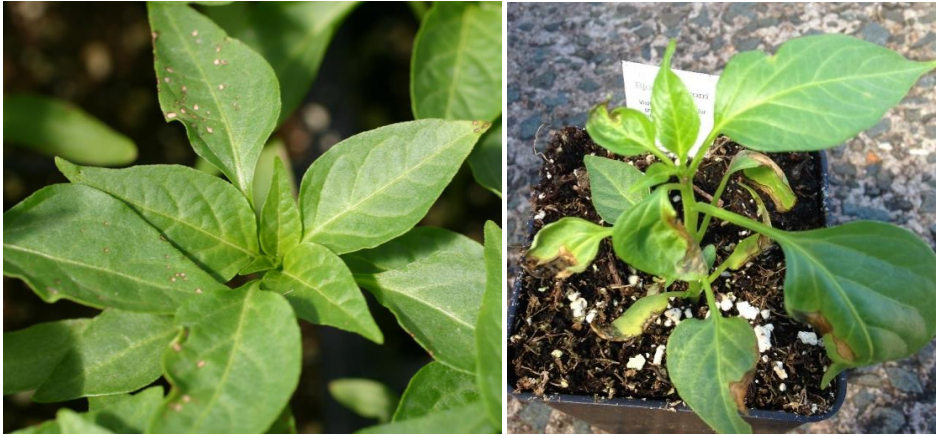
How does this disease spread?
Bacteria can be introduced on infected seeds or infected transplants purchased from another operation. The bacteria may survive within or on the outside of the pepper seed. As the seeds germinate, the seed leaves (cotyledons) become infected as they contact the infected seed coat. Xanthomonas campestris pv. vesicatoria is readily spread in propagation greenhouses, overhead watering, high relative humidity, warm temperatures, and close spacing favor the spread of the pathogen and disease development. Bacteria may also survive in crop debris in re-used plug trays.
What can you do?
- An integrated approach to bacterial leaf spot management is recommended because there are several different factors that contribute to the promotion and spread of the disease.
- Buy certified, pathogen-free seed from a reputable source. Grow your transplants in a clean, disinfected greenhouse, and use new plug trays whenever possible. If you must re-use plug trays, be sure to remove all organic matter before disinfecting. Purchase healthy seedlings from a reputable source.
- Use hot water-treated seed. Ideally, the seed should be custom-treated by the seed company. Seed companies may treat the seed upon request. However, there is a risk that germination percentages will be reduced if the hot water
treated seed crop is grown under stressful environmental conditions. You can also send seeds to a University Extension Service that can treat the seeds for you. The UConn Plant Diagnostic Laboratory is now offering hot water seed treatment for growers, and more information can be found at https://plant.lab.uconn.edu/ - Use varieties of pepper that are resistant to bacterial leaf spot whenever possible. There are many resistant varieties of bell peppers available, but there are fewer choices for resistant specialty peppers. The use of resistant varieties has been shown to be more effective at preventing bacterial leaf spot than a weekly spray program. However, there are still strains of the bacterium that can overcome known major resistance genes.
- When growing pepper transplants, water early in the morning so the leaves dry quickly. Avoid handling plants when they are wet. Avoid excessive applications of nitrogen fertilizer that promote lush, succulent growth.
- Chemical control has shown mixed efficacy. Streptomycin (e.g., Agri-Mycin 17) is labeled for greenhouse transplants, but resistant bacteria can result from repeated applications. When spraying, water splash can also spread bacterial leaf spot.
- Biological control of bacterial diseases includes the use of bacterial viruses known as bacteriophages. One example, AgriPhage (organic product), is labeled as a greenhouse seedling treatment and has been shown to be successful at
reducing disease. - If you see symptoms of bacterial leaf spot, promptly remove, and destroy infected plants and adjacent plants to prevent further infection. Avoid any unnecessary handling of plants. Clean and disinfect the greenhouse between crops.
Consult and follow pesticide labels for registered uses: local restrictions may apply. No discrimination is intended for any products not listed. If any information is inconsistent with the label, then follow the label. Consult the latest edition of the New England Vegetable Management Guide.
Disclaimer for Fact Sheets: The information in this document is for educational purposes only. The recommendations
contained are based on the best available knowledge at the time of publication. Any reference to commercial products, trade or brand names is for information only, and no endorsement or approval is intended. UConn Extension does not guarantee or warrant the standard of any product referenced or imply approval of the product to the exclusion of others which also may be available. The University of Connecticut, UConn Extension, College of Agriculture, Health and Natural Resources is an equal opportunity program provider and employer.