One of the most frequent question I receive is whether the plant injury observed is due to possible phytotoxicity (spray damage) from pesticides (insecticides, fungicides, plant growth regulators and surfactants). Injury may occur from a direct spray application or spray drift.
Spray damage is a greater concern in an enclosed greenhouse environment where plants are growing more rapidly than outdoors. Plant tissue is more tender and succulent, making plants more susceptible to potential spray damage. This damage may be more severe during certain environmental conditions or when plants are under stress. Spray damage is also more of a concern on ornamental plants, especially on tender blooms or poinsettia bracts right before sale. The target audience of this fact sheet is commercial greenhouse growers.
Some of the symptoms of possible spray damage include:
- Spots on or at the leaf tip.
- Leaf margins that are pitted.
- Distorted leaves showing curling, crinkling, or cupping.
- Symptoms may occur on leaves of the same age.
- Plants may be stunted when there is an overdose of a plant growth regulator or abnormal growth can occur.
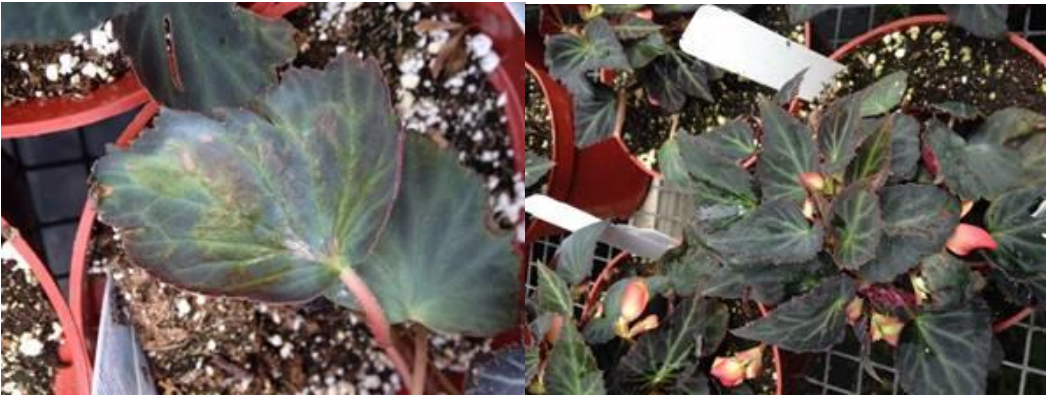
Some questions to ask yourself
- Look at the pattern of damage.
- Is it a spray damage pattern? Plants closer to the sprayer may have more damage and residue than plants further away. Spray may pool at the base of the leaves. Did the damage occur “overnight”? Spray damage may take several days to a week to appear but will tend to appear all at once.
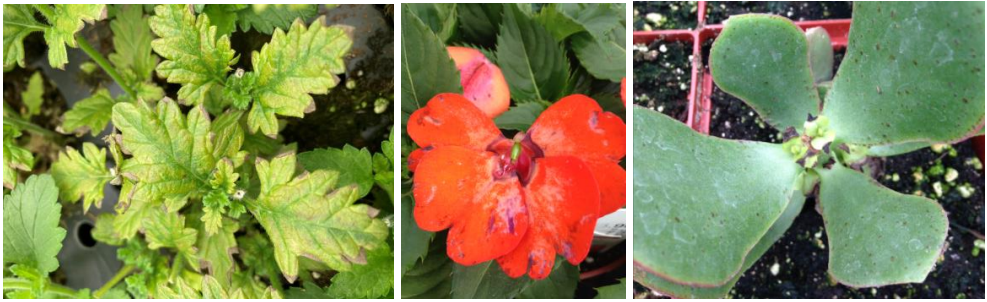
Unlike a disease caused by living organisms that tends to occur at random and develop over time, spray damage often occurs at once, due to a singular event.
As plants grow, the damage will remain on the oldest leaves and the new plant growth will appear healthy. Abiotic disorders tend to follow a regular pattern whereas diseases caused by living organisms tend to be random.
Some Tips on Preventing Phytotoxicity (Plant Injury) From Pesticide Applications
- Always read labels very carefully. The label is the law.
- The site must be on the label, and many labels for ornamental plants are very broad and identify greenhouse as the site. The pesticide may be labeled for use on ornamental plants without specific species or cultivars listed.
- Read labels carefully for all plant safety information. Pesticide labels usually mention sensitive plant species and cultivars. However, due to the continued introduction of new species and cultivars, these listings are not complete. The sensitivity of unlisted plants to the product is unknown
- Before using a pesticide that is new to you or that you may have used before but not on the specific plant or cultivar you are interested in treating, test it first on a few plants. Treat similar age, cultivar and planting date and hold for at least 7 to 10 days to see if any phytotoxicity symptoms develop before widespread use. Leave a few plants of the same crop untreated, as a control.
- Pay attention to dosage, application instructions and phytotoxicity information. Some pesticides are labeled so that the grower accepts all risks from phytotoxicity to greenhouse crops, because the risk is high.
- Read any technical brochures on the product (often available on the manufacturer’s website).
- Apply pesticides in the early morning or evening. Applications made in the early morning allow plant foliage to dry before temperatures reach 85 to 90°F.
- Plants stressed from extreme temperatures, light, humidity levels or insufficient moisture levels may be more susceptible to damage from pesticide treatments.
- Take special precautions when using pesticides containing either petroleum or paraffinic base oil. Always make applications when conditions allow plant foliage to dry quickly.
- Add surfactants only when recommended on the pesticide label.
- Use care when tank-mixing pesticides as this may increase the chance of harming crops.
- Apply pesticides only after crops have been irrigated. Never apply pesticides to plants that are under water-stress.
- Never use herbicides within the greenhouse unless they are specifically labeled for use in the greenhouse.
- Never use a sprayer for insecticides that was previously used to apply herbicides.
Pesticide labels can be found on the manufacturer’s websites or on the EPA PPLS (Pesticide Product Label System) https://www.epa.gov/pesticide-labels/pesticideproduct-label-system-ppls-more-information
Disclaimer for Fact Sheets: The information in this document is for educational purposes only. The recommendations contained are based on the best available knowledge at the time of publication. Any reference commercial products, trade or brand names is for information only, and no endorsement or approval is intended. UConn Extension does not guarantee or warrant the standard of any product referenced or imply approval of the product to the exclusion of others which also may be available. The University of Connecticut, UConn Extension, College of Agriculture, Health and Natural Resources is an equal opportunity program provider and employer.