Introduction
Tomatoes do not need to be cross pollinated and can self-pollinate. But they do need to be actively pollinated or the flowers need to be agitated to release pollen from the anther (male) to the pistil (female). Each tomato seed in the fruit must be fertilized by a grain of pollen. So, the final size and weight of the tomato fruit is determined by the number of seeds set. Outdoors, field-grown tomatoes rely on the wind for pollination. In the enclosed greenhouse, there is not enough air movement in high density plantings of greenhouse tomatoes to insure pollination. Proper pollination is needed for greenhouse tomatoes to flower and set fruit. Insufficient pollination results in poor fruit set with misshapen (cat faced) fruit. The target audience of this fact sheet is commercial greenhouse tomato growers.
Greenhouse tomatoes should be grown at temperatures between 65F and 85F once flowering begins. Daytime temperatures should not be above 85F or 90F. 100 F Nighttime temperatures should be between 55 and 70F to produce pollen. Moderate relative humidity levels are best, (between 50-80%) so the pollen isn’t too dry or too sticky.
Growers with smaller greenhouses may use mechanical pollination and growers with larger greenhouses often introduce bumblebee hives into the greenhouse because of the labor savings.
Mechanical Pollination
An electrical vibrator with rechargeable batteries can be purchased from greenhouse supply companies. Some growers may use a battery-operated electric toothbrush. Growers need to start pollinating as soon as the first tomato flower opens. Pollinate each cluster that has open flowers. It’s important to not directly touch the flower so one does not create a hole in the developing fruit. Vibrate the flowers by touching the stem of the tomato flower for a few seconds. Pollinate every other day, usually around the middle of the day when the relative humidity levels are at the lowest levels. Because of the labor involved, this technique is best used in smaller greenhouses.
Use of bumble-bee hives
Bumble beehives are available from commercial suppliers such as Koppert and Biobest. This can be a tremendous labor savings over mechanical pollination, especially for larger growers. Bumblebees grab onto the flower with their mouthparts and vibrate the tomato flowers, dislodging the pollen from the anthers. They are “buzz pollinators” and move their flight muscles rapidly, dislodging the pollen.
Bumblebees are shipped in maintenance-free hives with a food source. Introduce into the greenhouse once the first tomato cluster is open. They need pollen as a protein source for the build-up of the colony. Because tomatoes do not produce any nectar, bumblebees need a sugar solution which is included with the hive. Hives may last from 6 to 12 weeks depending upon the type of hive.
Place the hive within or below the plant canopy to provide enough shade so they are cool and protected. If the hive is exposed to direct sunlight, the bees spend their time cooling the hive and not pollinating the flowers. Consult with your biological control supplier to determine the proper number of hives to introduce to insure a balance between the number of tomato flowers and bumblebees. It is also a good idea to order the colonies 12 weeks before you will need them.
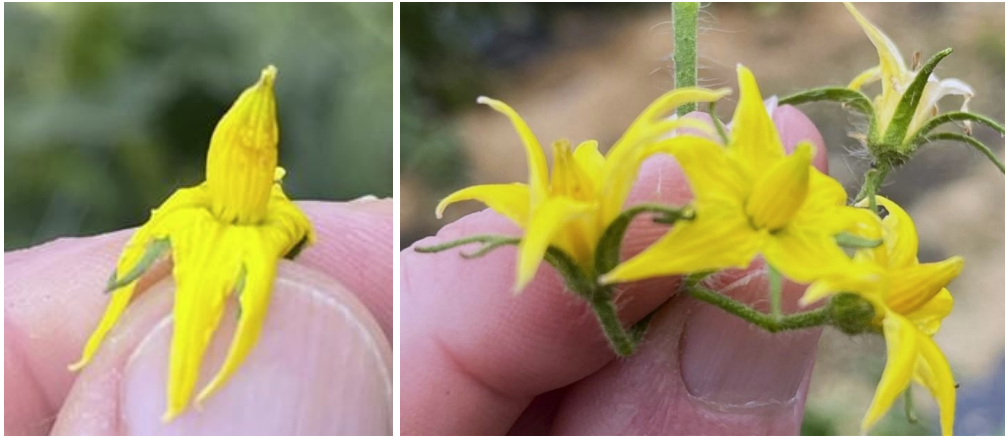
Look for their brown bite marks on the tomato flower to access their pollination activity. Collect 20 closed flowers and check to see that they show bite marks. Flowers open for more than one day may display from one to five bite marks. When the number of bite marks is less than one to two per flower, a new bumblebee hive may be needed. If there are too many bite marks on the flowers, the bumblebees are visiting the flowers too often and the tomato flowers can abort due to over pollination. One can then keep them in the hive for a day.
Bumblebees are best used with a biological control program for insect and mite pests on greenhouse tomatoes. Insecticides can be harmful to bumble bees. Consult with your biological control supplier and or check the online pesticide side effect databases from Koppert or Biobest from for more information.
Disclaimer for Fact Sheets: The information in this document is for educational purposes only. The recommendations
contained are based on the best available knowledge at the time of publication. Any reference to commercial products, trade or brand names is for information only, and no endorsement or approval is intended. UConn Extension does not guarantee or warrant the standard of any product referenced or imply approval of the product to the exclusion of others which also may be available. The University of Connecticut, UConn Extension, College of Agriculture, Health and Natural Resources is an equal opportunity program provider and employer.