Introduction
The pathogen Phytophthora (Oomycete) is a significant threat to greenhouse floriculture production in New England. Infected plants will display root and crown rot, seedling damping off, and foliar blight. Phytophthora means “plant destroyer” and the destructiveness of this pathogen is observed annually. High quantities of spores (sporangia) are produced on infected plants, which spread rapidly in the greenhouse. Phytophthora is a water mold and is especially adept at spreading in water with swimming zoospores. This feature allows the pathogen to infect large quantities of plants in a relatively short time frame. Using cultural controls to reduce media wetness, improving drainage, and applying preventive fungicide applications can help to reduce losses from this pathogen.
There are many ornamental crops that are susceptible to Phytophthora. These include African violet, Cineraria, Hedera, Gerbera, lavender, petunia, and vinca. Symptoms of root rot are initially observed above ground and include wilting and chlorosis.
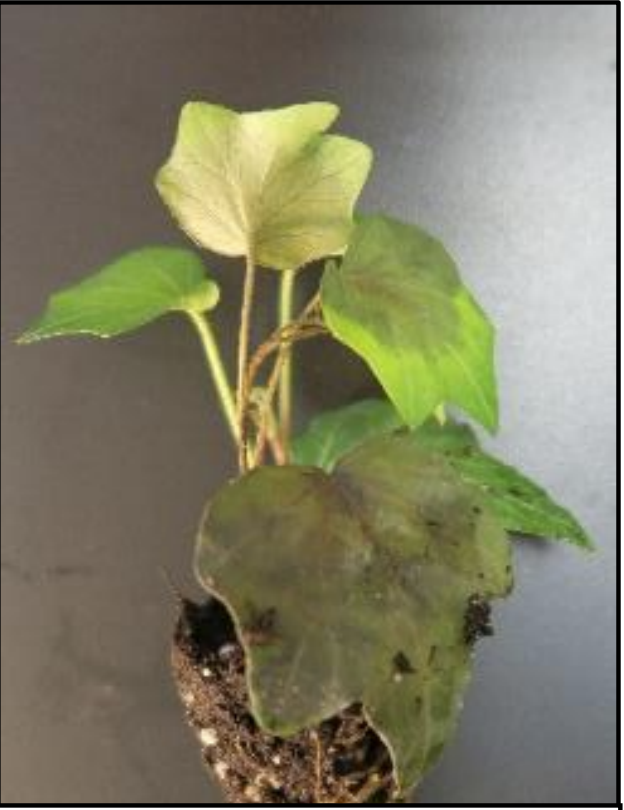
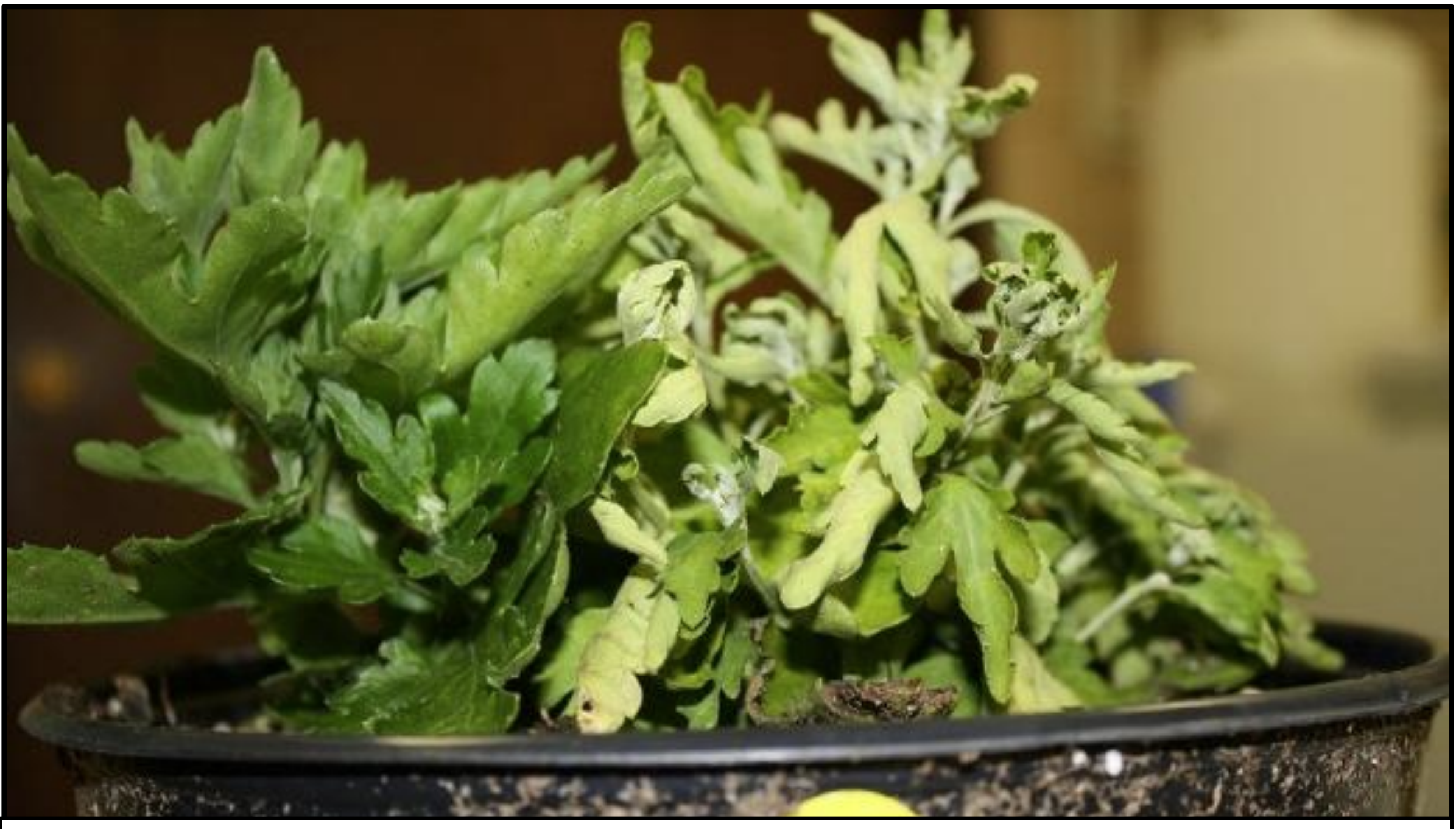
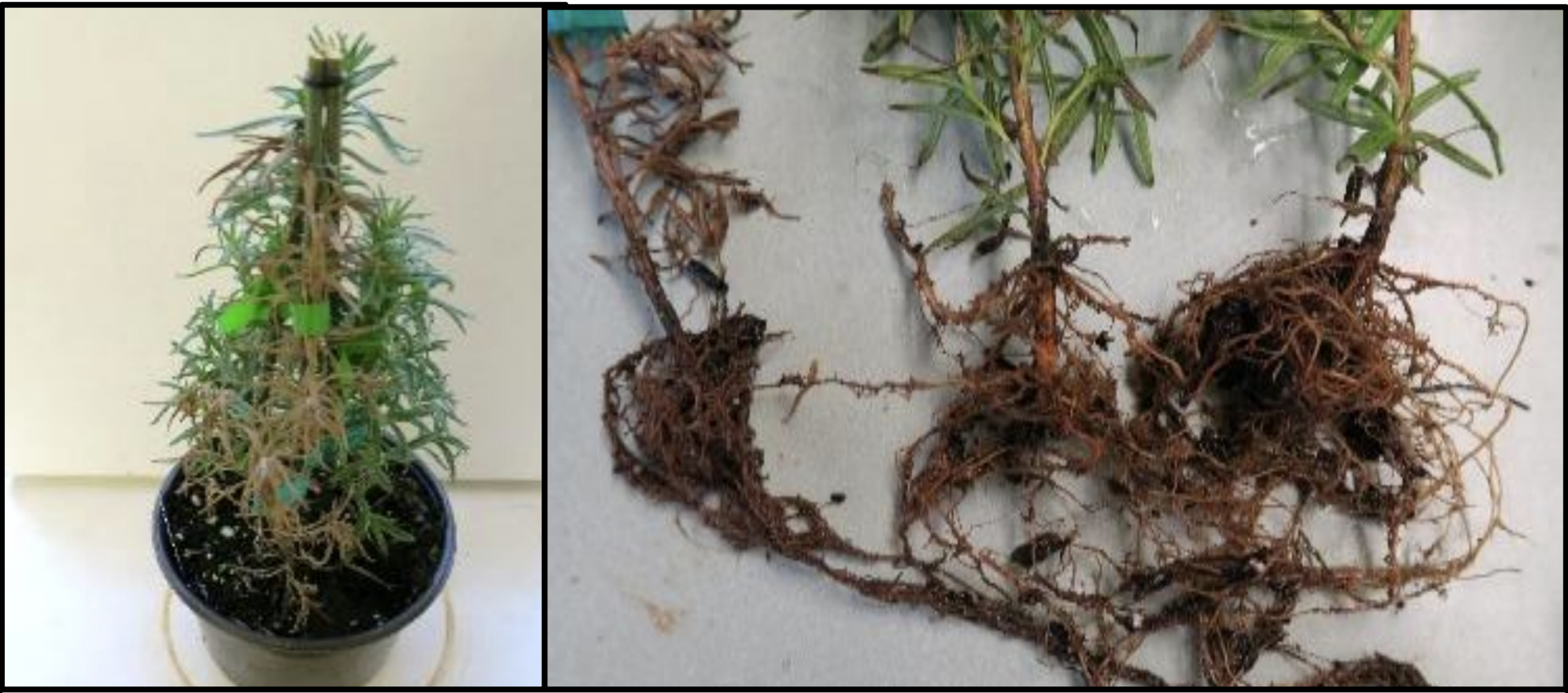
If an infected plant is removed from the pot, dark brown roots with cortical cells that slough off under light pressure can be observed. Brown watersoaked lesions at the crown develop, and these can extend up the stems as the disease progresses. The plant will then collapse. The pathogen can also spread with splashing water causing a foliar blight. This is frequently observed with tropical ornamentals that receive frequent irrigation and are grown under conditions of high humidity. Leaf blight symptoms appear as a dark brown watersoaked lesions that spread rapidly under warm and humid conditions. The pathogen then produces sporangia, which spread with splashing water. Epidemics can occur when a limited number of infected plants are irrigated repeatedly next to adjacent susceptible plants.
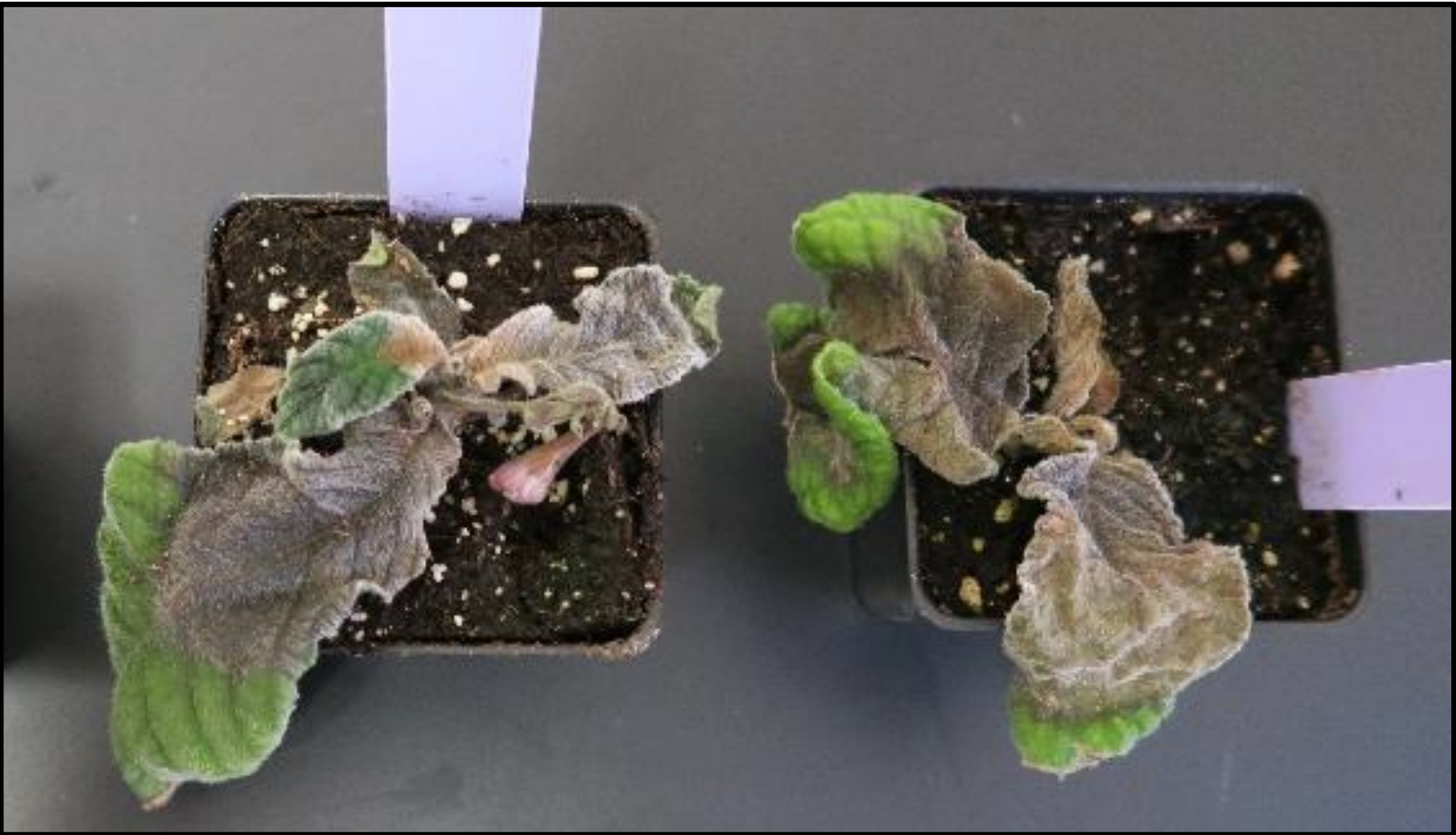
Control of Phytophthora root rot includes limiting irrigation so that media dries rapidly. Plants should be irrigated sparingly and arranged to promote rapid drying of foliage. Plants grown on flood floors are at risk as zoospores can move among pots in infested water that drains from pots holding infected plants. Certain crops such as gerbera daisy and tropicals have routinely been affected on flood floors and flood benches. Remove and discard infected plants as even a single diseased plant can put neighboring plants at risk.
Fungicides and biocontrols should be applied preventively to susceptible crops. There are many effective fungicides (Table 1) labeled for Phytophthora control. Apply preventively and follow the recommended application interval on the label for maximum results. The biocontrols listed can also be used when disease pressure is low or absent. Biocontrols will not cure Phytophthora-infected plants.
Fungicides effective against Phytophthora
| Product | Active ingredient | FRAC code | |
| Class A | Segovis | oxathiapiprolin | 49 |
| Subdue MAXX | mefenoxam | 4 | |
| Adorn | fluopicolide | 43 | |
| Fenstop | fenamidone | 11 | |
| Micora | mandipropamid | 40 | |
| Orvego | ametoctradin/ dimethomorph | 45/40 | |
| Stature SC | dimethomorph | 40 | |
| Alude | phosphorous acid salts | 33 | |
| Class B | Heritage | azoxystrobin | 11 |
| Segway | cyazofamid | 21 | |
| Aliette | aluminum tris | 33 | |
| Biocontrol | Serenade | Bacillus subtilus | - |
| Actinovate | Bacillus subtilus | - | |
| Cease | Streptomyces lydicus | - |
*Read the label for full list of tolerant plant species and crop safety information.
Disclaimer for Fact Sheets: The information in this document is for educational purposes only. The recommendations
contained are based on the best available knowledge at the time of publication. Any reference to commercial products, trade or brand names is for information only, and no endorsement or approval is intended. UConn Extension does not guarantee or warrant the standard of any product referenced or imply approval of the product to the exclusion of others which also may be available. The University of Connecticut, UConn Extension, College of Agriculture, Health and Natural Resources is an equal opportunity program provider and employer.