Fungus gnats (Bradysia spp.) are a common greenhouse pest, especially in the moist environment common in propagation greenhouses. Fungus gnat larvae feed upon young cuttings and plugs, causing root injury and death. The larvae create wounds that could allow for the entrance of soil borne fungi. Fungus gnat adults may also help spread soil borne pathogens such as Phytophthora, Pythium and Thielaviopsis. Adults can also carry airborne fungal spores from Botrytis on their bodies.
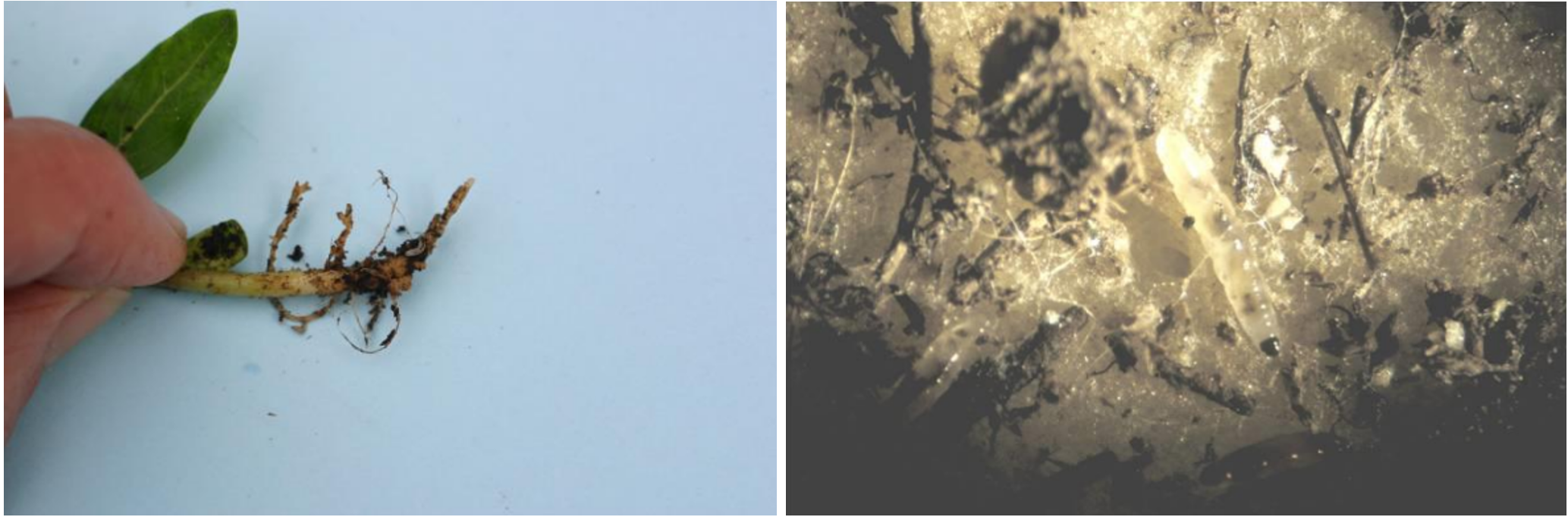
Scouting
A regular monitoring program is needed to ensure the success of a biological control program. Use yellow sticky cards placed horizontally at the media surface to attract and capture adults.
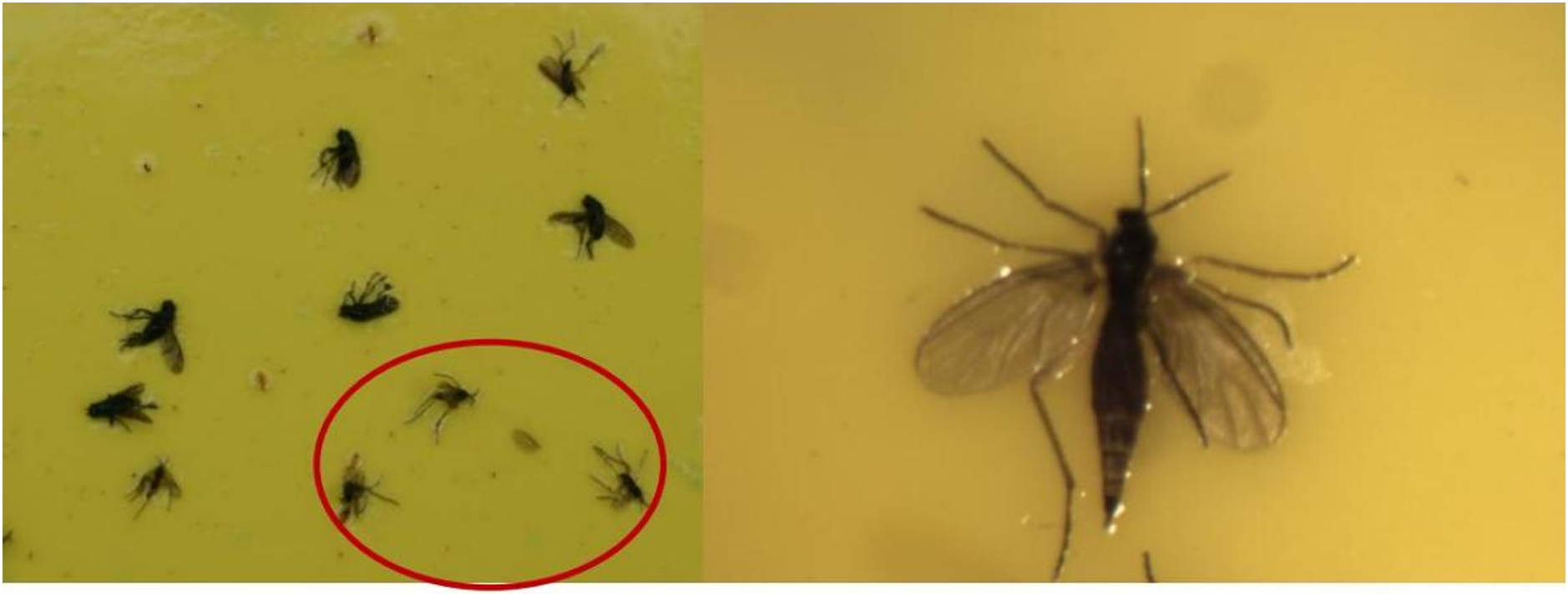
Check yellow sticky cards weekly. For more see: Identifying Some Pest and Beneficial Insects on Your Sticky Cards on the UConn Greenhouse IPM website.
Place potato chunks or plugs on the media surface to attract larvae. Inspect potato chunks after 2 days for presence of larvae. Inspect root systems for overall health and for signs of damage from fungus gnat feeding (blunt root tips).
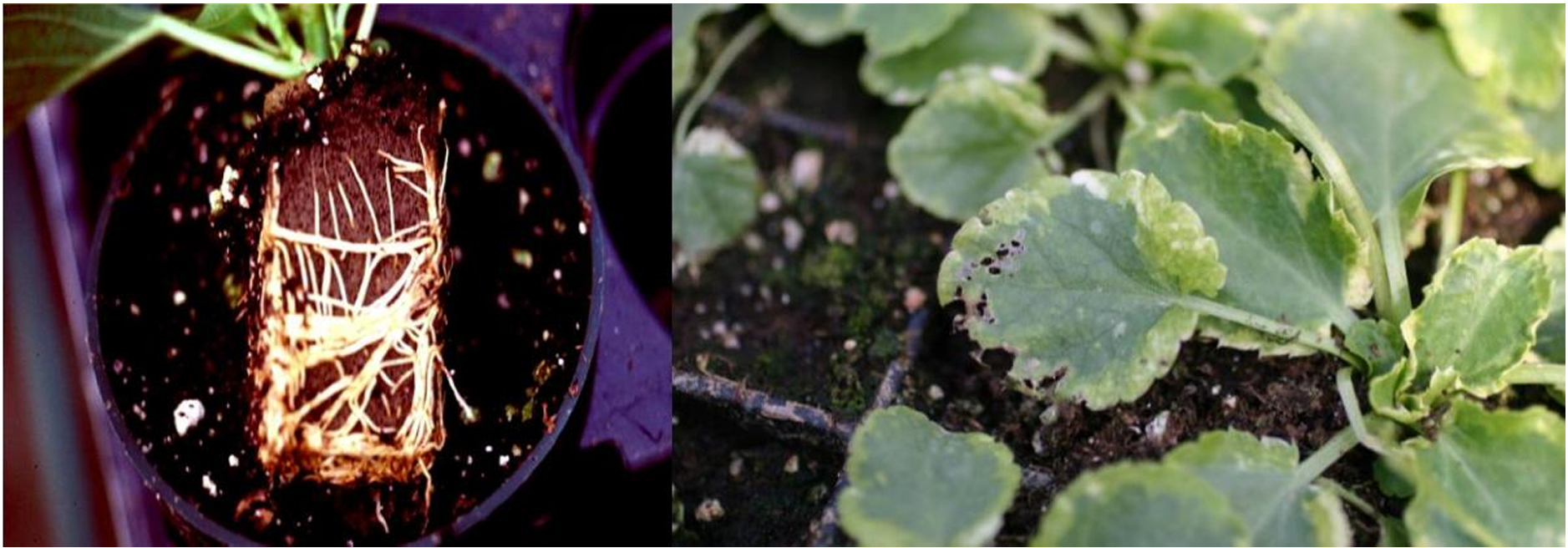
Cultural Controls
Cultural controls, including prevention of overwatering and water puddling on the floors, rigorous weed control, and control of algae are critical before starting a biological control program for fungus gnats.
Biological Controls
Soil dwelling predatory mites (Stratiolaelaps scimitus), the rove beetle (Dalotia coriaria) and entomopathogenic nematodes (Steinernema feltiae) can all be used in your biological control program. The growing medium should be moist before applying these natural enemies.
Predatory Mites
A native, soil-dwelling generalist predatory mite, Stratiolaelaps scimitus, feeds on fungus gnat larvae, thrips pupae, springtails and shore fly larvae. However, S. scimitus prefers to feed upon the first instar fungus gnat larvae. If small prey insects are scarce, these predatory mites can survive by scavenging on plant debris and algae. S. scimitus inhabits the top ½ inch of soil and does not survive in standing water. Adults are tan in color and less than one mm. long.
S. scimitus is shipped in an inert carrier with all stages of the predatory mites mixed with bran or mold mites that are a food source for the predatory mites. Distribute this carrier over the media surface, after mixing well to distribute the mites in the medium, especially when pots are placed close together. Applications can also be made to the soil under greenhouse benches or around the inside perimeter of the greenhouse.
S. scimitus life cycle from egg to adult is about 18 days at 68°F. They do not go into diapause in the winter. S. scimitus predatory mites are best used before fungus gnat populations become established. If fungus gnat populations are established, use with Bacillus thuringiensis subsp. israelensis or with entomopathogenic nematodes (see below).
Tips for S. scimitus use
- Use preventatively, at planting time.
- Do not refrigerate. They do not store well.
- Apply to the media surface, not too close to plant stems. Do not mix into the growing media because they will not survive.
- Minimum media temperature is 60°F, they become inactive below 59°F
- Media should be moist, not wet, before adding S. scimitus.
- To evaluate quality, place a small sample of the mites on a sheet of white paper. S. scimitus will be tan and will move quickly. The bran mites are translucent, white and move slowly.
Rove Beetles
Rove beetles, Dalotia coriaria, are generalist predators that prefer to feed upon fungus gnat larvae but will also feed upon shore flies and thrips pupae in the growing media.
Adults are slender, dark brown to black hairy beetles, about 1/8 of an inch long, with short wing covers that are less than the length of their body. Because adults can fly, this helps them disperse from release sites. Larvae are cream-colored to brown, depending upon their age. Both stages are primarily found in the growing media, especially in cracks and crevices. Once established in a greenhouse, they will be there year-round, but population levels vary depending upon fungus gnat and other food source populations.
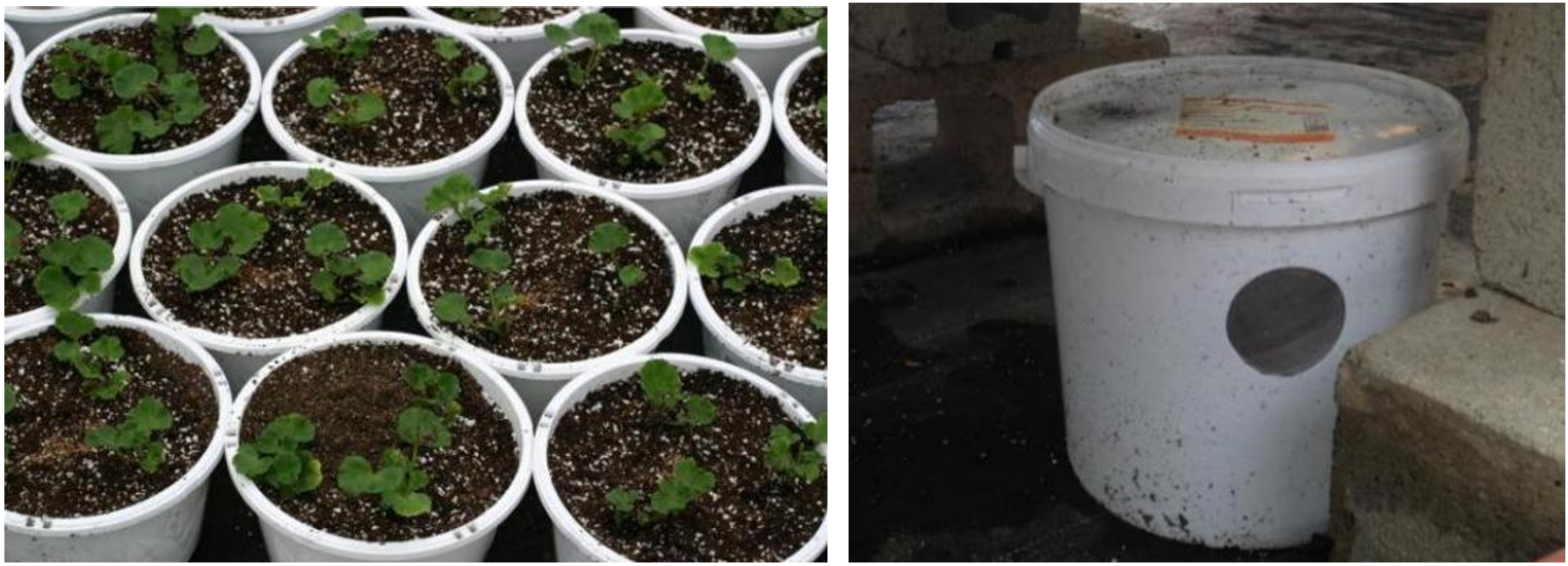
The rove beetle’s life cycle from egg to adult is 17 days at 79° F. Females live for about 48 days and males about 60 days. Adult females lay an average of 90 eggs. Eggs hatch in 3 to 4 days into creamy white larvae. (There are three larval stages after which they pupate.) Temperatures between 65-80 ˚F and a relative humidity of 50 to 85% are optimum for their survival. Rove beetles are commercially available as adults and larvae mixed in inert material. A breeding bucket system may be available for the rove beetles, which consists of media, beetles, and a supplier food source which can be
placed in shaded areas under the greenhouse benches. Growers can also make their own rearing systems
Tips for Dalotia coriaria use
- Adults are nocturnal so are best released in the evening.
- They tend to hide in cracks and crevices in the growing media, so may be difficult to find when scouting.
- Rove beetles are compatible with beneficial nematodes and S. scimitus
Entomopathogenic Nematodes
Nematodes are small, colorless, cylindrical round worms that occur naturally in soils throughout the world. Steinernema feltiae is primarily used against fungus gnat larvae, and thrips pupae in the soil. S. feltiae enter the insect host through body openings. They multiply within the host and release a symbiotic bacterium (Xenorhabdus) whose toxin kills the fungus gnat larvae in one to two days by septicemia (blood poisoning). More than one generation of nematodes may develop in dead host insect. The infective juveniles exit the dead body and search for new hosts to infect. The nematodes will stay active in the media for about 10 to 14 days. S. feltiae (NemaShield, Nemasys or Entonem) are applied as a soil drench treatment against fungus gnat larvae. Preventative applications to moist soils work best on cloudy, overcast days. See Beneficial Nematodes: An Easy way to Begin Using Biological Control in the
Greenhouse for specific tips on their use.
Natural Enemies Not Commercially Available: Hunter Flies
Hunter flies (Coenosia attenuata) may also be seen on yellow sticky cards. They are about twice the size of shore flies with clear wings that may appear iridescent as the hunter fly adults perch on plant leaves, pipes, or other objects in the full sun. The female has a dark gray body with black legs while the male has yellow legs. These aerial predators will catch fungus gnats or shore flies on the wing. Adults lay their eggs in the growing media and their larvae prey upon fungu gnat larvae and shore flies there.
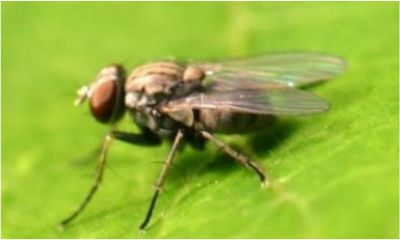
Entomopathogenic nematodes, soil dwelling predatory mites, and rove beetles are all part of a biological control program for fungus gnats.
Disclaimer for Fact Sheets: The information in this document is for educational purposes only. The recommendations contained are based on the best available knowledge at the time of publication. Any reference to commercial products, trade or brand names is for information only, and no endorsement or approval is intended. UConn Extension does not guarantee or warrant the standard of any product referenced or imply approval of the product to the exclusion of others which also may be available. The University of Connecticut, UConn Extension, College of Agriculture, Health and Natural Resources is an equal opportunity program provider and employer.