Introduction
Intumescences is an abiotic disorder that can affect greenhouse tomatoes. It is a physiological disorder and not an infectious disease. It is also known as edema (oedema). The target audience of this factsheet is commercial greenhouse growers.
Symptoms
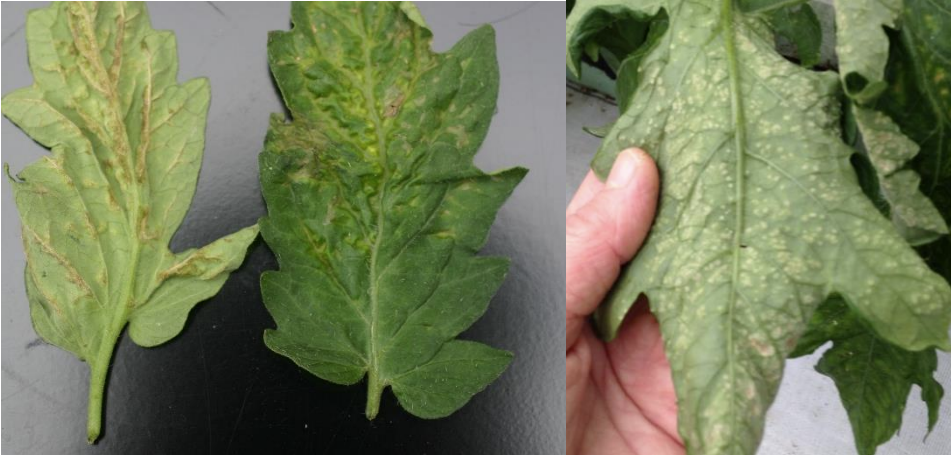
Blisters develop on the lower surface of the leaves, starting out as small, clear watery blisters or whitish-green bumps especially near the leaf veins. Lesions then turn brown as they dry. On the upper leaf surface, brown necrotic spots can be seen that are surrounded by chlorosis (yellowing). Leaf curling, distortion and leaf drop can also occur. Older leaves are more likely to be damaged than younger leaves. Tomato cultivars vary in their responsiveness to this abiotic disorder.
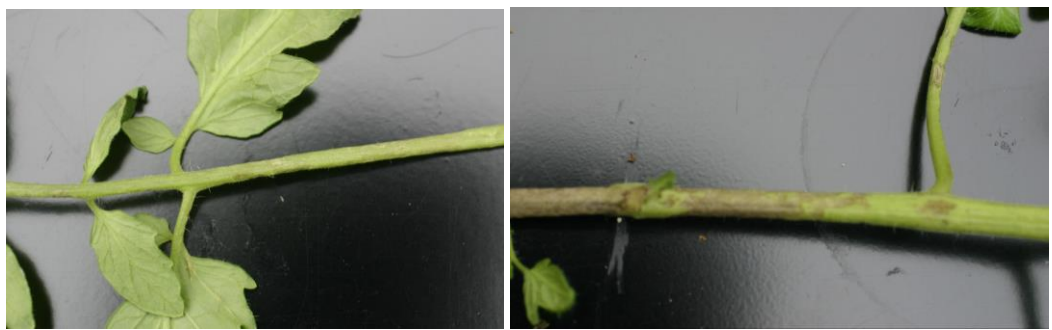
Stems and petioles can also become infected
Causes
This abiotic disorder may be caused by environmental conditions such as improper water balance in the plant and the quality of light. Excess moisture in the growing media combined with high humidity levels in the greenhouse leads to low transpiration rates. This causes a buildup of excess moisture in the cells, so the cells enlarge and erupt. Blisters develop due to this increased cell pressure.
Light quality may also be a factor. Recent research has shown that ultraviolet B light, which is mainly provided by the sun, helps prevent the formation of intumescences in tomato. In a Michigan State University study, researchers reported less intumescence in tomato plants, when supplemental light was in the 50:50 blue: red ratio compared to 100% red light.
Management
Keep records of which cultivars you grow that are more susceptible, so you can select cultivars that are less problem prone. Avoid overwatering plants especially during cool, cloudy overcast growing conditions when they should be kept on the dry side. Reduce humidity levels to below 70% in the greenhouse by heating and venting and the use of HAF fans. Give plants plenty of space so there is more air flow around the plants.
Give plants plenty of space to increase light levels. Use white plastic mulch on greenhouse floors instead of black plastic mulch, to increase light levels. If using supplemental light to combat low light levels in the winter months, choose LED lights that provide a combination of blue and far-red wavelengths. Metal halide fixtures also provide more ultraviolet and blue light compared to high-pressure sodium fixtures.
Disclaimer for Fact Sheets: The information in this document is for educational purposes only. The recommendations
contained are based on the best available knowledge at the time of publication. Any reference to commercial products, trade or brand names is for information only, and no endorsement or approval is intended. UConn Extension does not guarantee or warrant the standard of any product referenced or imply approval of the product to the exclusion of others which also may be available. The University of Connecticut, UConn Extension, College of Agriculture, Health and Natural Resources is an equal opportunity program provider and employer.