Introduction
Hosta Virus X (HVX) is a mechanically transmitted virus that only infects Hosta. University of Minnesota plant pathologists discovered HVX in 1996 in Minnesota, Indiana, Iowa, and Michigan. HVX was reported in CT in 2006, although the first positive detection occurred on many cultivars in 2005. HVX is not spread by insects or nematodes but only mechanically by the spread of infected sap. The target audience is commercial greenhouse growers.
Symptoms
Symptoms of HVX vary depending upon the specific Hosta cultivar infected and may include stunting, leaf twisting and puckering, ringspots, and browning (necrosis). Mosaic (patterns of light and dark-green), mottling and changes in color along the veins may also be seen. Symptoms may also remain latent for months or even years.
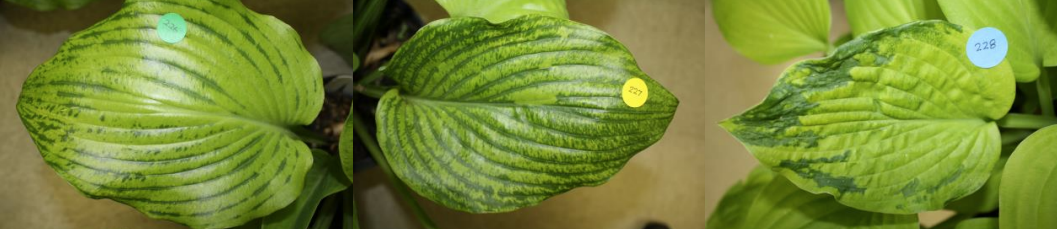
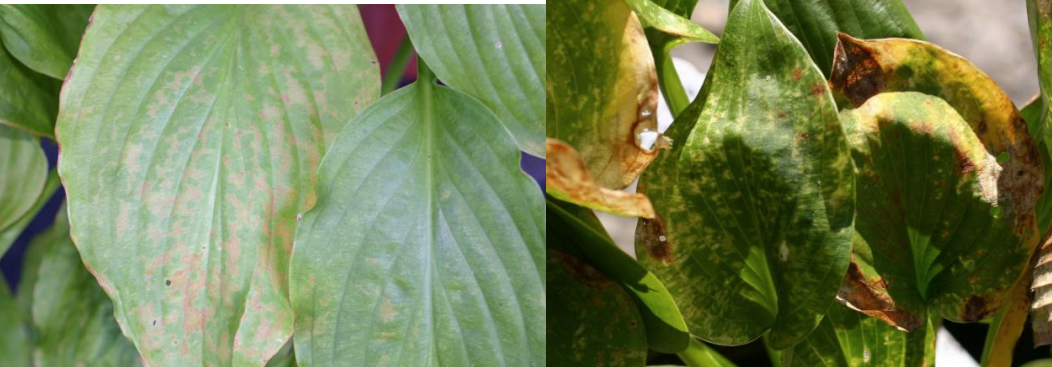
Hosta can be infected by other viruses including tobacco rattle virus (TRV), arabis mosaic virus (ArMV), tobacco ringspot virus (TRSV) and tomato ringspot virus (ToRSV), all of which are vectored by root-feeding plant parasitic nematodes. Hosta can also be infected with tospoviruses, vectored by thrips.
Causal Agent and Life History
HVX can be transmitted mechanically in sap on tools, clothing, and by vegetative propagation. HVX only infects Hosta and is primarily spread through the propagation of infected plants. Confirm the presence of the virus by submitting samples to a plant diagnostic laboratory or purchasing ImmunoStrip tests specific for HVX from Agdia.
Management
- Purchase clean, virus-free plugs from a reputable supplier. Isolate incoming plants in quarantine type area until you have determined that they are virus-free.
- There is no cure for virus-infected plants. Infected plants should be destroyed by burning or burying (not composting).
- Plants can be infected without showing symptoms so plants immediately adjacent to infected plants should also be destroyed.
- Avoid handling healthy Hosta plants after handling diseased plants.
- HVX is spread mechanically in the sap that contaminates worker's hands or cutting tools. To remove contamination of most viruses from tools, soak the tools in commercially available disinfectants such as quaternary ammonium compounds or hydrogen dioxide. Soak the tools for at least one minute. Propagators need to soak their cutting tools on a regular basis, after use on each stock plant or specific cultivars.
- Do not reuse contaminated pots without proper cleaning and disinfection.
Disclaimer for Fact Sheets: The information in this document is for educational purposes only. The recommendations
contained are based on the best available knowledge at the time of publication. Any reference to commercial products, trade or brand names is for information only, and no endorsement or approval is intended. UConn Extension does not guarantee or warrant the standard of any product referenced or imply approval of the product to the exclusion of others which also may be available. The University of Connecticut, UConn Extension, College of Agriculture, Health and Natural Resources is an equal opportunity program provider and employer.