Introduction
Garden fleahoppers (Halticus bractatus) are a native insect and one of the smallest plant bugs.
Identification
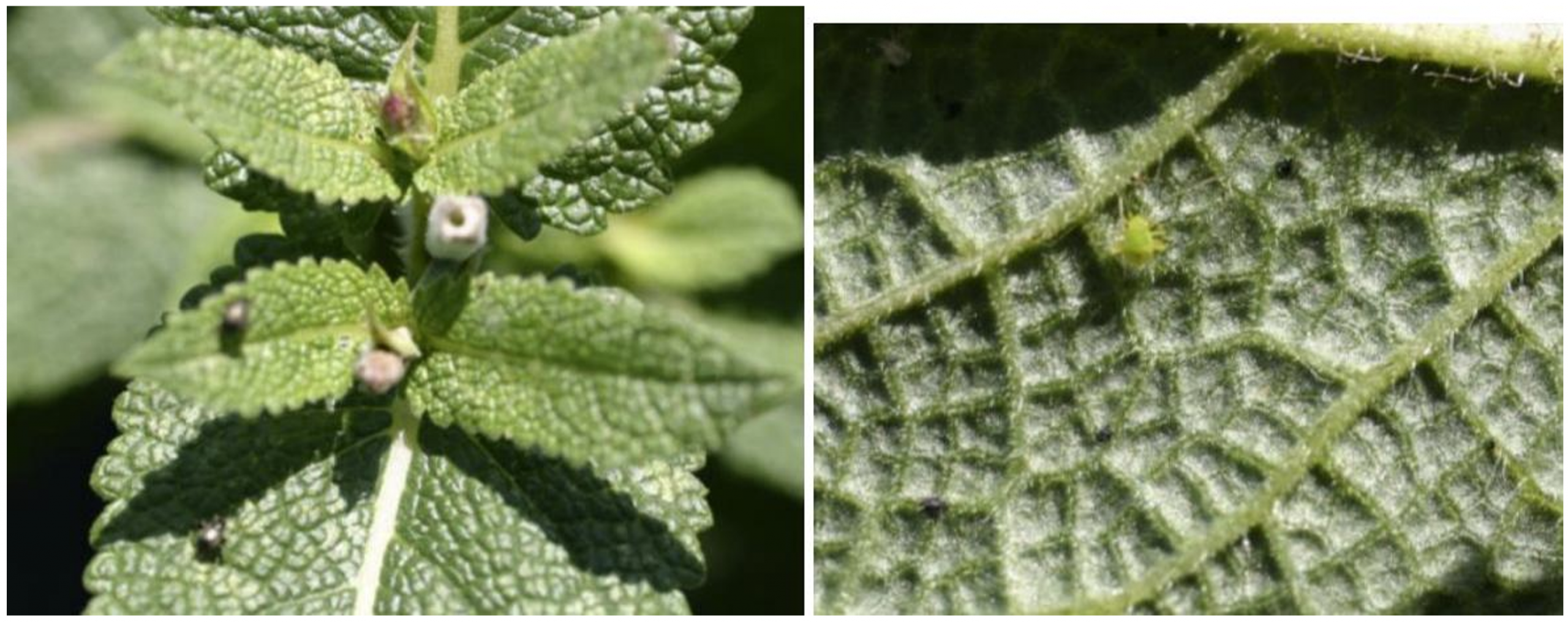
Garden fleahoppers are small (1/10inch long), shiny black insects with long legs and antennae. They have an expanded hind leg segment (femora) enabling them to jump or hop when disturbed. Garden fleahoppers resemble flea beetles except that their antennae are as long as their body whereas flea beetles have much shorter antennae that are less than half the length of their body. The immature garden fleahopper nymphs are pale green, turning darker as they age. The target audience of this fact sheet is commercial greenhouse growers.
Feeding Damage
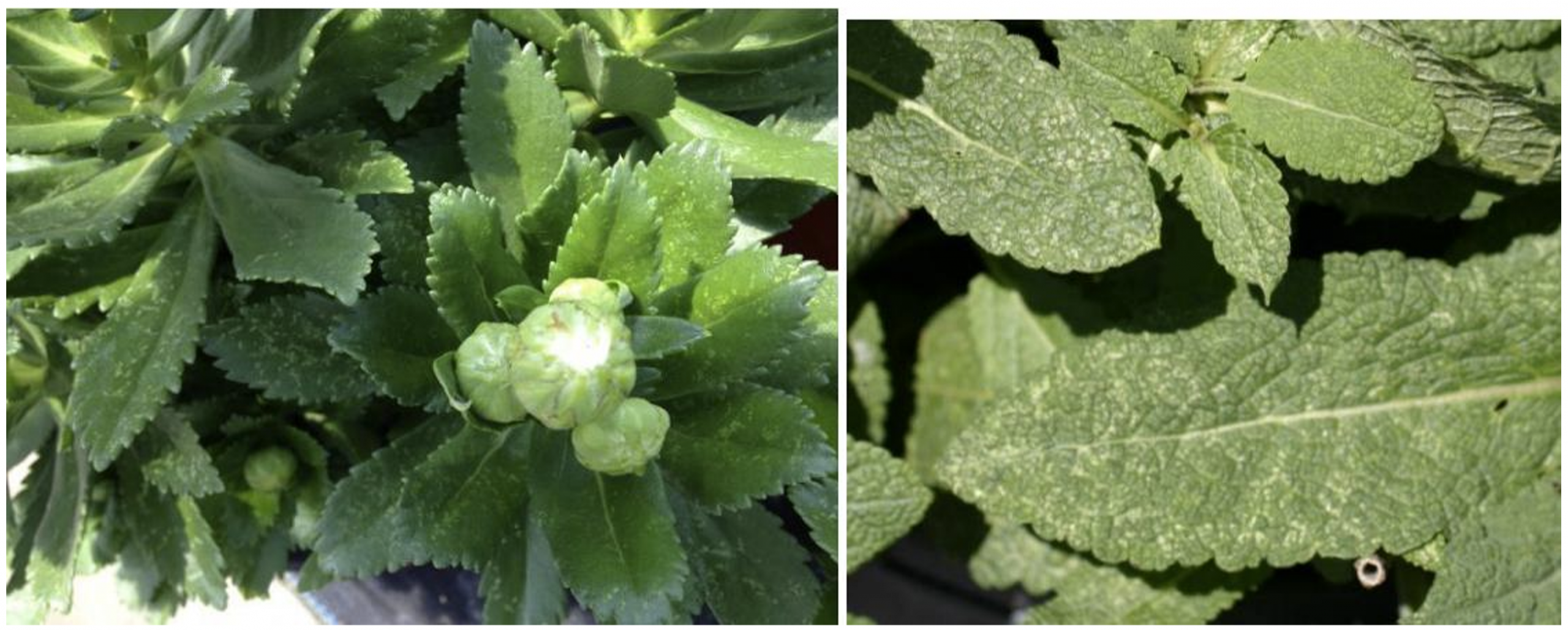
The garden fleahopper has a broad host range feeding upon many different herbaceous annuals and perennials, garden vegetables, and weeds. Some ornamental plants reported as hosts include chrysanthemum, Helenium, Helianthus, Phlox, Rudbeckia, Scabiosa, Salvia, verbena, and zinnia. As this sucking insect feeds, pale whitish spots or speckles develop on the leaves resembling two-spotted spider mite or lace bug.
Biology and Life Cycle
Garden fleahoppers overwinter as eggs inserted into plant stems. Eggs hatch into nymphs that mature into adults. There may be 3 to 4 generations a year
Management
Garden fleahoppers may build up in nearby weeds, so practicing good weed management around production areas is important. Garden fleahoppers are also easily suppressed by applications of labeled insecticides.
Disclaimer The information in this document is for educational purposes only. The recommendations contained are based on the best available knowledge at the time of publication. Any reference to commercial products, trade or brand names is for information only, and no endorsement or approval is intended. UConn Extension does not guarantee or warrant the standard of any product referenced or imply approval of the product to the exclusion of others which also may be available. The University of Connecticut, UConn Extension, College of Agriculture, Health and Natural Resources is an equal opportunity program provider and employer.