Introduction
Fusarium wilt on greenhouse tomatoes is caused by Fusarium oxysporum f. sp. lycopersici. Tomato is the major host; eggplant and several weeds can also become infected. The target audience of this factsheet is commercial greenhouse growers.
Symptoms
At first, lower leaves turn yellow and wilt, especially during the heat of the day. Older leaves drop and turn downward. Wilted leaves turn brown and die. Often, one side of a leaf midrib or branches on one side of a plant will be affected. However, symptoms will spread to the entire plant. Wilted leaves drop prematurely. Not all greenhouse tomato varieties are susceptible.
If you cut the tomato stem open crosswise, the vascular tissue is brown with brownish streaks up and down the stem. However, the pith of the tomato stem is not affected. Greenhouse tomatoes may become infected at all stages of development, but symptoms may be more obvious during or shortly after flowering. The disease may be seed-borne.
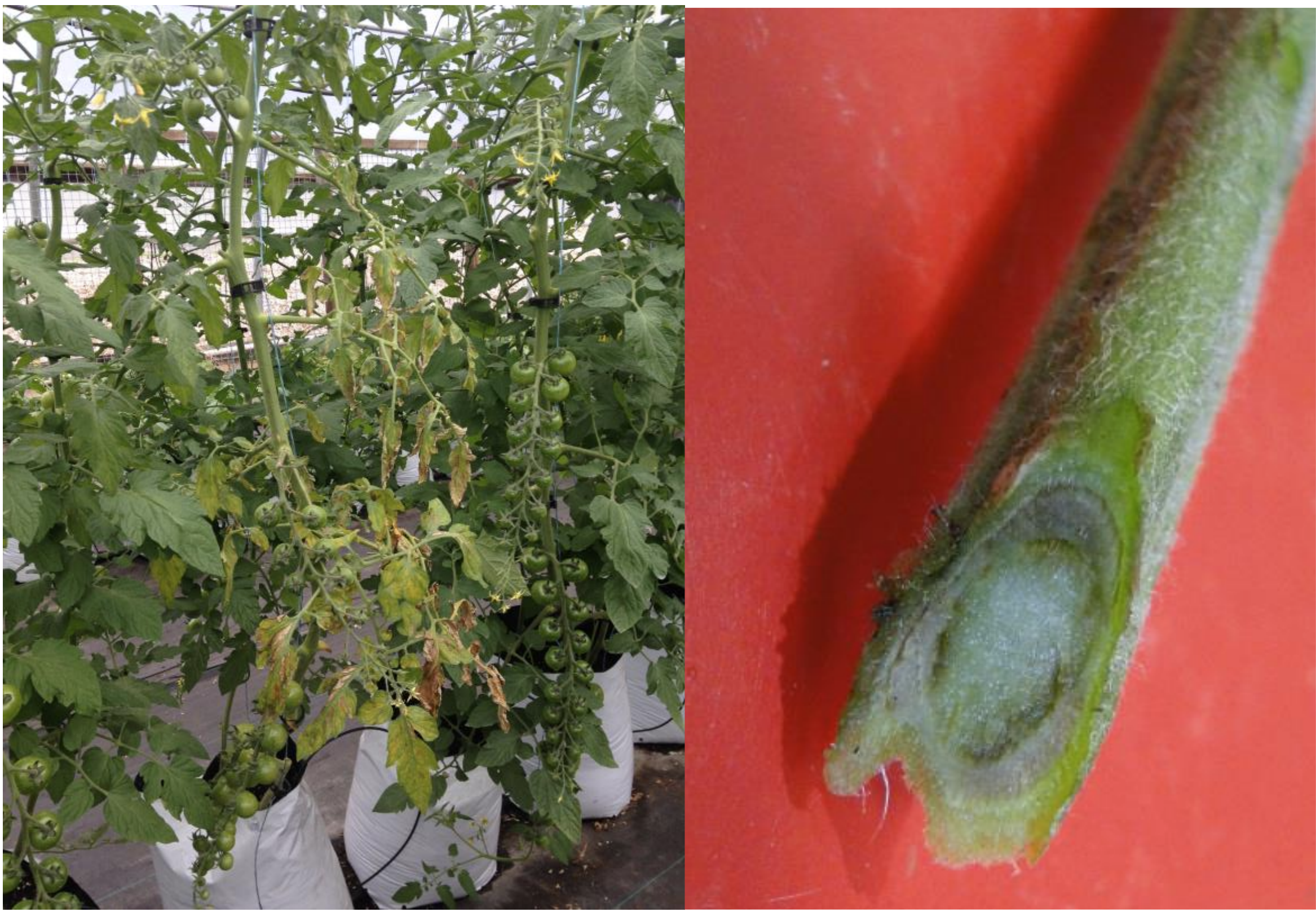
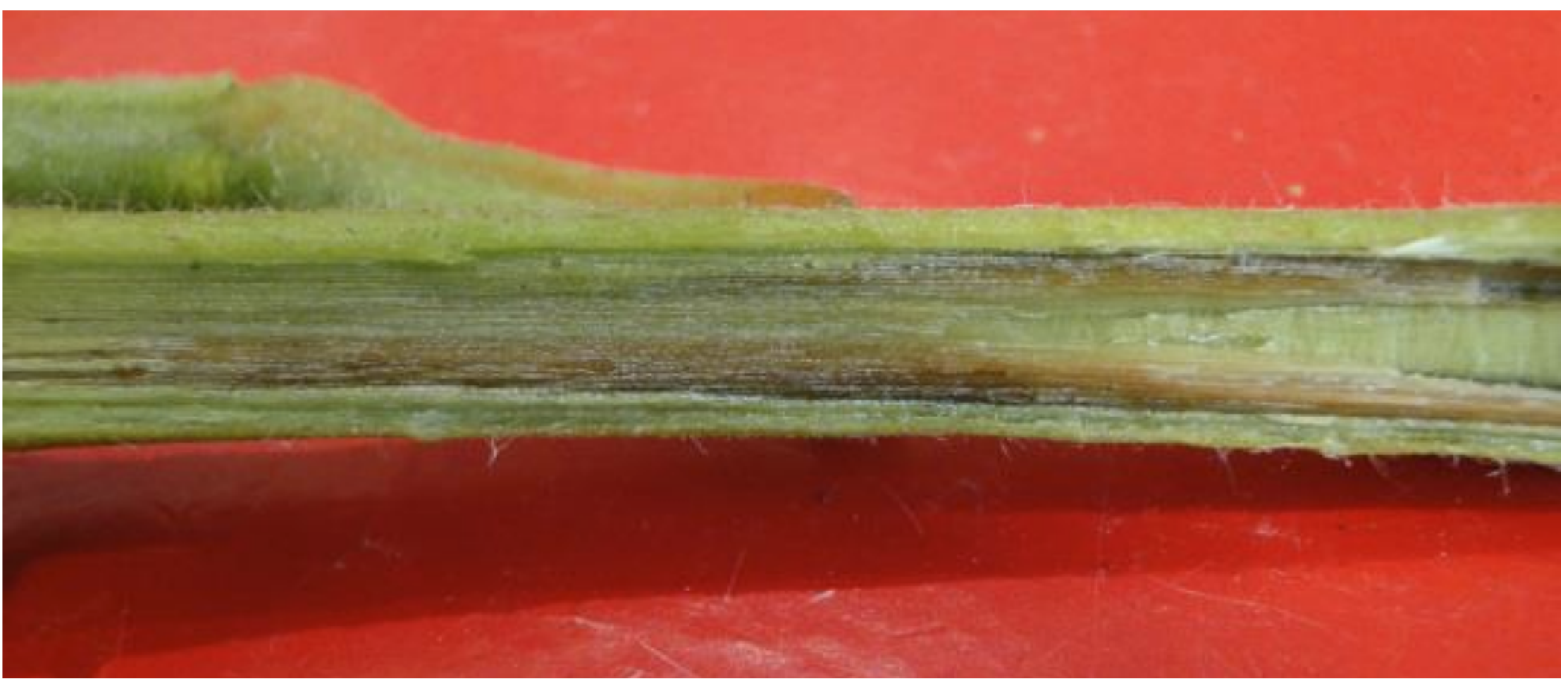
Bacterial canker can also cause the plants to wilt. When the stem is cut at the base of the plant, look for yellowish to white bacterial ooze. Bird’s eyespots develop on the fruit.
Causal Agent
Fusarium wilt is caused by Fusarium oxysporum f. sp. lycopersici.
Management
- Select disease resistant varieties. See Cornell Vegetables Disease Resistant Varieties.
- Use disease free seed and transplants.
- Practice proper greenhouse sanitation.
- Rogue out affected plants.
Disclaimer for Fact Sheets: The information in this document is for educational purposes only. The recommendations
contained are based on the best available knowledge at the time of publication. Any reference to commercial products, trade or brand names is for information only, and no endorsement or approval is intended. UConn Extension does not guarantee or warrant the standard of any product referenced or imply approval of the product to the exclusion of others which also may be available. The University of Connecticut, UConn Extension, College of Agriculture, Health and Natural Resources is an equal opportunity program provider and employer.