Damping-off is a common disease of germinating seeds and young seedlings. It may be found in greenhouses that grow vegetable or ornamental transplants. The target audience of this fact sheet is commercial greenhouse growers.
Several fungi or fungi-like organisms, especially Pythium and Rhizoctonia, are capable of causing damping-off. However, Alternaria, Sclerotinia, Botrytis, Phytophthora and Fusarium can also cause damping-off. Soil-borne fungi generally do not produce air-borne spores, but they are easily moved from contaminated soil to pathogen-free growing media by contaminated tools, hose ends, watersplash, and worker’s hands. Some fungi such as Alternaria are seed-borne.
Favorable Conditions
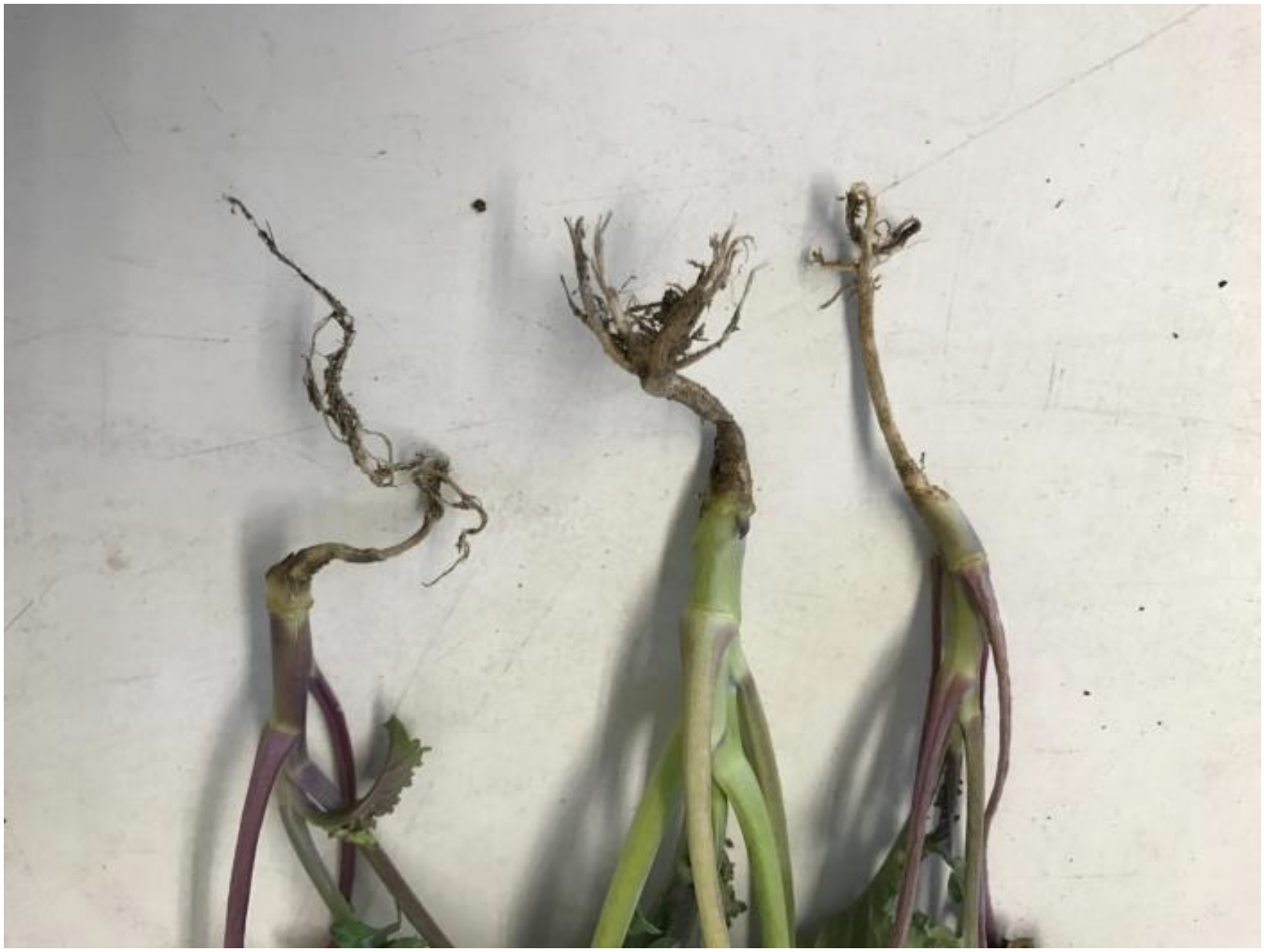
Damping-off can develop if seedlings are overwatered and the growing media stays wet too long. Excessive overhead misting or condensation dripping from greenhouse coverings to the growing media promotes damping-off. Low media temperatures (below 68˚F) before seeds germinate can also promote damping off. Overcrowded seed flats, which increases moisture and humidity levels around young seedlings, promote damping-off diseases. Young seedlings are most susceptible to damping-off. However, later in the crop cycle, the same pathogens may cause “wire stem” with an off-color, twisted and constricted stem. Cabbage, cauliflower, tomato and pepper seedlings may develop wire stems.
Symptoms of damping-off include:
- Seedlings failing to emerge (pre-emergence damping off).
- Seedlings wilting, often with a stem lesion that appears water-soaked or is dark, necrotic and sunken at the soil line (post-emergence damping off).
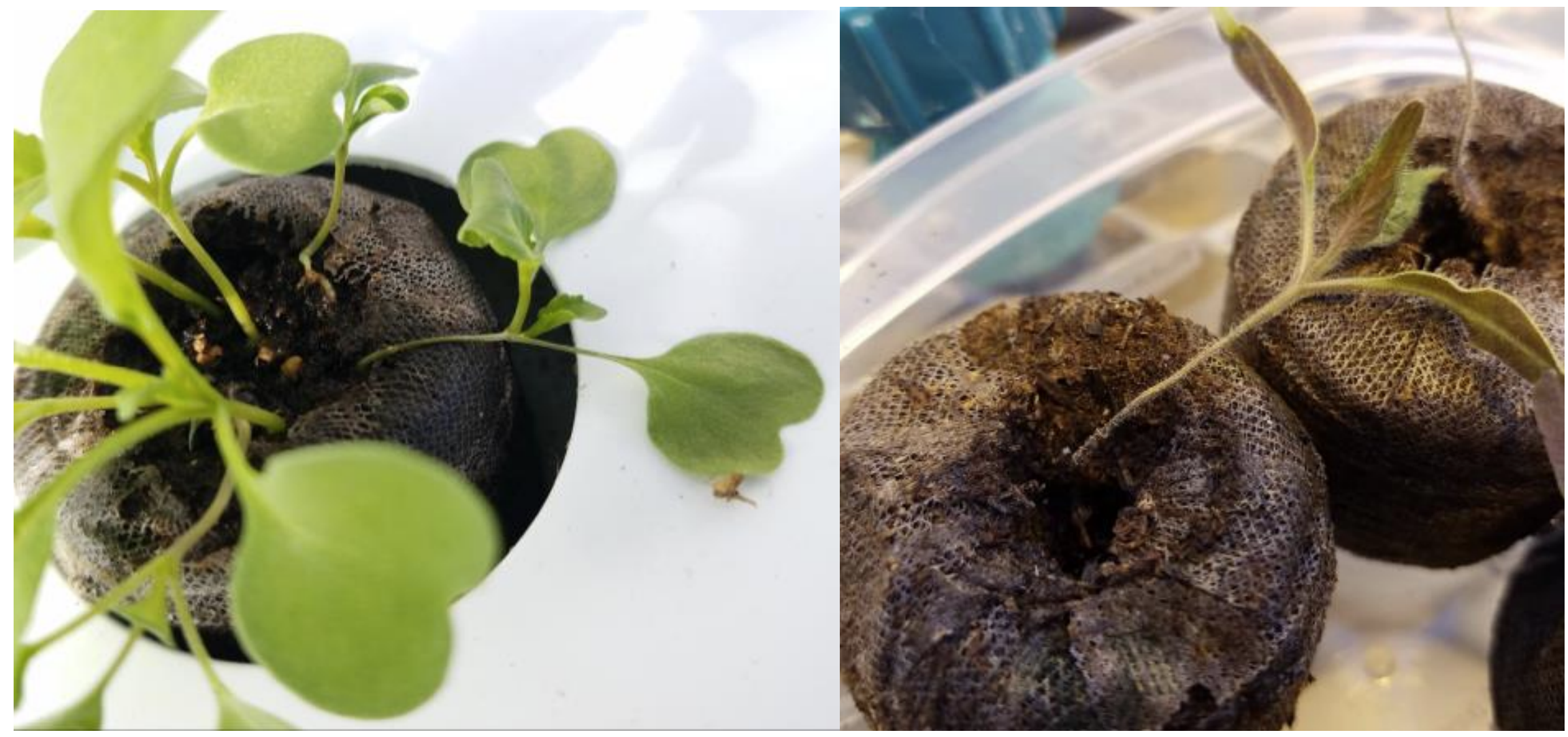
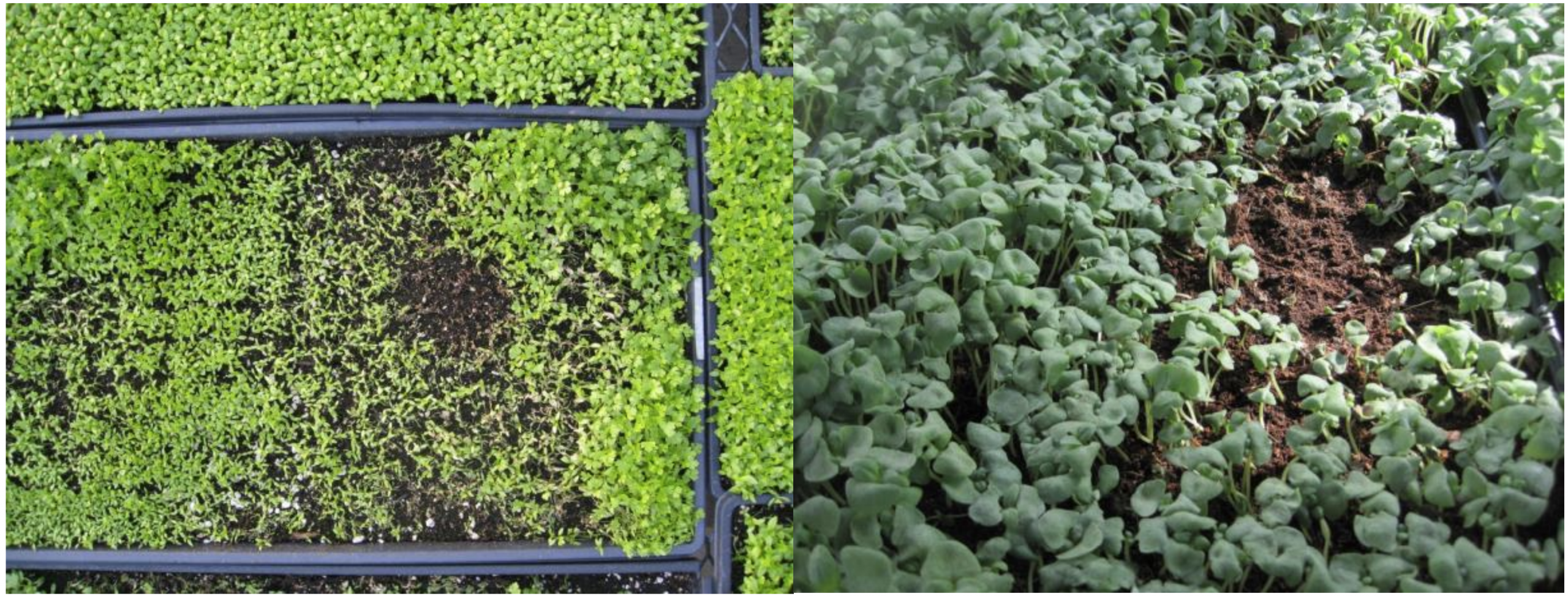
When seedlings are planted in flats, damping-off pathogens spread radially from a central point of origin with seedlings dying in a circular pattern. In plug trays, infected plants may be more randomly affected as the pathogens move by splashing water. Seedlings that are germinated in poorly drained, cool soils are especially susceptible. Young plants that do emerge are weak and often wilt at or below the soil line.
Stems of these plants may shrivel and become dark and woody (wirestem). The plants may not collapse but remain stunted and die after being transplanted into the field or garden.
Seeds may not germinate if the seed is old or if conditions are not favorable for germination. If the seeds have germinated, but the emerging shoot is water soaked or decayed, damping-off pathogens are most likely the cause.
If tender young seedlings are over-fertilized, roots appear shriveled and desiccated, as the plants die from high salt injury. Hot water, heat stress, lack of water and phytotoxicity from chemical sprays can also cause tender young seedlings to die.
Management
Prevent damping-off because it is difficult to stop once symptoms occur. Focus on proper sanitation practices, use of preventive biological fungicides, and providing proper cultural care for young seedlings.
Proper Sanitation Practices
- Use only certified disease-free seed from reputable seed companies.
- Use fungicide-treated seed, if available.
- Use commercially available soilless potting media that are free of damping off fungi.
- Use pasteurized soil, or properly produced compost-based growing mixes. Test pHand EC levels of compost before using to be sure the compost is finished.
- Alternatively, fill a pot with compost and a pot with a reputable potting mix, plant 4 or 6 bean seeds and compare results.
- Disinfect all flats, pots and tools before using them.
- After disinfection, do not contaminate cleaned flats, by placing them on a dirty greenhouse floor or using dirty tools.
- Do not reuse plug trays with diseased plants. It is very difficult to remove all the organic matter in the small plug trays so that the commercial disinfectants can work.
- Discard entire infected flats.
- Do not just discard seedlings with symptoms of damping-off. Seedlings may appearhealthy but can carry infected media and develop wirestem or root rot, as they get older.
Encourage Seedlings to Grow Rapidly
- Incorporate biological fungicides into your soilless mix or apply biological fungicides as a drench at planting. See Biological Fungicides fact sheet on the UConn Greenhouse IPM website under diseases for more information.
- Fill flats with pre-moistened growing media to avoid compaction. Lightly fill and brush containers. To avoid compaction, do not stack or “nest” filled trays or pots.
- Germinate seed under conditions that will ensure rapid emergence, such as with the use of bottom heat (70-75˚F).
- Avoid planting seeds too deeply, which stresses the seedlings.
- Provide adequate light for rapid growth.
Actualmente no existen insecticidas ni acaricidas específicamente registrados para el control de ácaros del bulbo.
Avoid favorable conditions for the pathogens (cold, wet conditions)
- Avoid overwatering, excessive fertilizer, poor air circulation, and careless handling.
- Avoid planting seeds too densely, which reduces airflow around the young seedlings.
- Keep greenhouse temperatures warm with low humidity. Condensation on the plastic causes drips which can then lead excessive moisture and damping-off.
- If damping-off occurs, treatment with a broad-spectrum fungicide may be an option.
- However, tender young seedlings are more susceptible to plant injury from fungicide treatments (phytotoxicity) than more mature plants. See the latest edition of New York and New England Management Guidelines for Greenhouse Floriculture and Herbaceous Ornamentals and the New England Vegetable Management Guide (see section on vegetable transplants) for more specific up-to-date recommendations.
Disclaimer for Fact Sheets: The information in this document is for educational purposes only. The recommendations contained are based on the best available knowledge at the time of publication. Any reference to commercial products, trade or brand names is for information only, and no endorsement or approval is intended. UConn Extension does not guarantee or warrant the standard of any product referenced or imply approval of the product to the exclusion of others which also may be available. The University of Connecticut, UConn Extension, College of Agriculture, Health and Natural Resources is an equal opportunity program provider and employer.