Introduction
Black rot caused by the bacterial pathogen, Xanthomonas campestris pv. campestris, affects plants in the cabbage family. All brassica vegetables are susceptible. The target audience of this factsheet is commercial greenhouse growers.
Symptoms
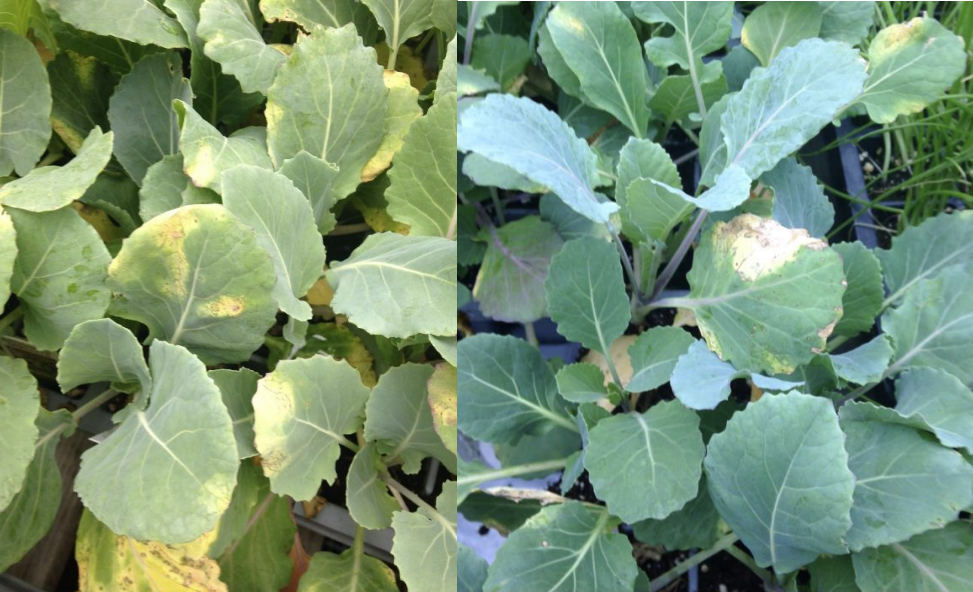
- On young transplants grown in the greenhouse, the edges of the seed leaves (cotyledons) turn black and may drop off.
- If the bacteria enter the leaves through the hydathodes (a modified pore at the edge of the leaf margin), one will see yellow, V-shaped lesions on the edge of the leaf.
- A notable feature is the blackening of the veins within these wedge-shaped lesions. Leaves may then wilt and become necrotic.
Disease Cycle
Like most bacterial diseases, disease development is fastest during warm (77 to 86° F), moist conditions. Symptoms can appear one to two weeks after infection.
As the disease progresses, the infected plant will collapse when it is planted into the garden or field. Leaves will drop as the bacteria spreads through the vascular system.
Management
- Black rot is carried on or in the seed, so make sure your suppliers are using pathogen free seed.
- If growing your own transplants, ask your seed company to hot water treat your seeds to kill the bacteria. Some private laboratories and University laboratories offer a hot water seed treatment service.
- Promptly remove and destroy infected transplants and monitor surrounding plants closely for any symptoms. Black rot resistant varieties are available for some types of cruciferous plants.
Disclaimer for Fact Sheets: The information in this document is for educational purposes only. The recommendations
contained are based on the best available knowledge at the time of publication. Any reference to commercial products, trade or brand names is for information only, and no endorsement or approval is intended. UConn Extension does not guarantee or warrant the standard of any product referenced or imply approval of the product to the exclusion of others which also may be available. The University of Connecticut, UConn Extension, College of Agriculture, Health and Natural Resources is an equal opportunity program provider and employer.