Introduction
Some of the bacterial diseases that may occur on geraniums include bacterial blight, Ralstonia wilt, Pseudomonas leaf spot and bacterial fasciation. The use of culture indexed plant material and increased sanitation efforts to prevent R. solanacearum (Race 3, biovar 2) into the US has helped greenhouse growers prevent bacterial diseases on geraniums. The target audience of this fact sheet is commercial greenhouse growers.
Bacterial Blight of Geraniums
Bacterial blight of geraniums caused by Xanthomonas hortorum pv. pelargonii can infect zonal geraniums (Pelargonium x hortorum), ivy geraniums (Pelargonium peltatum), Regal or Martha Washington geraniums (Pelargonium domesticum), and cranesbill geranium (Geranium sanguineum). Symptoms vary depending upon the species or cultivar of geranium affected and environmental conditions. Warm temperatures favor bacterial diseases such as Xanthomonas. Symptoms can develop in as little as seven days at 81 °F but may develop in three weeks at 60 °F. Temperatures below 50 °F or above 90 °F may prevent development of symptoms. The bacterium can spread on infected tools, and splashing irrigation water.
Xanthomonas can cause tiny, round, water-soaked, brown leaf spots that are less than 1/4 inch in diameter. These spots develop first on the leaf undersides and later become visible on the upper leaf surface. Yellow to brown v-shaped wedges may develop on the leaves that could be confused with Botrytis blight. Leaves may wilt down, with the petiole remaining turgid, giving an “umbrellalike appearance”. The affected leaves may drop off immediately or hang onto the plant for a week or so. Although the leaves wilt, the roots remain healthy.
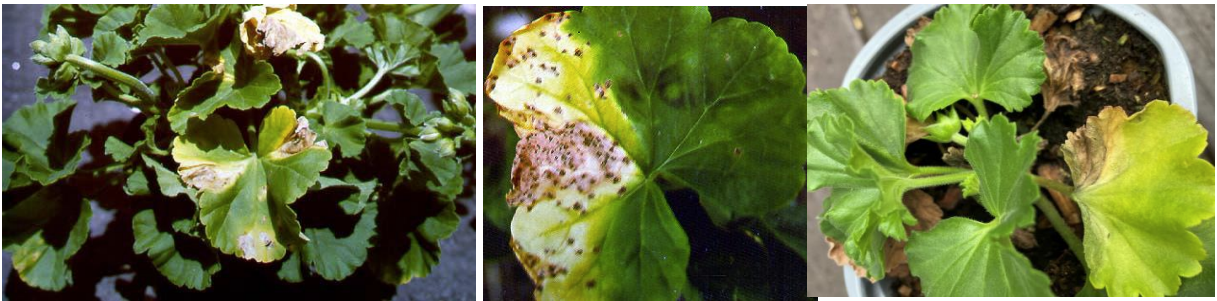
Ivy geraniums are very susceptible to bacterial blight, but infected plants do not develop very distinctive symptoms. Infected plants may be off-color resembling a nutrient deficiency symptom or two-spotted spider mite feeding damage.
Avoid placing ivy geranium hanging basket crops over bench or floor grown zonal geraniums to eliminate potential disease spread as water drips unto susceptible zonal geraniums below.
Specific management strategies include:
- Use of culture-indexed cuttings.
- Avoid overhead watering.
- Keep planting stock from different suppliers and locations separate.
- Do not grow ivy geraniums above zonal geraniums and do not grow cranesbill geraniums (Geranium sanguineum) near greenhouse crops.
- Inspect plants frequently for symptoms.
- Discard any plants showing symptoms and plants within 3 ft from infected plants, or the water splash area.
- If you suspect that you have infected plants, you can test incoming plants using an Agdia ImmunoStrip test kit specific for Xanthomonas or send samples to a university plant diagnostic clinic.
Ralstonia solanacearum
R. solanacearum has a wide host range, attacking up to 200 plant species in 33 different plant families. The bacterium can be divided into different races and biovars based upon their host range, and specific properties. Race 1 is commonly found in the southern United States and has a wide host range including impatiens, marigolds, zinnia, salvia, tomatoes, peppers, and petunia. Race 3 is tropical and does not naturally occur in the US. R. solanacearum (race 3, biovar 2) is an exotic pathogen, causing brown rot in potato, a major threat to US agriculture. It is regulated under federal quarantine.
When geraniums are infected with Ralstonia, lower leaves may wilt, turn yellow and drop off the plant. Sometimes, plants may be infected and show few if any symptoms. Ralstonia is not spread as readily as Xanthomonas by splashing water, so no leaf spots occur. R. solanacerium is a soil borne pathogen, entering the plant thru the root system causing a vascular wilt. High temperatures (80 to 90 °F) and high soil moisture favors this disease. Ralstonia spread through the irrigation water, for example, in a subirrigation system, from one plant's root system to another plant's root system. Under cool conditions, infected plants may not show any visible symptoms.
Pseudomonas Leaf Spot
Pseudomonas leaf spot caused by Pseudomonas cichorii develops water-soaked spots from ¼ to ½ inch in diameter. These dark brown to black spots may sometimes be surrounded by a yellow halo. Warm temperatures, high relative humidity and water splash favor this disease. Purchase pathogen-free cuttings, keep leaves dry and discard infected plants.
Bacterial Fasciation
Bacterial fasciation is caused by Rhodococcus fascians. Symptoms include short, thick, fleshy leafy galls especially at the plant crown. These symptoms might be confused with a plant growth regulator overdose or herbicide drift. This bacterium survives in live plants or infested soil. It does not require a wound to enter the plant. The bacterium may survive for long periods of time in the plant before symptoms even occur.
Management includes the purchase of culture-indexed plants and removal of any infected stock plants and infested media. Bactericides are not effective. Never propagate from a plant showing symptoms of leafy gall or fasciation. The main source of infection is propagation from infected stock plants and spread through contaminated tools, and water splash. This pathogen has a wide host range. Older specialty nonpatented scented geraniums may harbor this pathogen. So, always isolate your production of scented geraniums from culture-indexed zonal geraniums.
Management of Bacterial Diseases
Good sanitation practices are essential!
- Obtain culture-indexed cuttings from a reliable propagator.
- Do not grow ivy geraniums hanging baskets above zonal geraniums.
- Keep seed geraniums separate from vegetatively propagated geraniums
- Keep orders from different suppliers and/or locations separate.
- Keep newly arrived plant material in a separate quarantine area for 10 to 14 days.
- Keep plants from the same shipment in the same greenhouse (as much as possible).
- At the end of the season, do not hold over any plants.
- Rake up any debris, as some of the bacteria can survive in dead leaves.
- Thoroughly disinfest your greenhouse including floors, walls, benches, and walkways.
Disclaimer for Fact Sheets: The information in this document is for educational purposes only. The recommendations
contained are based on the best available knowledge at the time of publication. Any reference to commercial products, trade or brand names is for information only, and no endorsement or approval is intended. UConn Extension does not guarantee or warrant the standard of any product referenced or imply approval of the product to the exclusion of others which also may be available. The University of Connecticut, UConn Extension, College of Agriculture, Health and Natural Resources is an equal opportunity program provider and employer.