Introduction
Aster yellows is a systemic plant disease caused by a single-celled microorganisms known as phytoplasmas that can only survive and reproduce in living plant tissue. Once infected, there is no cure.
Symptoms
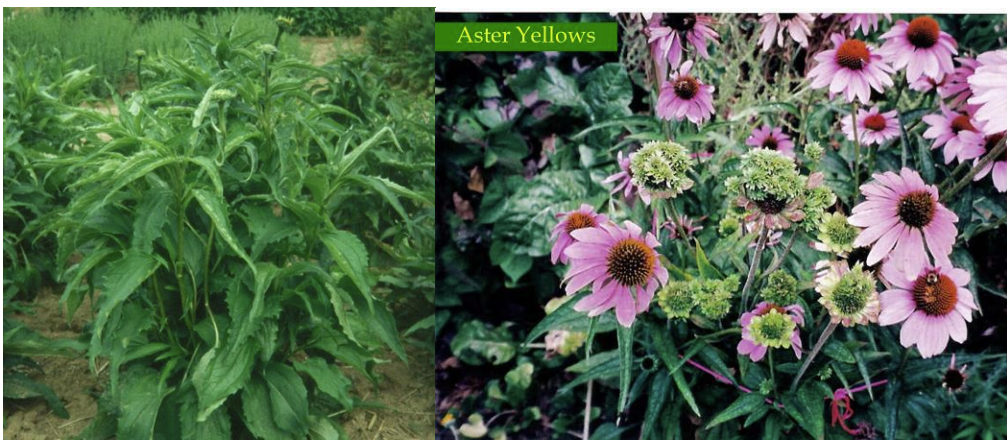
Symptoms vary depending upon the host. At first, leaves become chlorotic and new growth is yellowish-green. If herbaceous perennials are infected early in the season, plants become stunted, with shortened internodes. Unusual flower symptoms may develop such as greening of flower petals (“virescence”). Flower parts may revert to leaf forms (“phyllody”) which is especially seen in Echinacea. If plants are severely infected, they may also develop a bushy mass of leaves (“witches’ broom”) with no normal flower production.
Causal Agent and Host Range
Aster yellows is caused by a phytoplasma (Candidatus phytoplasma asteris), which is smaller than a bacterium and lacks a cell wall. It lives in the phloem of infected plants. Aster yellows has a broad host range of 200 species in 40 plant families including ornamentals, vegetables, and many weed hosts. Some herbaceous perennials susceptible to aster yellows include Anemone, Aster, Bellis, Campanula, Centaurea, Chrysanthemum, Coreopsis, Delphinium, Echinacea, Eupatorium, Gaillardia, Limonium, Phlox, Rudbeckia, Salvia, Scabiosa and Veronica.
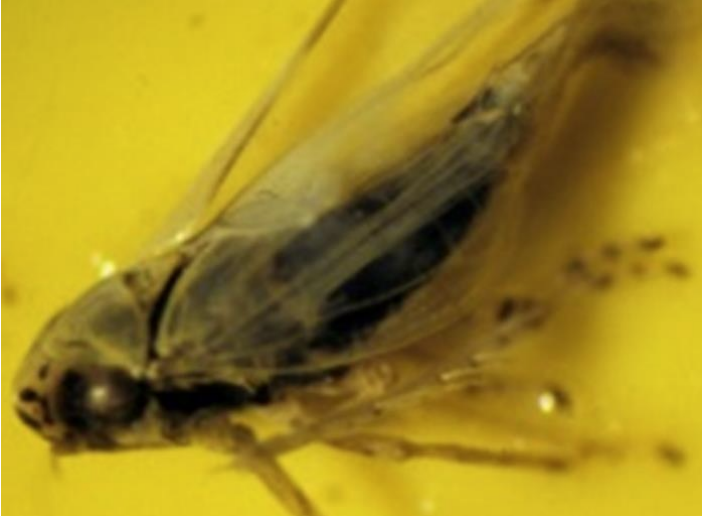
Aster yellows is vectored by the aster leafhopper (Macrosteles quadrilineatus) and other leafhoppers. The phytoplasma needs to build up in the leafhoppers body for several weeks before the leafhoppers can vector this disease. It also may take several weeks before symptoms develop. Aster leafhoppers migrates into Connecticut from the southern states.
Scouting
Regularly monitor susceptible crops for the presence of aster leafhoppers and signs of aster yellows. It may be more common in outdoor production yards because perennial weeds such as Queen’s Anne lace, dandelion and horseweed may serve as reservoirs of aster yellow. Bare root perennials or vernalized liners grown outside before overwintering in the greenhouse may also become infected.
Management
- Once plants are infected with aster yellows, there is no cure. Promptly rogue and destroy infected plants.
- Manage weeds in and around production areas to prevent infection of alternative hosts and overwintering of aster yellows.
- Consider growing high value susceptible crops in screened greenhouse facilities.
- Use yellow sticky cards to monitor for aster leafhoppers.
- Keep aster leafhopper numbers low.
Disclaimer for Fact Sheets: The information in this document is for educational purposes only. The recommendations
contained are based on the best available knowledge at the time of publication. Any reference to commercial products, trade or brand names is for information only, and no endorsement or approval is intended. UConn Extension does not guarantee or warrant the standard of any product referenced or imply approval of the product to the exclusion of others which also may be available. The University of Connecticut, UConn Extension, College of Agriculture, Health and Natural Resources is an equal opportunity program provider and employer.