Introduction
Liverworts (Marchantia polymorpha) are a common weed pest in herbaceous perennial production in greenhouses and container nurseries. They are branching, ribbon-like plants lacking distinct roots, stems, and leaves. As they grow, a thick mat covering develops, preventing water and nutrients from reaching the root zone and reducing crop marketability.
Liverworts reproduce both sexually and asexually. They reproduce vegetatively by spores. Stalked, umbrella-like structures release these spores. Spores can live for up to one year.
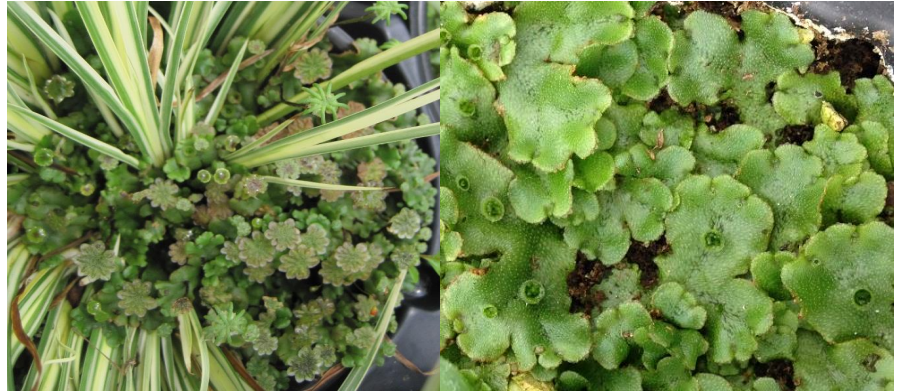
Small, bud-like branches that are produced in cup-like structures on the surface of the plant also help spread liverworts. They spread from pot to pot in water droplets as plants are watered overhead. Both sexual and vegetative reproduction can occur at the same time.
Liverworts thrive in conditions of high fertility, moisture and high humidity that are prevalent in enclosed greenhouses or hoop houses. The target audience of this factsheet is commercial greenhouse growers.
Cultural Practices to Help Prevent Liverworts
- Clean and disinfect empty greenhouses between crops to remove spores.
- Inspect incoming plants for signs of liverworts and isolate infected plants.
- Regularly scout plants for signs of liverworts, especially during the winter months. Rogue out infected plants.
- Clean up liverworts from benches, walkways, and drainage ditches.
- Store growing media properly to prevent contamination.
- Avoid overwatering crops and water according to plant need.
- Avoid topdressing with slow release fertilizers contributing to increased fertility levels on the media surface and the growth of liverworts.
- Liverworts lack true roots, so allowing the media to dry between watering, helps reduce their vigor.
- Use of coarse textured mulch helps reduce surface moisture levels.
- Or mulch plants with parboiled rice hulls or rice husks to reduce liverwort establishment and growth.
In an USDA study, containers topdressed with ½ to 1 inch of rice hulls provided nearly 100 % liverwort control for 8 weeks with no adverse effects. However, this mulching depth is most suitable for larger sized containers. Rice hulls dry down the surface of the substrate, but they have a higher pH (6.5-8.0) than what is desirable for most greenhouse crops (5.8- 6.2) so growers need to monitor pH levels on a regular basis.
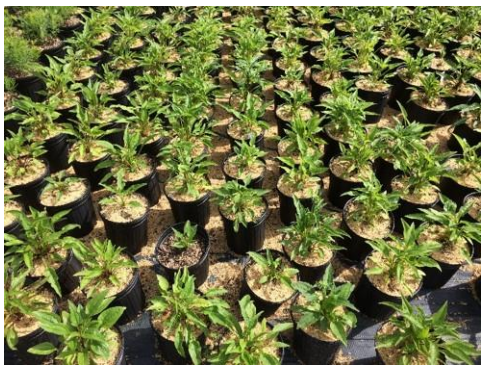
Pre-emergence herbicides labeled for liverwort control in outdoor woody ornamental nurseries are not labeled for use in enclosed greenhouse structures. Labeled greenhouse sanitizers can be used between crop cycles to sanitize surfaces and kill spores.
Disclaimer for Fact Sheets: The information in this document is for educational purposes only. The recommendations
contained are based on the best available knowledge at the time of publication. Any reference to commercial products, trade or brand names is for information only, and no endorsement or approval is intended. UConn Extension does not guarantee or warrant the standard of any product referenced or imply approval of the product to the exclusion of others which also may be available. The University of Connecticut, UConn Extension, College of Agriculture, Health and Natural Resources is an equal opportunity program provider and employer.