Scouting & Observations
- Wildfire Smoke
- Squash Vine Borer
- Tomato Spotted Wilt Virus
- Bacterial Wilt of Cucumber
- Sweet Corn Pest Tracking
- Continue to be on the lookout for Allium Leafminers, Aphids,
Colorado Potato Beetles, Corn Earworm, Flea Beetles, Potato
Leafhoppers, European Corn Borer, Squash Vine Borer, Scarab
Beetles, Cabbage Root Maggot, Thrips and Mites
Upcoming Events & Opportunities
- 7/22 - Commercial Vegetable Pests and Diseases Skill Share
- 8/5 - Plant Science Day with CAES
- 8/6 - Twilight Urban Farming Cut Flower Series #3
Can the particles in the air currently from the Canadian wildfires get into the soil and then into our food being grown locally?
Smoke and ash from current Canadian wildfires have raised questions about the safety of produce growing on farms and gardens in Connecticut and beyond. While the number 1 concern from wildfire smoke is human health, chemicals found in the smoke don’t just stay in the air and can deposit onto plants and soils.
From a food safety perspective, there is generally low concern about the chemicals present on soils and produce. A study conducted in California examined 200 samples of greens (collard greens, lettuces, kale, and chard) that were exposed to wildfire smoke and ash. The study found no detectable levels of lead, arsenic, mercury, or chromium in any of the samples. However, it is still important to practice basic food safety measures, such as washing hands before handling produce and thoroughly washing produce before consumption.
When the smoke is light to moderate, it can actually enhance crop growth by diffusing light into the plant canopy. However, severe smoke that blocks sunlight can negatively impact photosynthesis and hinder plant growth and development.
Toxic gases present in smoke, such as nitrous oxide, sulfur dioxide, and ozone, can enter plants through their stomata and cause damage to plant tissues. Ozone, in particular, can burn or oxidize tissues in sensitive plants like cucumber, watermelons, beans, and potatoes. Exposure to wildfire smoke can affect the flavor of certain crops like wine grapes, giving them a smoky taste. The reduced photosynthesis and presence of toxic gases can increase plant stress and delay the physiological processes, resulting in delayed growth and harvest. Pollinator activity is also reduced due to smoke there by having a potential issue with crop pollination.
Smoke from wildfires can also have indirect effects on agriculture, creating a ripple effect throughout the farming process. The health concerns of farm workers due to the presence of smoke can hinder various farm activities, including crop scouting, fertilization, spraying, and other essential tasks. These disruptions have the potential to adversely impact crop production and overall agricultural output. Pollinator activity is also reduced due to smoke there by having a potential issue with crop pollination.
Answered by: Shuresh Ghimire, PhD, Vegetable Crops Assistant Extension Educator, originally published on June 9, 2023.
Squash Vine Borer
We're starting to see squash vine borer (SVB) damage in summer squash. At first glance, affected plants may look like they have Phytophthora crown rot because the crown is collapsed and covered with white, rotting tissue. However, in the samples we've examined, the primary problem was squash vine borer, with bacteria and fungi invading afterward and causing secondary crown rot.
If plants suddenly wilt, inspect the crown closely. Look for orange-brown sawdust-like frass, small entry holes, and tunneling inside the stem. Split the crown lengthwise—finding tunnels, frass, or a cream-colored larva confirms SVB. Remove and destroy affected plants, and continue scouting the remaining crop. Timing insecticides before larvae enter the stem is critical, as products are ineffective once the larvae are inside.
Tomato Spotted Wilt Virus
Tomato Spotted Wilt Virus (TSWV) was observed this week in CT in a tomato field where nearly all plants were infected. TSWV causes black, small, irregularly shaped lesions on tomato foliage. Stems and shoots may exhibit black streaks. Severely affected plants may wilt and become stunted. Fruit develops chlorotic rings, patches, or lesions. Symptoms of TSWV can be variable and some are similar to symptoms of other viruses. Symptoms of TSWV may also resemble symptoms of early blight or other leaf spot diseases; however, lesions caused by TSWV have blurred margins, while the margins of lesions caused by other diseases are definite.
Agdia ImmunoStrip® is a test strip can be used in the field to confirm the presence of TSWV within minutes.
Numerous landscape plants, greenhouse ornamentals, and weeds may be reservoirs of the virus. TSWV is primarily spread by thrips which feed on plants and transmit the virus. It only takes 5 min of feeding for thrips to acquire the virus, causing it to easily spread quickly. The virus is not seed-borne.
There is no cure or chemical treatment for plant viruses. Discard affected plants. Eradicate weeds that may be hosts. Control thrips populations. Inspect plant material at arrival. Do not grow vegetable transplants and ornamental bedding plants in the same greenhouse. For the next season, use TSWV resistant varieties.
Bacterial Wilt of Cucumber
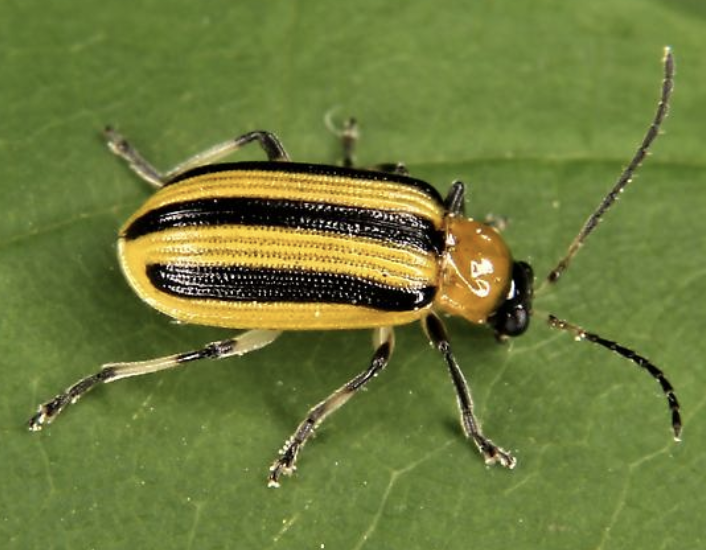
Bacterial wilt of cucumber was observed this week in CT. Bacterial wilt is transmitted by cucumber beetles. Cucumber, muskmelon and summer squash plants are highly susceptible to wilt, pumpkins and winter squashes are less susceptible, and watermelon is not. Seedlings at the cotyledon and 1- to 3-leaf stage are more susceptible to infection with bacterial wilt than older plants. Thus, it is especially important to keep beetle numbers low before the 5-leaf stage. Use crop rotation to reduce beetle numbers. Adult striped cucumber beetles can overwinter in field edges with this bacterial pathogen in their gut and infect susceptible plants next year.
To prevent bacterial wilt in highly susceptible crops, treat when there is 1 beetle for every 2 plants. Less wilt-susceptible crops (butternut, watermelon, most pumpkins) will tolerate 1 or 2 beetles per plant without yield losses. Spray within 24 hours after the threshold is reached. Timely and effective early control will prevent the need for sprays during flowering when bees are active in the crop.
Sweet Corn Pests - Trap Count Update
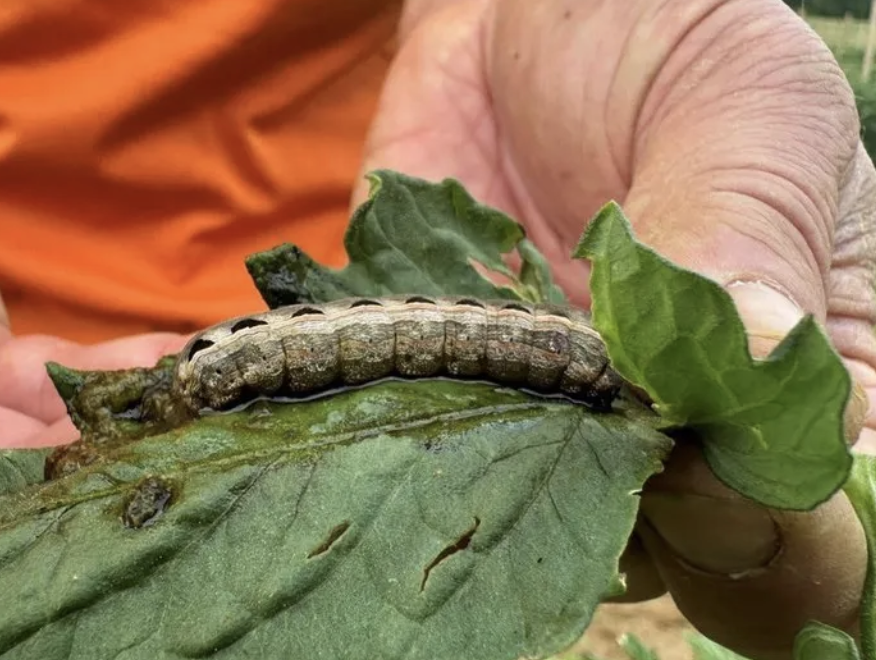
| Location | CEW (avg per night) | ECB - NY | ECB - IA | ECB - III |
| Shelton | 2 | 0 | 0 | 0 |
| Berlin | 0 | 0 | 1 | 0 |
| Glastonbury | 0.86 | 0 | 0 | 0 |
Spray Interval for Corn Earworm:
 View our Sweet Corn Pest ID Guide.
See the New England Vegetable Management Guide for management strategies for all sweet corn insect pests.
Continue to be on the lookout
The following pests that were covered in the previous pest alerts and are still relevant in current conditions:
- Allium Leafminer
- Aphids
- Colorado Potato Beetles
- Cucumber Beetles
- Flea Beetles
- Potato Leafhoppers
- Cabbage Root Maggot
- Onion Thrips
- Mites
Upcoming Events & Opportunities
Solid Ground Summer Skill Share
Next Up: Vegetable Pests & Diseases
July 22nd, 4pm to 6:30pm
Handel Family Farm, East Hartford
Using an active farm as our classroom, Vegetable Specialist Shuresh Ghimire will guide participants on a scouting walk, illustrating what to look for, frequency of inspections, tools and traps, describing good record keeping, and thresholds for taking action. Cost to attend is $15, dinner included!
Twilight Urban Farming Cut Flower Series
#3 - Intensive Production
August 6th, 6:30PM - 8PM
Backyard Blooms, Trumbull
>> Register for Series #3
Join UConn Extension's Urban Agriculture Team for a series of unique hands on learning experiences while touring urban flower farms.
This series is free to attend. All are welcome! Please contact Angela Lopez-Tejada if you have any questions.
116th CAES Plant Science Day
August 5th, 10AM - 4PM
Lockwood Farm, 890 Evergreen Ave, Hamden
This annual hands-on event focuses on agriculture, public health, food safety, and the environment. There will be barn displays, field plots and exhibits to tour, technical demonstrations, plant disease diagnosis, plant identification, insect identification, activities for the kids, and CT pesticide credits offered.
Save These Dates!

2026 New England Vegetable & Fruit Conference
December 15, 16, 17, 2026
Manchester, New Hampshire

2027 UConn Extension Vegetable and Small Fruit Growers Conference
Tuesday, January 12th, 2027
UConn Student Union, Storrs, CT
Stay in touch with us
- Share what you see: We're here to assist with identification, management strategies, and guidance on best practices. Send us a photo/message via iMessage at 959-929-1031.
- Facebook Group: UConn Extension moderates a private Facebook group specifically for commercial vegetable producers. It is a space to share photos of insects and diseases you find in your fields, ask questions, share ideas, and stay engaged with growers across the state.
Join the "UConn Extension - Vegetable IPM" Facebook Group - Schedule a consultation: Would you benefit from meeting with an Extension Specialist at your farm to provide insight on pest or disease identification, management strategies, and more? If so, please contact our Vegetable Extension Specialist, Shuresh Ghimire, to setup a farm visit. Contact him at shuresh.ghimire@uconn.edu or 860-870-6933.
Contact Information
Shuresh Ghimire, Vegetable Extension Specialist: shuresh.ghimire@uconn.edu
Nicole Davidow, Vegetable Extension Outreach Assistant: nicole.davidow@uconn.edu
Vegetable IPM Office Phone Number:
860-870-6933
Vegetable IPM Cell Phone Number:
959-929-1031 (feel free to text/iMessage photos)
Any reference to commercial products, trade or brand names is for information only, and no endorsement or approval is intended. Always read the label before using any pesticide. The label is the legal document for product use. Disregard any information if it is in conflict with the label. UConn Extension does not guarantee or warrant the standard of any product referenced or imply approval of the product to the exclusion of others which also may be available. The University of Connecticut, UConn Extension, College of Agriculture, Health and Natural Resources is an equal opportunity program provider.