Scouting & Observations
- Extreme Summer Weather Resources
- Powdery Mildew
- Squash Bugs
- Cucumber Beetles
- Armyworms
- Sweet Corn Pest Tracking
- Continue to be on the lookout for Allium Leafminers, Aphids,
Colorado Potato Beetles, Corn Earworm, Flea Beetles, Potato
Leafhoppers, European Corn Borer, Squash Vine Borer, Scarab
Beetles, Cabbage Root Maggot, Thrips and Mites
Upcoming Events & Opportunities
- 7/16 - Twilight Urban Farming Cut Flower Series #2
- 7/22 - Commercial Vegetable Pests and Diseases Skill Share
- 8/5 - Plant Science Day with CAES
- 8/6 - Twilight Urban Farming Cut Flower Series #3
Extreme Summer Weather
Flooding
Rain from last weekend's storm brought some relief to our region, which has been experiencing a long period of moderate to severe drought. However, heavy downpours during dry conditions often translates to more water run off than substantial ground soaking, and results in a heightened risk for flooding.
While there was concern the storm damage from July 4th could've been more widespread, localized areas experienced downbursts of rain, wind, and hail leading to downed trees, impassable roads, and power outages. If your farm received damage over the weekend, please report them to your local FSA office.
Resources:
Ways for Growers to Be Ready for Flooding and Hurricanes in Connecticut
CT Department of Agriculture - Flooding Resources
Storm Impact on Pest & Diseases
Storm systems moving across the northeast during the summer months bring with them a surge in insect pests that aren't able to overwinter in our region. The relief in heat and humidity is often temporary, if at all. Considering July is a time of abundant foliar growth, air flow among plants becomes more and more challenging as plant surfaces become more susceptible to disease and fungal growth in the summer climate.
Five general tips:
- Avoid overhead watering: Use drip irrigation when possible. If overhead irrigation is unavoidable, do so early in the morning so plants can dry quickly in the sun.
- Manage weeds: In addition to using up precious nutrients and water, weeds harbor pathogens and pests that can threaten the health of your crops.
- Stake and prune: Stake vining plants to reduce soil contact and get them away from ground insects. Prune and remove diseased plant material including fruit.
- Work strategically and sanitize often: Do your best to avoid working in fields when plants are wet. Work in the healthiest part of the field last, and make sure to sanitize your tools (including boots and harvesting equipment) often.
- Go on scouting walks: pests and diseases are easier to deal with when identified early. Contact us you need assistance with identifying the cause of a symptom or would like help with customizing a spray program.
Cucurbit Powdery Mildew
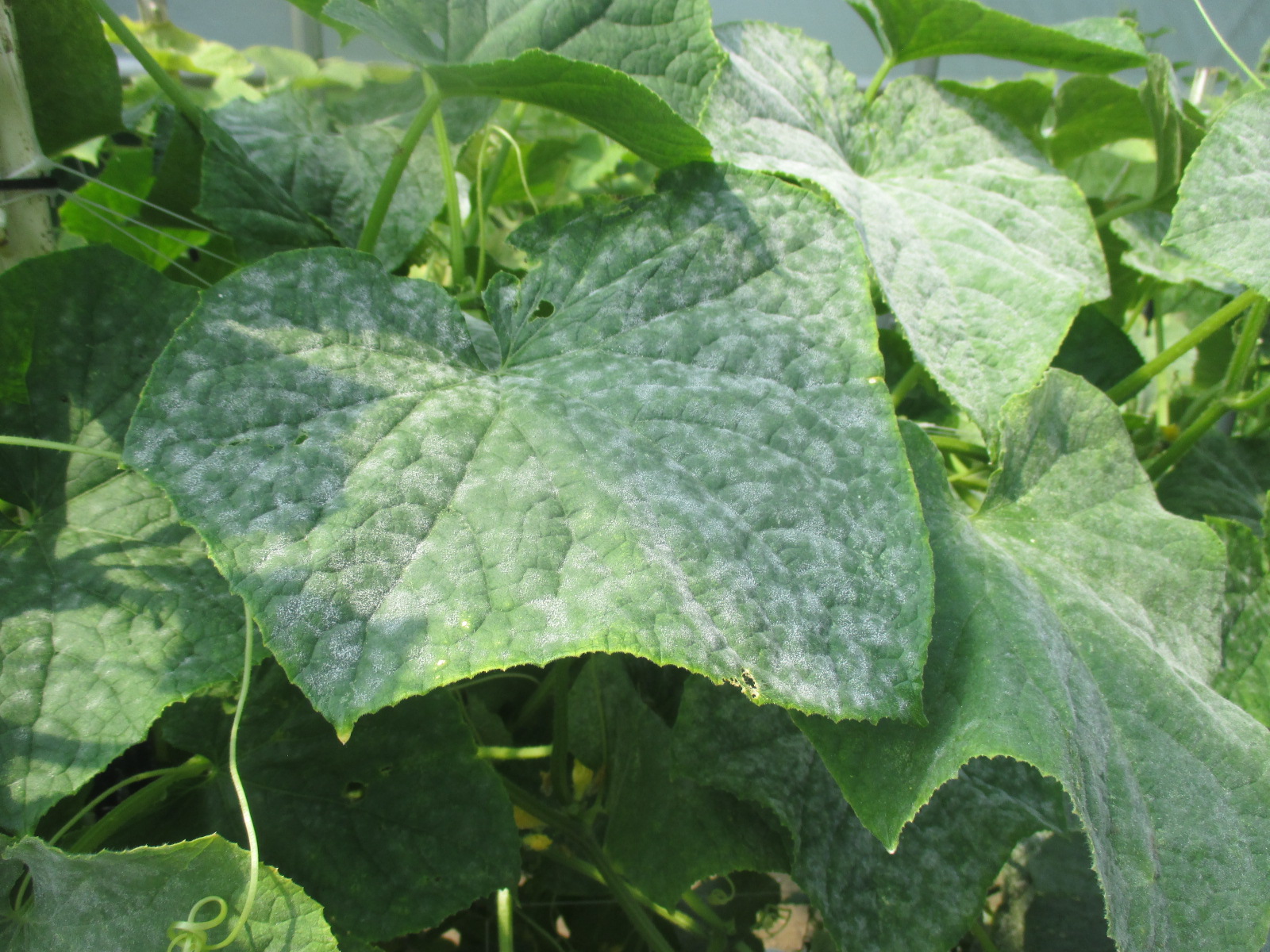
Begin scouting for powdery mildew at fruit initiation. Fungicides should be applied at the first sign of disease (or earlier with some products). On cucurbits, the disease has a white powdery appearance and infects both the top and bottom of the leaf, making it more difficult to control with non-systemic fungicides. However, powdery mildew fungi tend to become resistant to systemic fungicides such as Topsin-M (Group 1) and Cabrio, Flint Extra, Quadris, and Sovran (Group 11). Resistances to Group 1 and Group 11 fungicides have resulted in the removal of these classes of fungicides from recommendations, with the exception of Pristine which is a combination product. Resistance to the DMI fungicides (Rally, Procure - Group 3) is also widespread; use Rally or Procure at the high labeled rate only.
The most effective contact fungicides are sulfur, mineral oil, and chlorothalonil. For organic production, options include sulfur, mineral oil/JMS Stylet-Oil, potassium bicarbonate, neem oil, Regalia, Double Nickel, and similar labeled products, but many organic materials work best preventatively and require excellent coverage.
With the forecasted heat, be careful with sulfur and oils. Sulfur can injure plants when temperatures approach 90°F, and oils can also cause crop injury under hot or drought-stressed conditions. If using sulfur, oil, or other organic contact materials, apply during cooler parts of the day and follow label restrictions on temperature, crop safety, and mixing intervals.
Squash Bugs
Squash bug adults find zucchini, yellow summer squash, and other thick-stemmed cucurbits like pumpkins and Hubbard squash most attractive. They thrive when plants are large and can provide a greater surface area for food, shelter, and egg-laying. Adults are long-lived and lay eggs over several weeks. High densities of squash bugs can cause foliage to wilt, turn black, and die. Squash bugs also feed on the fruit causing scarring and reducing marketability.
Scout the undersides of leaves for squash bug adults and eggs. Treat if egg masses exceed 1 per plant. Time squash bug sprays to kill young nymphs which are easiest to control. Thorough plant coverage is necessary. As the spray timing often coincides with the bloom period, treat plants late in the day to reduce risk to bees. Be mindful of pollinators when selecting a control product and select one with lower bee toxicity.
Cucumber Beetles
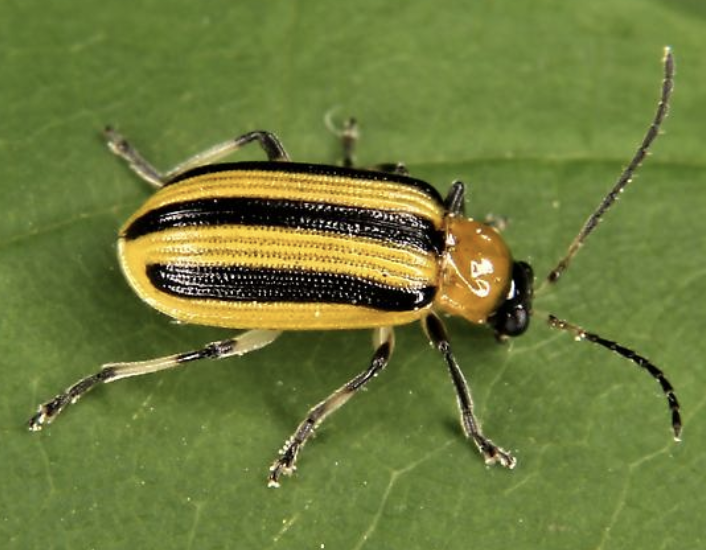
Cucumbers and muskmelons are highly susceptible to bacterial wilt. Treat these crops if one cucumber beetle is found for every two plants. Butternut squash, watermelon, and most pumpkins are less susceptible to bacterial wilt and can tolerate 1-2 beetles per plant. There aren’t many bee-friendly options for chemical control, so get populations under control early on to prevent the need to spray during flowering or consider spraying in the evening after bees have stopped foraging. Learn more about reducing the risk to pollinators.
The most effective OMRI-listed material is pyrethrin (e.g. Pyganic). Small plants can also be protected using kaolin clay (e.g. Surround), which needs to be reapplied to protect new growth. If you are applying a contact spray, target adult beetles in the evening when they are less active. For crops most susceptible to bacteria wilt, a systemic insecticide may be more effective. Systemic insecticides can be applied to the seed or the seedling root zone during or after planting/transplanting.
Adults will overwinter in field edges near last season's crop field. The overwintering population will lay eggs in the soil after maturing on early season crops, leading to a generation of summer adults that emerge in late July and August. This generation may produce a subsequent generation that emerges in the fall. Crop rotation and early intervention is key to managing cucumbers beetles since their populations grow so rapidly.
See the New England Vegetable Management Guide for more information on insect control for cucurbit crops.
Armyworms
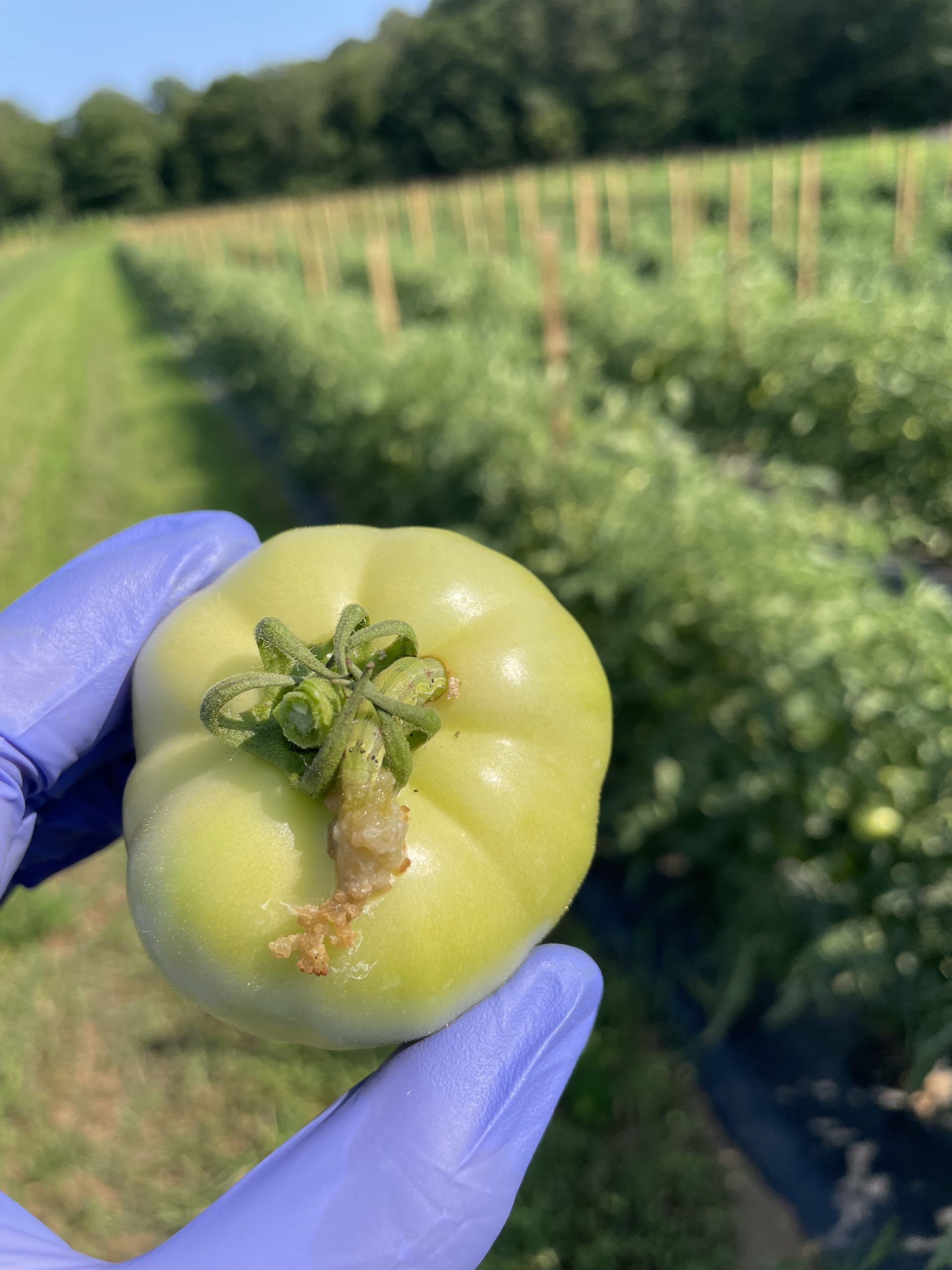
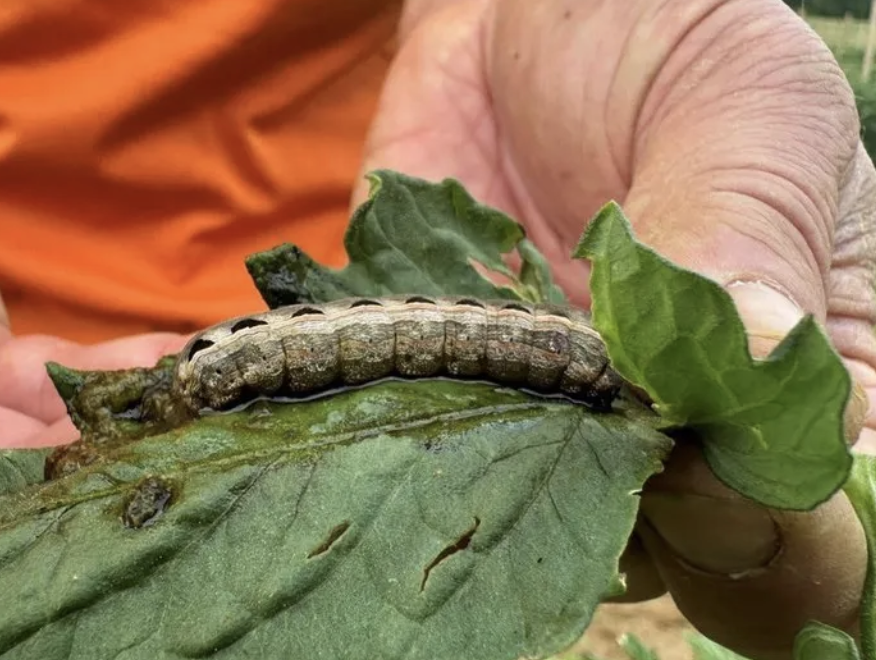
Armyworms were recently found feeding on high-tunnel tomatoes in Middlesex County, mainly near an open tunnel door. They are smooth-bodied caterpillars that may be green, brown, gray, or nearly black, often with lengthwise stripes. Several armyworm species may feed on tomatoes. Young larvae make small holes or skeletonize leaves; larger larvae can consume substantial foliage and may also feed on fruit. Scout plants near doors, vents, weeds, and tunnel edges first, checking leaf undersides and the interior canopy. Look for caterpillars, fresh feeding, frass, and fruit injury.
Remove caterpillars by hand where infestations are localized. Control weeds and grasses around tunnel entrances, and consider insect screens where practical. Treat while larvae are small if numbers are increasing or if feeding is becoming economically significant. Effective options include Bacillus thuringiensis products such as Dipel and Xentari. Bt works best on very small larvae and requires thorough coverage and ingestion. For a more comprehensive list, consult New England Vegetable Management Guide. Rotate insecticide mode-of-action groups and preserve natural enemies whenever possible.
Sweet Corn Pests - Trap Count Update
| Location | CEW (avg per night) | ECB - NY | ECB - IA | ECB - III |
| Shelton | 4 | 2 | 0 | 1 |
| Berlin | .16 | 0 | 0 | 1 |
| Glastonbury | 0.5 | 0 | 0 | 0 |
Spray Interval for Corn Earworm:
 View our Sweet Corn Pest ID Guide.
See the New England Vegetable Management Guide for management strategies for all sweet corn insect pests.
Continue to be on the lookout
The following pests that were covered in the previous pest alerts and are still relevant in current conditions:
- Allium Leafminer
- Aphids
- Colorado Potato Beetles
- Cucumber Beetles
- Flea Beetles
- Potato Leafhoppers
- Cabbage Root Maggot
- Onion Thrips
- Mites
Upcoming Events & Opportunities
Twilight Urban Farming Cut Flower Series
#2 - From Seed to Flower
July 16th, 6:30PM - 8PM
The Hickories, Ridgefield
>> Register for Series #2
#3 - Intensive Production
August 6th, 6:30PM - 8PM
Backyard Blooms, Trumbull
>> Register for Series #3
Join UConn Extension's Urban Agriculture Team for a series of unique hands on learning experiences while touring urban flower farms.
This series is free to attend. All are welcome! Please contact Angela Lopez-Tejada if you have any questions.
Solid Ground Summer Skill Share
Next Up: Vegetable Pests & Diseases
July 22nd, 4pm to 6:30pm
Handel Family Farm, East Hartford
Using an active farm as our classroom, Vegetable Specialist Shuresh Ghimire will guide participants on a scouting walk, illustrating what to look for, frequency of inspections, tools and traps, describing good record keeping, and thresholds for taking action. Cost to attend is $15, dinner included!
116th CAES Plant Science Day
August 5th, 10AM - 4PM
Lockwood Farm, 890 Evergreen Ave, Hamden
This annual hands-on event focuses on agriculture, public health, food safety, and the environment. There will be barn displays, field plots and exhibits to tour, technical demonstrations, plant disease diagnosis, plant identification, insect identification, activities for the kids, and CT pesticide credits offered.
Save These Dates!

2026 New England Vegetable & Fruit Conference
December 15, 16, 17, 2026
Manchester, New Hampshire

2027 UConn Extension Vegetable and Small Fruit Growers Conference
Tuesday, January 12th, 2027
UConn Student Union, Storrs, CT
Stay in touch with us
- Share what you see: We're here to assist with identification, management strategies, and guidance on best practices. Send us a photo/message via iMessage at 959-929-1031.
- Facebook Group: UConn Extension moderates a private Facebook group specifically for commercial vegetable producers. It is a space to share photos of insects and diseases you find in your fields, ask questions, share ideas, and stay engaged with growers across the state.
Join the "UConn Extension - Vegetable IPM" Facebook Group - Schedule a consultation: Would you benefit from meeting with an Extension Specialist at your farm to provide insight on pest or disease identification, management strategies, and more? If so, please contact our Vegetable Extension Specialist, Shuresh Ghimire, to setup a farm visit. Contact him at shuresh.ghimire@uconn.edu or 860-870-6933.
Contact Information
Shuresh Ghimire, Vegetable Extension Specialist: shuresh.ghimire@uconn.edu
Nicole Davidow, Vegetable Extension Outreach Assistant: nicole.davidow@uconn.edu
Vegetable IPM Office Phone Number:
860-870-6933
Vegetable IPM Cell Phone Number:
959-929-1031 (feel free to text/iMessage photos)
Any reference to commercial products, trade or brand names is for information only, and no endorsement or approval is intended. Always read the label before using any pesticide. The label is the legal document for product use. Disregard any information if it is in conflict with the label. UConn Extension does not guarantee or warrant the standard of any product referenced or imply approval of the product to the exclusion of others which also may be available. The University of Connecticut, UConn Extension, College of Agriculture, Health and Natural Resources is an equal opportunity program provider.