Introduction
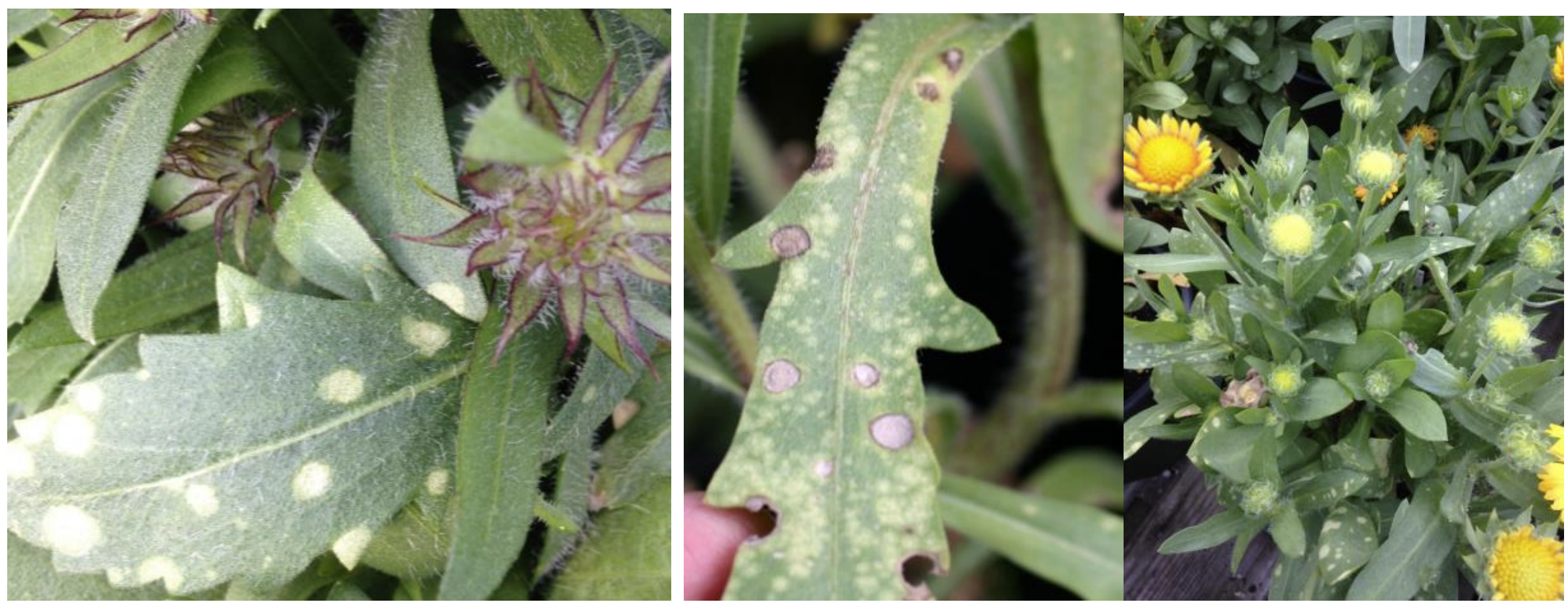
Gaillardia or blanket flower occasionally has mysterious yellow spots on its leaves that are caused by a white smut disease. The target audience of this fact sheet is commercial greenhouse growers.
Symptoms
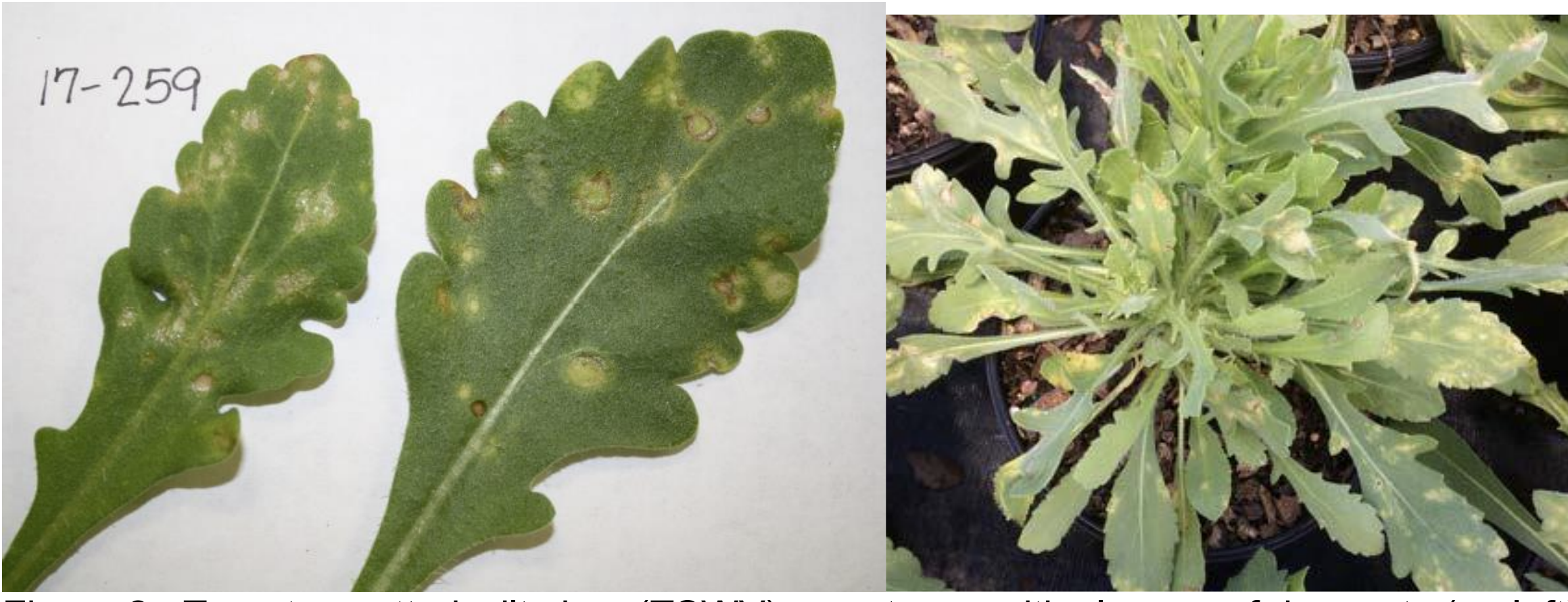
Look for white to yellowish-green spots, up to ¼ of an inch long. At first, one may see very faint spots that could be confused with tomato spotted wilt virus (TSWV) symptoms. Light to dark-brown spots later develop in the center of these spots. One will not see fungal fruiting bodies on the surface of these leafspots. As the disease advances, spots may appear brown surrounded by yellow areas.
Causal Agent and Host Range
White smut on gaillardia is caused by fungi in the genus Entyloma. This smut disease is most severe on Gaillardia but can also infect Aster, Echinacea, Helianthus and Rudbeckia. Cool, humid conditions favor this disease which is more common in production yards with close plant spacing and overhead irrigation.
Microscopic examination is needed to see the distinctive thick-walled resting spores known as ustiliospores. These resting spores enable the fungus to overwinter. White spores are also formed on the surface of the leaf spots, which are spread via air currents. A white coating may be visible on the leaf surface.
Gaillardia smut may be seed-borne. Certain cultivars may be more susceptible. It has been reported on the Gaillardia cultivars Goblin, Baby Cole, and Fanfare.
Monitoring
Look for the white to yellowish-green spots in the late spring or early summer.
Management
- Keep leaves dry by watering in the morning so leaves dry by nightfall.
- Give plants plenty of space.
- Apply preventive applications of fungicides, especially those fungicides that perform well against rust diseases. Systemic fungicides can be rotated with protectant fungicides.
- See the latest edition of New York and New England Management Guidelines for Greenhouse Floriculture and Herbaceous Ornamentals for more information available from the Northeast Greenhouse Conference.
Disclaimer for Fact Sheets: The information in this document is for educational purposes only. The recommendations
contained are based on the best available knowledge at the time of publication. Any reference to commercial products, trade or brand names is for information only, and no endorsement or approval is intended. UConn Extension does not guarantee or warrant the standard of any product referenced or imply approval of the product to the exclusion of others which also may be available. The University of Connecticut, UConn Extension, College of Agriculture, Health and Natural Resources is an equal opportunity program provider and employer.