Scouting & Observations
- Alternaria
- Botrytis Blight
- Tomato fact sheets to help with scouting
- Cross-Striped Cabbageworm
- Sweet Corn Pest Tracking
- Farming During Extreme Heat
- Continue to be on the lookout for Allium Leafminers, Aphids,
Colorado Potato Beetles, Corn Earworm, Flea Beetles, Potato
Leafhoppers, European Corn Borer, Squash Vine Borer, Scarab
Beetles, Cabbage Root Maggot, Onion Thrips and Mites
Upcoming Events & Opportunities
- 7/7 - Vegetable IPM Field Workshop
- 7/8 - Cut Flower Pests and Diseases Skill Share
- 7/16 - Twilight Urban Farming Cut Flower Series #2
- 7/22 - Commercial Vegetable Pests and Diseases Skill Share
- 8/5 - Plant Science Day with CAES
- 8/6 - Twilight Urban Farming Cut Flower Series #3
Alternaria
Current temperatures and high relative humidity create conditions more conducive to disease development. That has been very true for cases of Alternaria. We have seen reports of Alternaria increase dramatically in recent days, with at least one report of an incidence inside a high tunnel with drip irrigation, where Alternaria is not very common. While the germination of Alternaria spores occurs across a relatively broad temperature range of approximately 46–90°F, disease development is most favorable under warm conditions (68 to 86 °F). The presence of free moisture on leaf surfaces, or >90% relative humidity, is essential for spore germination and successful infection.
Alternaria impacts a wide range of crops including solanaceous and cruciferous plants. The most common symptom is yellow, dark brown to black circular leaf spots with target-like concentric rings. Lesion centers may fall out. Individual spots coalesce into large necrotic areas and leaf drop can occur. Lesions can occur on petioles, stems, flowers, flower pedicels, and seed pods.
Alternaria (aka Early Blight) in Tomatoes
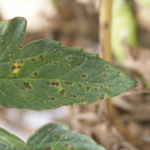
Commonly found early in the season, but can occur at any point during the growing season, early blight will start on the lower leaves as dark brown spots that start small and grow larger. The stems and fruit may also develop symptoms with dark sunken lesions that will also exhibit the concentric rings. On the stem, the infected area may be more elongated than would be seen on the leaves or fruit.
Alternaria in Crucifers
Infections of broccoli and cauliflower heads can lead to complete deterioration of the heads and impact marketability.
Management Best Practices
- Avoid overhead irrigation if possible. When irrigation is needed, do it in the morning
- Control weeds, especially those in the family Brassicaceae
- Avoid working in fields when foliage is wet
- Promptly incorporate plant debris after harvest, or mow if tillage is not possible in late fall crops
- Start with certified disease-free seed or plan to use a hot water treatment for future seasons
- Practice a 3-year crop rotation with all brassica crops. Use proper plant spacing and row spacing for good air circulation.
Use Cornell’s Disease Resistant Vegetable Crop Varieties as a resource when selecting seeds. The New England Vegetable Management Guide also has related information in its Field Tomato and Brassica crop section. Double Nickel and Oso are examples of fungicides that can help control the spread of Alternaria.
Botrytis Blight
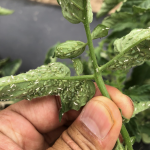
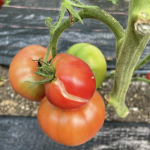
Another damp, high temperature, and humidity-loving disease commonly found in tomato crops - particularly those grown in high tunnels - is Botrytis Blight. Symptoms include tan to brown lesions on leaves and stems that can expand and cause wilting. It also causes brown, dying flowers, spreading the infection to fruit. Soft, watery rot on fruit, or whitish rings called "ghost spots," reduce market quality. Botrytis Blight is often referred to as gray mold due to the grayish-white, fuzzy mold that appears on infected plant parts. The fungus Botrytis cinerea spreads through spores carried by wind, rain, or air currents.
- Take measures to improve air circulation. This can be accomplished by increasing plant to plant/row to row spacing and continual pruning of plants
- Currently there are no known B. cinerea resistant tomato cultivars
- Apply fungicides preventatively prior to dense canopy growth, rotate fungicides to manage resistance
- Avoid overhead irrigation, minimize plant wetness
- Do not work on wet plants, prune plants in the early afternoon allowing wounds to dry quickly
- Ventilate high tunnels or greenhouses to maintain relative humidity at less than 90%
- Practice good greenhouse sanitation, scout, bag, and remove infected plants
We are updating our Tomato Fact Sheets!
These informational guides are great resources for properly identifying what you might be seeing in your tunnel or field tomato crops.
Diseases
|
Pests
|
and more!
|
Cross-Striped Cabbageworm
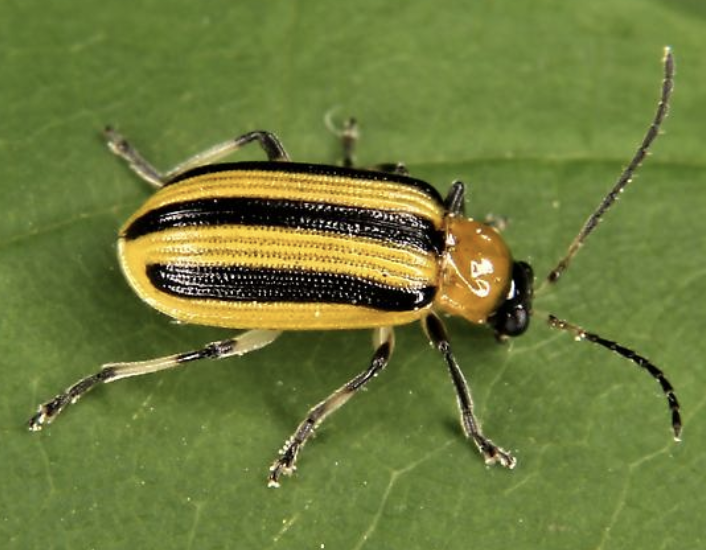
The cross-striped cabbageworm (CSCW) has officially arrived in CT from overwintering further south. CSCW has become a significant pest of brassicas in our region because, unlike other major caterpillar pests, they lay eggs in batches of 3-25, not one at a time. Egg batches are flat yellow clusters attached to the underside of the leaf. Infested plants will therefore have many caterpillars and can leave the plant completely skeletonized. They can also target terminal buds and sprouts and may burrow into heads. Scout weekly for caterpillars and damage. Spray if 5% of the plants are infested. Use selective insecticides to preserve parasitic wasps.
While scouting for CSCW, it’s a good idea to be on the lookout for other brassica caterpillar pests including those of the imported cabbageworm (ICW) and diamond back moth (DBM). Damage of ICW includes round or ragged feeding holes and deposits of wet, green or brownish frass. When disturbed, DBM wiggle vigorously and may drop off the plant on a string of silk. DBM feeding causes small, round holes which tend to be spread across the foliage rather than concentrated in the head.
Scout fields by checking leaves (top and bottom) on 25 plants across the field. In the Northeast, there is generally no need to treat young plants unless weather conditions delay plant development and at least 35% of plants are infested with ICW and/or DBM. Treat plants between the start of heading and harvest if 20% or more of the plants are infested. The most critical time to scout and apply chemical controls is just before head formation. Use a 10-15% threshold throughout the season for kale, collards, mustard, and other leafy greens. But remember the threshold for CSCW is 5%. Spray recommendations can be found on the New England Vegetable Management Guide.
Sweet Corn Pests - Trap Count Update
| Location | CEW (avg per night) | ECB - NY | ECB - IA | ECB - III |
| Shelton | 8 | 1 | 0 | 0 |
| Berlin | .66 | 0 | 0 | 1 |
| Glastonbury | 0 | 0 | 0 | 0 |
Spray Interval for Corn Earworm:
 View our Sweet Corn Pest ID Guide.
See the New England Vegetable Management Guide for management strategies for all sweet corn insect pests.
Farming During Extreme Heat
UConn Extension put together a fact sheet on how to prepare farm operations for extreme summer weather. It is part of a series of resources compiled for agricultural producers to inform short-term, immediate actions that can be taken in preparation for impending extreme weather events.
Here are some quick tips:
- Stay hydrated — schedule regular water/shade breaks and try to avoid working during peak heat (see CDC's work/rest guide for timing)
- Watch for heat illness — avoid solo work and know the signs of heat stroke and exhaustion (OSHA fact sheet)
- For crops — irrigate before the heat hits, use shade cloth as needed, and consider sprinklers for evaporative cooling.
- Be strategic - focus irrigation on high-value and drought-sensitive crops. Reduce tillage and maintain residue to conserve soil moisture. Avoid additional plant stressors like foliar sprays during ozone alerts.
Continue to be on the lookout
The following pests that were covered in the previous pest alerts and are still relevant in current conditions:
- Allium Leafminer
- Aphids
- Colorado Potato Beetles
- Cucumber Beetles
- Flea Beetles
- Potato Leafhoppers
- Cabbage Root Maggot
- Onion Thrips
- Mites
Upcoming Events & Opportunities
Vegetable IPM Field Workshop
Tuesday, July 7th, 2026
3:30pm to 6:30pm
UConn Plant Science Research and Education Facility
This free workshop, led by UConn specialists, covers a range of agricultural topics and will include a cover crop and soil sampling demonstration, IPM monitoring using the NEWA system, update on squash variety trials and cucumber beetle management, hands-on white grub identification training, and report on sweet corn fertilizer trials.
Pesticide certification credits available in PA and 1A categories. The event registration is at capacity. However, if you wish to be put on the wait list, please email ana.legrand@uconn.edu.
Solid Ground Summer Skill Shares
Cut Flowers: Pests & Diseases
July 8th, 4pm to 6:30pm
Off Center Farm, Woodbridge
Commercial Vegetables: Pests & Diseases
July 22nd, 4pm to 6:30pm
Handel Family Farm, East Hartford
These Skill Shares will focus on building good scouting habits and identification skills to correctly identify the cause of a problem. Using an active farm as our classroom, facilitators will guide participants on scouting walks, illustrating what to look for, frequency of inspections, tools and traps, describing good record keeping, and thresholds for taking action. Cost of each event to attend is $15, dinner included!
Twilight Urban Farming Cut Flower Series
#2 - From Seed to Flower
July 16th, 6:30PM - 8PM
The Hickories, Ridgefield
>> Register for Series #2
#3 - Intensive Production
August 6th, 6:30PM - 8PM
Backyard Blooms, Trumbull
>> Register for Series #3
Join UConn Extension's Urban Agriculture Team for a series of unique hands on learning experiences while touring urban flower farms.
This series is free to attend. All are welcome! Please contact Angela Lopez-Tejada if you have any questions.
Save These Dates!

116th CAES Plant Science Day
Wednesday, August 5th, 2026
Lockwood Farm, 890 Evergreen Ave, Hamden

2026 New England Vegetable & Fruit Conference
December 15, 16, 17, 2026
Manchester, New Hampshire

2027 UConn Extension Vegetable and Small Fruit Growers Conference
Tuesday, January 12th, 2027
UConn Student Union, Storrs, CT
Coming Soon
Stay in touch with us
- Share what you see: We're here to assist with identification, management strategies, and guidance on best practices. Send us a photo/message via iMessage at 959-929-1031.
- Facebook Group: UConn Extension moderates a private Facebook group specifically for commercial vegetable producers. It is a space to share photos of insects and diseases you find in your fields, ask questions, share ideas, and stay engaged with growers across the state.
Join the "UConn Extension - Vegetable IPM" Facebook Group - Schedule a consultation: Would you benefit from meeting with an Extension Specialist at your farm to provide insight on pest or disease identification, management strategies, and more? If so, please contact our Vegetable Extension Specialist, Shuresh Ghimire, to setup a farm visit. Contact him at shuresh.ghimire@uconn.edu or 860-870-6933.
Contact Information
Shuresh Ghimire, Vegetable Extension Specialist: shuresh.ghimire@uconn.edu
Nicole Davidow, Vegetable Extension Outreach Assistant: nicole.davidow@uconn.edu
Vegetable IPM Office Phone Number:
860-870-6933
Vegetable IPM Cell Phone Number:
959-929-1031 (feel free to text/iMessage photos)
Any reference to commercial products, trade or brand names is for information only, and no endorsement or approval is intended. Always read the label before using any pesticide. The label is the legal document for product use. Disregard any information if it is in conflict with the label. UConn Extension does not guarantee or warrant the standard of any product referenced or imply approval of the product to the exclusion of others which also may be available. The University of Connecticut, UConn Extension, College of Agriculture, Health and Natural Resources is an equal opportunity program provider.