Tomato Pith Necrosis
Author: Matthew DeBacco
Reviewed by: Shuresh Ghimire, Ph.D.
Associate Extension Educator
Extension Vegetable Specialist
Date of Publication: July 1, 2026
Introduction
Tomato pith necrosis is a bacterial disease affecting tomato plants, caused primarily by soil-borne bacteria such as Pseudomonas corrugata, P. mediterranea, P. viridiflava, P. fluorescens, and sometimes Pectobacterium carotovorum. Tomato pith necrosis is evident by brown discoloration and/or necrosis and collapse of the pith of the stem. These are sometimes accompanied by vascular browning, external dark brown to black stem lesions; bacterial exudates from stem wounds and adventitious root formation. The disease, which appears to be favored by high humidity and/or free water on the plant surfaces and by high N fertilizer.
This is a soil born bacterial pathogen inside the plant which makes control very difficult, so growers are highly encouraged to focus on environmental conditions to try and reduce conditions that favor disease development.
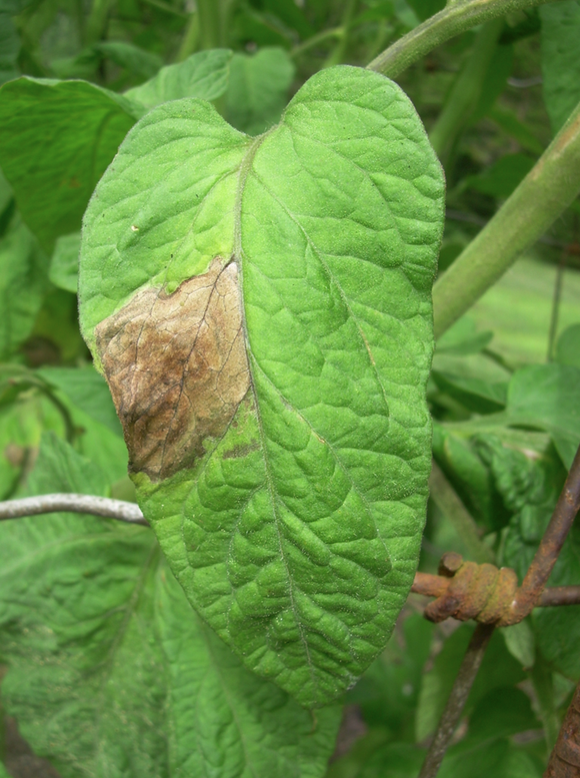
Symptoms
Leaves: Yellowing (chlorosis) and wilting of young or lower leaves, often when the first fruit cluster reaches the mature green stage.
Stems: Dark brown to black lesions or streaks on stems and petioles. When stems are cut longitudinally, the pith (central stem tissue) appears discolored (brown to black), degraded, hollow, or chambered, sometimes with a ladder-like appearance. Swollen stems or excessive adventitious roots (roots forming from non-root tissue) may develop.
Fruit: Rarely seen
Host Crops: Solanaceae family (Tomatoes, Peppers, Eggplant)
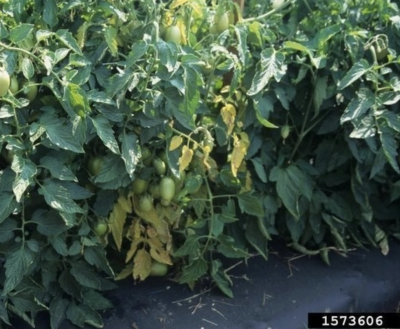
Identification of Disease
Use the stem as this is the main distinguishing feature of this disease. Cut the stem longitudinally with a clean knife to inspect the middle spongy tissue called the pith. Look for brown to black discoloration, hollowing, or a sectioned appearance to the pith which may feel soft or rotting which may be completely hollow in situations that are diagnosed late in development.
Not to Be Confused with:
Bacterial Canker- More sever (of greater concern) that also impacts the fruit
Fusarium and Verticillium Wilt- Does not induce the advantageous root formation on the stems
Prevention
Cultural
Preventive measures to minimize the occurrence of this disease in high tunnels include adequate ventilation to avoid high humidity levels.
Avoid excessive nitrogen levels to prevent vigorous plant growth.
Remove infected crop debris. Sanitize tool and equipment.
Crop rotation.
References
Cornell University. (n.d.). Pith necrosis on tomatoes. Long Island Horticultural Research & Extension Center. https://blogs.cornell.edu/livegpath/gallery/tomato/pith-necrosis-on-tomatoes/
Elphinstone, J. G., & Toth, I. K. (1978). Bacterial soft rot and pith necrosis of tomato. Journal of Phytopathology, 91(3), 191–197. https://doi.org/10.1111/j.1744-7348.1978.tb00684.x
NC State Extension. (n.d.). Tomato pith necrosis. NC State Extension Publications. https://content.ces.ncsu.edu/tomato-pith-necrosis
Ohio State University. (n.d.). Tomato pith necrosis. Vegetable Disease Facts. https://u.osu.edu/vegetablediseasefacts/tomato-diseases/tomato-pith-necrosis/advanced/
Purdue University. (2024). Tomato pith necrosis. Vegetable Crops Hotline. https://vegcropshotline.org/article/tomato-pith-necrosis/
University of Maryland Extension. (n.d.). Tomato pith necrosis. https://extension.umd.edu/resource/tomato-pith-necrosis/
University of Massachusetts Amherst. (n.d.). Tomato pith necrosis. Center for Agriculture, Food, and the Environment. https://www.umass.edu/agriculture-food-environment/vegetable/fact-sheets/tomato-pith-necrosis
University of Minnesota Extension. (2023). Pith necrosis of tomato. https://extension.umn.edu/disease-management/pith-necrosis-tomato
Consult and follow pesticide labels for registered uses. To avoid potential phytotoxicity problems, spot test before widespread use. No discrimination is intended for any products not listed.
The information in this document is for educational purposes only. The recommendations contained are based on the best available knowledge at the time of publication. Any reference to commercial products, trade or brand names is for information only, and no endorsement or approval is intended. UConn Extension does not guarantee or warrant the standard of any product referenced or imply approval of the product to the exclusion of others which also may be available. The University of Connecticut, UConn Extension, College of Agriculture, Health and Natural Resources is an equal opportunity program provider and employer.