Tomato Phytophthora
Author: Matthew DeBacco
Reviewed by: Shuresh Ghimire, Ph.D.
Associate Extension Educator
Extension Vegetable Specialist
Date of Publication: July 1, 2026
Introduction
The species of Phytophthora that causes buck-eye rot is different from the species that causes late blight (P. infestans). Phytophthora nicotianae and Phytophthora capsica are the main causes of Buckeye rot that mainly infects the fruits of tomatoes that have had soil contact. Wet conditions during the optimum temperature range of 77-82F (25-28C) will increase the odds of seeing this disease. Once a field is infected, it can persist for many years.
Symptoms
Buck-eye rot is appropriately named since it produces tan to brown spots that have concentric rings. These are more commonly found on fruit that are either coming in direct contact with soil or are very close to the soil. The areas of infection will start as smooth, firm water-soaked areas that as the process of decay continues will turn soft.
Host Crops: Solanaceae family (Tomatoes, Peppers, Eggplant)
Identification of Disease
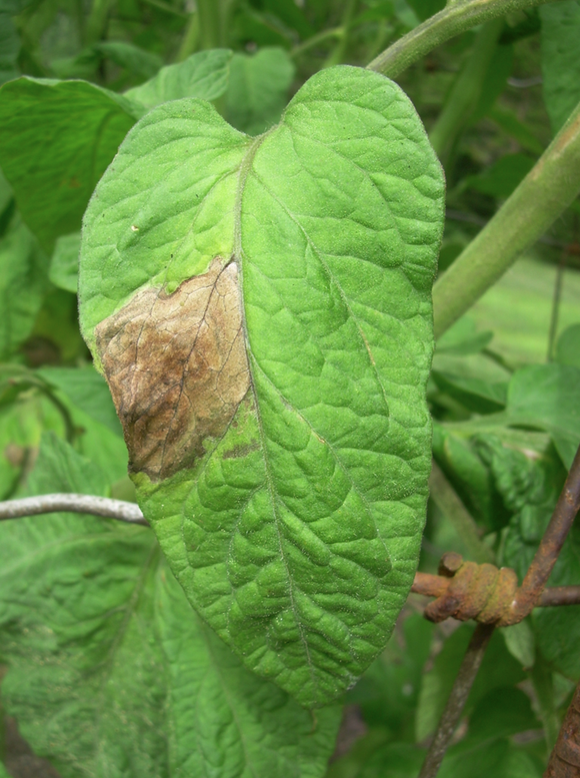
Buck-eye rot is primarily caused by the oomycetes (water molds) Phytophthora species, notably Phytophthora nicotianae and Phytophthora capsici, though other species like P. drechsleri may also be involved with tomato infections. There may be white sporangia noticed in the lesions, especially if the conditions are humid. It can spread via zoospores in water films
Not to Be Confused with:
Blossom end rot- Tends to occur on the blossom end (bottom away from the stem) portion of the tomato
Late Blight- Impacts the leaves and the fruit, also the area of infection will be even and lack concentric rings.
Prevention
Cultural
Ensure fields are well drained or plant tomatoes in a raised beds to help reduce the water accumulation.
Be sure to support tomato plants to avoid direct contact with the soil.
Practice crop rotation
Adding a physical soil barrier (that can also suppress weeds) can reduce two challenges.
Chemical
Consult New England Vegetable Management Guide for a list of labeled products.
References
American Phytopathological Society. (2021). Buckeye rot of tomato caused by Phytophthora nicotianae in Florida. Plant Disease, 105(4), 861. https://doi.org/10.1094/PDIS-04-21-0861-FE
Cornell University. (n.d.). Tomato buckeye fruit rot. LiveGPath. https://blogs.cornell.edu/livegpath/gallery/tomato/tomato-buckeye-fruit-rot/
Mississippi State University Extension. (2020). What's wrong with my tomatoes? Lesson 1: Buckeye rot [Video]. https://extension.msstate.edu/webinars-and-presentations/video/2020/what%E2%80%99s-wrong-my-tomatoes-lesson-1-buckeye-rot
Purdue University. (n.d.). Buckeye rot on tomato. Southwest Purdue Agricultural Program. https://ag.purdue.edu/department/arge/swpap/buckeye-rot-tomato.html
University of Florida IFAS Extension. (2015, June 5). Buckeye rot in tomatoes. Northwest District PHAG. https://nwdistrict.ifas.ufl.edu/phag/2015/06/05/buckeye-rot-in-tomatoes/
University of Florida IFAS Plant Pathology. (n.d.). Buckeye rot and Phytophthora root rot. U-Scout Tomato. https://plantpath.ifas.ufl.edu/u-scout/tomato/buckeye-rot-and-phytophthora-root-rot.html
Consult and follow pesticide labels for registered uses. To avoid potential phytotoxicity problems, spot test before widespread use. No discrimination is intended for any products not listed.
The information in this document is for educational purposes only. The recommendations contained are based on the best available knowledge at the time of publication. Any reference to commercial products, trade or brand names is for information only, and no endorsement or approval is intended. UConn Extension does not guarantee or warrant the standard of any product referenced or imply approval of the product to the exclusion of others which also may be available. The University of Connecticut, UConn Extension, College of Agriculture, Health and Natural Resources is an equal opportunity program provider and employer.