Introduction
Fungal leaf spots are a common problem during greenhouse and herbaceous perennial production especially when overhead irrigation combined with close plant spacing favor disease development. Often, specific cultivars are more susceptible than others to a specific leaf spot disease.
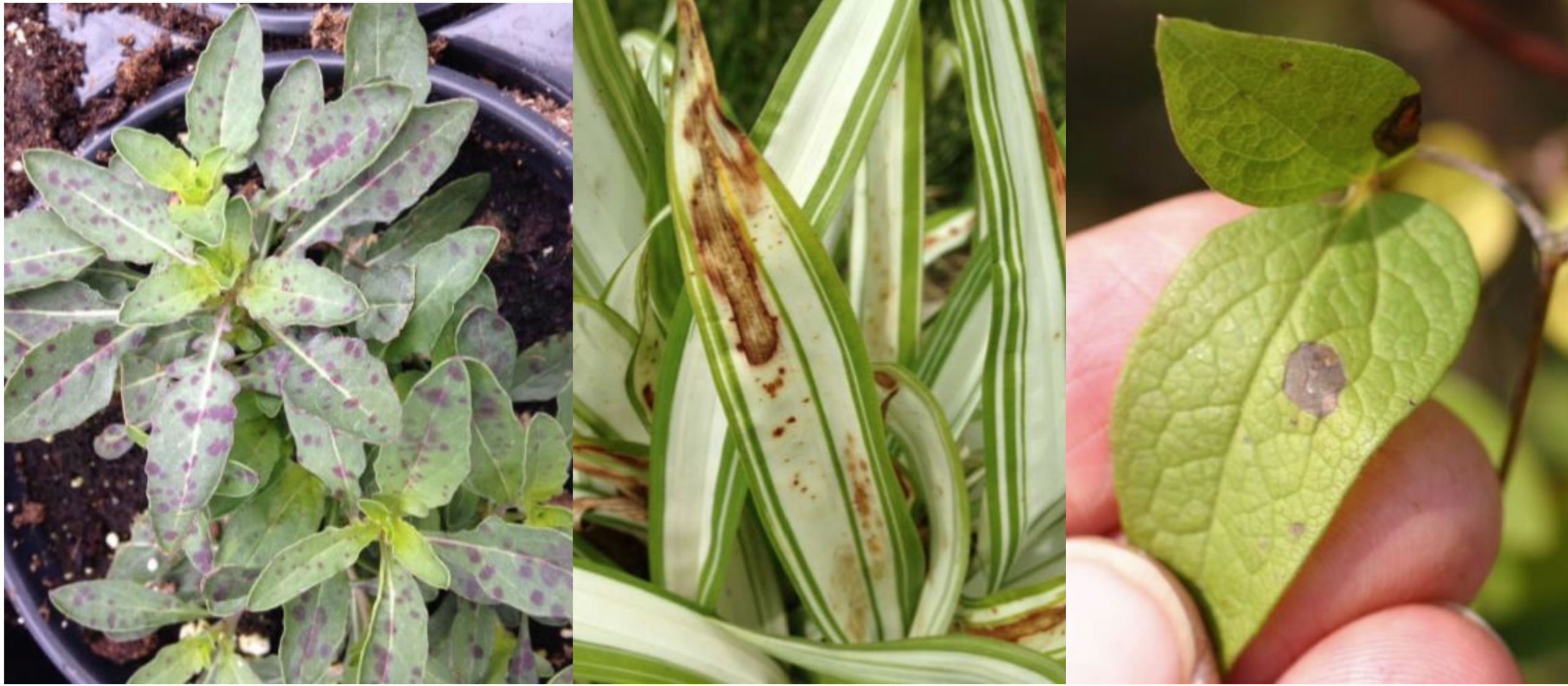
Some common fungal leaf spots include Septoria leaf spot on Phlox, and Rudbeckia; Heterosporium leaf spot on Iris; Phyllosticta leaf spots on Anemone, Delphinium, Heuchera, Iris, Liatris, Monarda and Rudbeckia; Alternaria leaf spot on dahlia, gerbera daisy, annual vinca, geranium and zinnia; Ascochyta leaf spot on Aster, Clematis, and Eupatorum; and Cercospora leaf spot on Alcea, Aquilegia, Hibiscus and Viola.
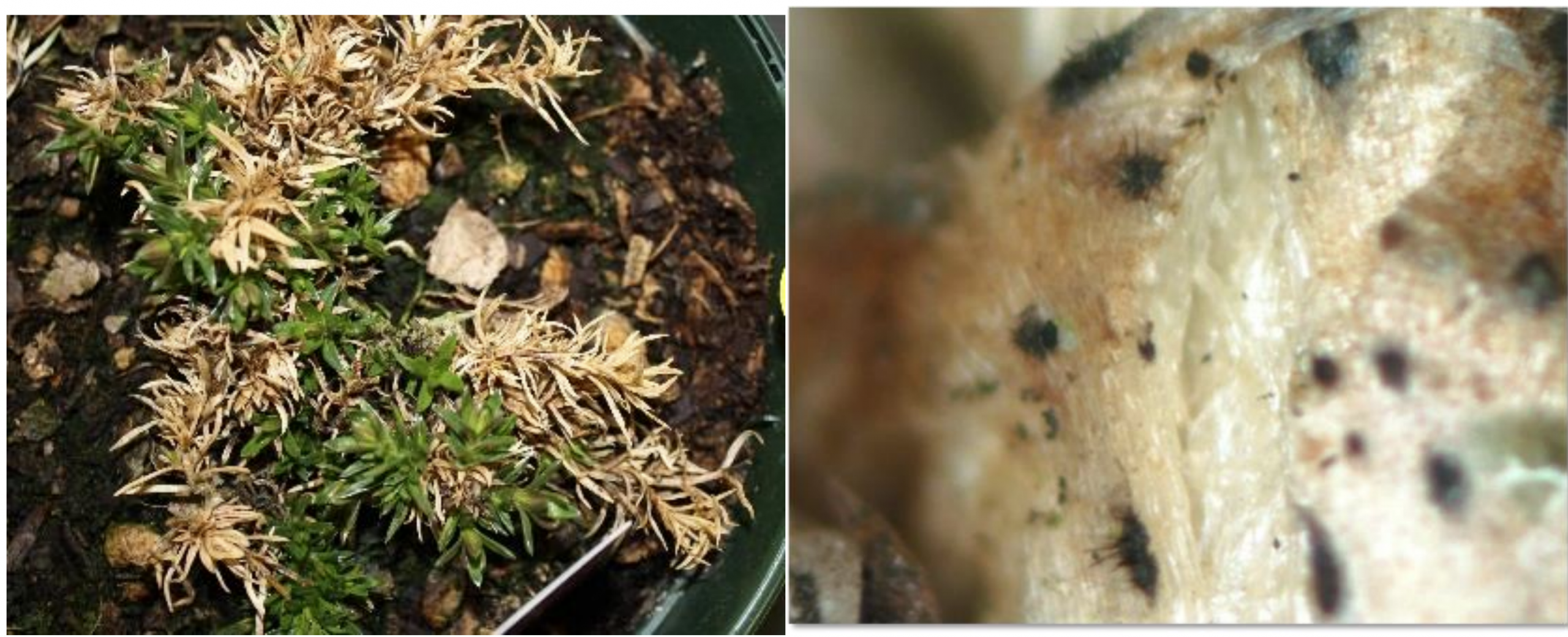
Anthracnose diseases are caused by different species of fungi, including Colletrotrichum and Gloeosporium, which produce their spores in a fruiting body known as an “acervulus”. Spores are often released in a slimy mass that is spread by insects or splashed from place to place during irrigation.
With a hand lens, you may see pimple-like fruiting bodies within the brown spots or lesions, and perhaps globs of spores on or around the fruiting bodies.
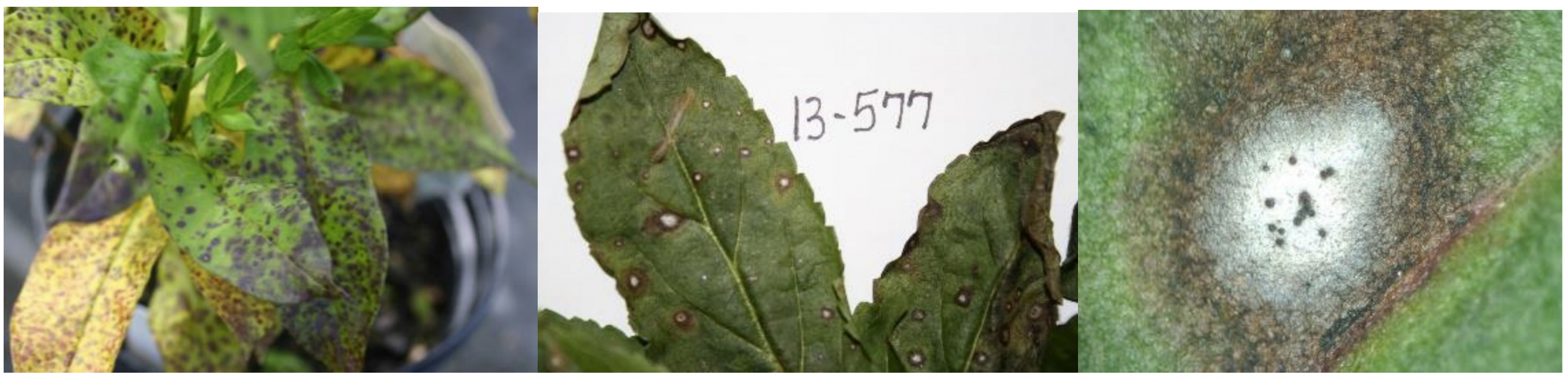
Injury from these and other leaf spot diseases varies with environmental conditions and with the specific cultivars being grown. It is important to determine the causal agent to determine the best management strategy. For example, management for fungal leaf spot diseases are not the same as for bacterial leaf spots.
Symptoms
Spots will vary in size, shape and color depending on the specific disease. Septoria causes grayish leaf spots with black, pepper-like spore cases that are surrounded by a purple border. A dark-purple border may also surround Phyllosticta leaf spots. Many other leaf spot diseases have white to tan centers with darkened margins. Spots may progress to blighted areas on leaves. Symptoms may begin on the lowermost leaves or in the center of the plant where leaves stay wet longer.
Management
- Select disease-resistant varieties whenever possible.
- Properly clean and disinfect greenhouses and outdoor production areas.
- Follow cultural practices to manage Botrytis to also help to manage leaf spot diseases.
- Take cuttings only from disease-free planting stock.
- Provide proper plant spacing to increase air flow.
- Water early in the day so that leaves dry by nightfall.
- Clean-up diseased leaves in the fall to help remove overwintering spores.
- Application of preventive fungicides can supplement proper cultural practices used for leaf spot fungi.
- See the latest edition of New York and New England Management Guidelines for Greenhouse Floriculture and Herbaceous Ornamentals for more information.
Disclaimer for Fact Sheets: The information in this document is for educational purposes only. The recommendations contained are based on the best available knowledge at the time of publication. Any reference to commercial products, trade or brand names is for information only, and no endorsement or approval is intended. UConn Extension does not guarantee or warrant the standard of any product referenced or imply approval of the product to the exclusion of others which also may be available. The University of Connecticut, UConn Extension, College of Agriculture, Health and Natural Resources is an equal opportunity program provider and employer.