Crop Talk | May 2026
In This Issue
- Periodic Ozone Level Spikes Can Lead to Crop Injuries
- Recent Updates on Pest Management in Sweet Corn
- Chemical Thinning of Apples in New England Orchards: A Guide for Commercial Producers in Connecticut
- They come out at night…a difference between Asiatic garden and Japanese beetles
- UConn Soil Lab now at its new location!
- New modules added to the Farm Risk Management Course
- Upcoming Events
- Quick Links to IPM Resources
Periodic Ozone Level Spikes Can Lead to Crop Injuries
By: Shuresh Ghimire, Vegetable IPM Specialist, UConn Extension
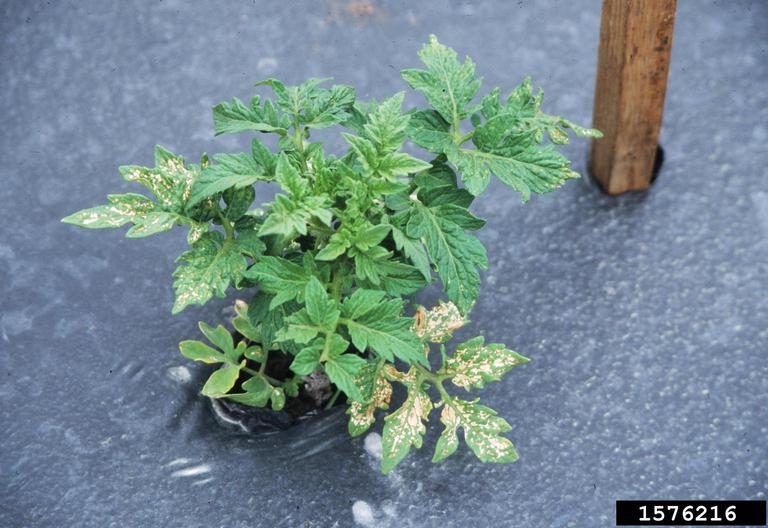
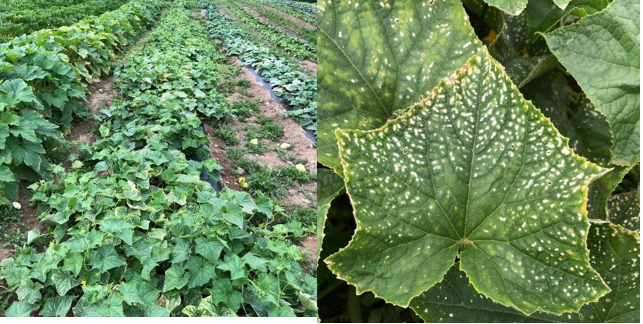
Ozone is formed when the combustion of fossil fuels react with oxygen in the presence of sunlight. It is the most common air pollutant in the Eastern United States, and moves from areas of high concentration (cities, heavy traffic areas) to nearby fields simply by wind. Common symptoms of ozone injury on crops are very small, irregularly shaped spots that are dark brown to black or light tan to white on the upper leaf surface. Injury is usually more pronounced at the leaf tip and along the margins. It is most likely to occur when the weather is hot, humid, and air masses are stagnant.
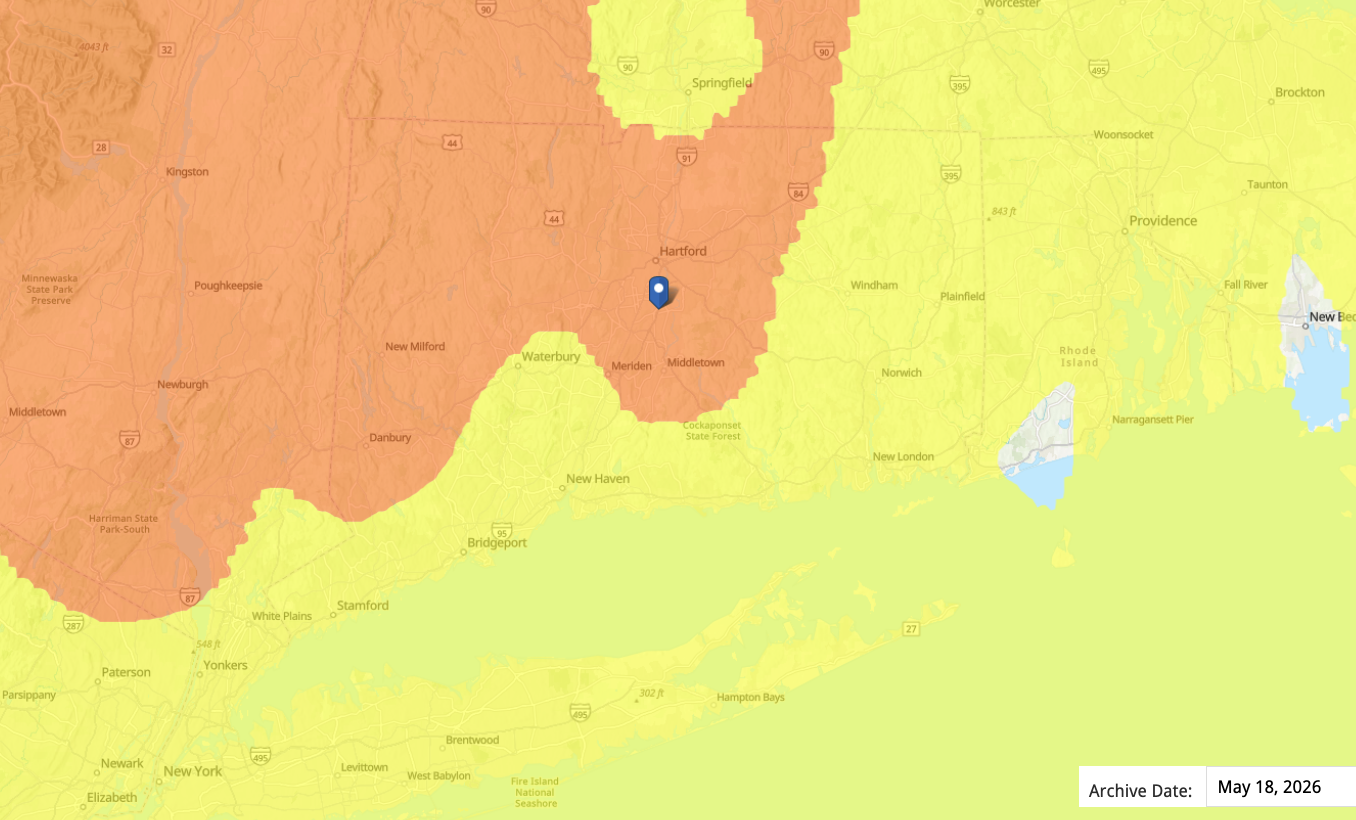
As of May 2026, there have been a few recent ozone level surges reaching toxic levels for crops in Connecticut, with the severity changing slightly depending on the precise location in the state. Ozone injury in susceptible vegetable varieties develops when ozone levels are over 80 ppb for four or five consecutive hours, or 70 ppb for a day or two when vegetable foliage is at a susceptible stage of growth. Typically, the most susceptible vegetable crops include cucumber, potatoes, watermelon, cantaloupe, snap beans, pumpkins, and squash.
The best recommendation for managing susceptible crops in when ozone levels are high is to avoid additional stresses on plants, to whatever extent possible. Avoid applying unwarranted pesticides or nutrients during this period. You can also take note of which varieties show fewer symptoms and plan to select varieties that are less susceptible in the future.
For more information on the relationship between the Air Quality Index (AQI) and Ozone levels, visit the Air Quality Guide for Ozone and Particle Pollution. For example, ozone concentrations would be 71-85 ppb when AQI is 101-150. To monitor local trends, vist airnow.gov.


Back to Top
Recent Updates on Pest Management in Sweet Corn
By: Srikanth Kodati1 and Shuresh Ghimire2
1Pesticide Safety and IPM Specialist, UConn Extension
2Vegetable IPM Specialist, UConn Extension
In the Northeast, sweet corn is held to high visual quality standards, and even minor insect feeding or foliar disease can reduce marketability. Effective pest management depends on choosing effective active ingredients, applying them at the right growth stage, and timing sprays using monitoring data. This article reviews recent research and offers practical guidance on corn earworm (CEW), an ear-feeding insect, and major foliar diseases, including northern corn leaf blight, common rust, gray leaf spot, and emerging tar spot; tar spot is not yet found in CT, but confirmed in central NY (as far east as Otsego County) in 2025.
Management of corn earworm
Target stage: what you are trying to hit
- Primary target: newly hatched larvae (neonates / early instars) feeding on fresh silks and exposed tip before entering the ear.
- Eggs: most foliar insecticides are not ovicides; timing aims to kill larvae immediately after hatch.
- Late instars inside the ear: control is limited—prevention depends on tight intervals and coverage on fresh silks.
- Trap guidance: Heliothis net traps baited with Hercon Heliothis zeapheromone lures are commercially available and widely used in the region.
Mode of action (MOA) groups and the CEW stage they best target
Table 1. Common insecticide resistance action committee (IRAC) groups used in CEW programs and best-fit target stage.
IRAC (Insecticide class) |
Example active ingredients |
Primary CEW stage targeted |
Practical notes |
| 28 (Diamides) | chlorantraniliprole (Coragen/Vantacor) | Neonates/early instars on silks & tip | Often strong residual; use early in silk window; rotate away next spray. |
| 5 (Spinosyns) | spinetoram (Radiant); spinosad (Entrust) | Neonates/early instars | Contact + ingestion; good fit for rotation; avoid repeated use. |
| 3A (Pyrethroids) | lambda-cyhalothrin, bifenthrin, beta-cyfluthrin, zeta-cypermethrin | Early instars; variable under resistance | Fast knockdown; resistance documented; avoid pyrethroid-only programs. |
| 1A (Carbamates) | methomyl (Lannate) | Early instars (exposed) | Shorter residual; can be effective in rotation; avoid repeated use. |
| 15 (IGR*—chitin inhibitor) | novaluron (Rimon) | Early instars (molting) | Best before larvae enter ear; slower acting; rotate. |
| 18 (IGR—ecdysone agonist) | methoxyfenozide (Intrepid/Intrepid Edge premix) | Early instars (molting) | Best timing is early; often used with partner MOA; rotate. |
| Biological (HzSNPV) | Heligen (virus) | Neonates | Most effective on very small larvae; coverage and timing are critical. |
*IGR= insect growth regulator
Management of foliar diseases
Primary foliar disease targets are northern corn leaf blight (NCLB), common rust, and gray leaf spot (GLS), with tar spot emerging in some areas.
- NCLB management goal: Protect ear leaves and delay defoliation during reproductive growth. If defoliation is delayed until about six weeks after silking, yield loss is less likely, though husk lesions can still reduce fresh-market quality.
- Typical timing: Fungicides are commonly applied at V7–V8 and tassel when disease risk is rising to protect ear leaves.
- Fungicide selection: Use Corn Disease Working Group efficacy ratings, based on multi-location field trials on sweet corn.
Table 2. Fungicide efficacy ratings for key Northeast corn foliar diseases, based on multi-year, multi-location field trials.
Product (AI, FRAC) |
Common rust |
NCLB |
Gray leaf spot |
Tar spot |
| Quadris (azoxystrobin, QoI 11) | E | G | E | NL |
| Headline (pyraclostrobin, QoI 11) | E | VG | E | NL |
| Tilt (propiconazole, DMI 3) | G | G | G | NL |
| Veltyma (azoxystrobin + mefentrifluconazole, 11+3) | VG–E | VG | VG–E | VG |
| Miravis Neo (azoxystrobin + propiconazole + pydiflumetofen, 11+3+7) | VG–E | VG–E | E | G–VG |
| Headline AMP (pyraclostrobin + metconazole, 11+3) | G | VG | E | G–VG |
Abbreviations: E=Excellent; VG=Very good; G=Good; NL=Not labeled for that disease.
Northeast field-ready integrated recommendations
- Use pheromone traps near silking fields and adjust spray intervals based on moth catches.[1]
- Use directed sprays to the ear zone and maintain 3–6 day intervals during silking, depending on CEW pressure.[1][2]
- Alternate insecticide (IRAC groups) across silk sprays, especially during high pest pressure, and avoid back-to-back use of the same group.[3][4]
- Where available, choose resistant or tolerant hybrids and use rotation and residue management to reduce pathogen inoculum; apply fungicides when risk is high and before severe defoliation.[5]
- Use multi-mode fungicides strategically and rotate FRAC groups when repeated applications are needed; focus on protecting ear leaves from tassel and silk through early grain fill, as needed for your market window.[5][6]
Pesticide resistance management
Corn earworm (CEW): Many CEW populations in Connecticut, as they fly up from South, may be resistance to pyrethroid insecticides, especially during heavy CEW pressure and late-season flights. So do not rely on pyrethroids alone.[7][8]
Table 3. Quick resistance management reminders for key pesticides
Target |
Common pesticide groups mentioned |
Resistance management reminder |
| CEW (ear protection) | Pyrethroids; spinosyns; diamides | Avoid pyrethroid-only programs during heavy flights; rotate IRAC groups and tighten spray intervals based on trap counts.[7][8] |
| Foliar diseases (rust/NCLB/GLS/tar spot) | QoI (11); DMI (3); SDHI (7); premixes | Limit repeated use of single-site groups; favor premixes with multiple effective modes of action and rotate FRAC groups between applications.[9] |
Additional resources
[1] Rutgers Plant & Pest Advisory. Corn earworm monitoring (pheromone trap guidance). https://plant-pest-advisory.rutgers.edu/corn-earworm-monitoring/
[2] Owens, D., & Malone, M. 2024. Insecticide efficacy against corn earworm in sweet corn, 2022. Arthropod Management Tests (tsae049). https://academic.oup.com/amt/article/49/1/tsae049/7658966
[3] University of Delaware Extension. Protecting sweet corn from corn earworm / sweet corn ear insect protection (timing notes). https://www.udel.edu/content/dam/udelImages/canr/pdfs/extension/factsheets/Protecting-Sweet-Corn-From-Corn-Earworm.pdf
[4] Penn State Extension. Alternative chemistries for managing corn earworm in sweet corn (Gemstar LC + Entrust note). https://extension.psu.edu/alternative-chemistries-for-managing-corn-earworm-in-sweet-corn
[5] Cornell Vegetables. Northern corn leaf blight of sweet corn (management notes/timing). https://www.vegetables.cornell.edu/pest-management/disease-factsheets/northern-corn-leaf-blight-of-sweet-corn/
[6] Corn Disease Working Group. 2023. Fungicide efficacy for control of corn diseases (CPN-2011-W table). https://cropprotectionnetwork.s3.amazonaws.com/cpn2011_fungicideefficacycontrolcorndiseases_2023-1684787227.pdf
[7] Arthropod Management Tests. Insecticide Efficacy Against Corn Earworm in Sweet Corn, 2021b (notes pyrethroid resistance documented since 2008). https://academic.oup.com/amt/article/47/1/tsac004/6514151
[8] Penn State Extension. Alternative Chemistries for Managing Corn Earworm in Sweet Corn (recommends limiting pyrethroids and rotating MOA). https://extension.psu.edu/alternative-chemistries-for-managing-corn-earworm-in-sweet-corn
[9] FRAC. Summary of FRAC recommendations for cereals and corn (resistance management for QoI and other fungicides). https://www.frac.info/media/mfvlrma1/summary-of-frac-recommendations-for-cereals-and-corn.pdf
Disclaimer
UConn Extension does not endorse any product, manufacturer, or brand name referenced in this factsheet. Product examples are provided for educational purposes only. Always read and follow the pesticide label—the label is the law—including rates, application instructions, personal protective equipment (PPE), restricted-entry intervals (REIs), and pre-harvest intervals (PHIs). Before use, confirm that the product is currently registered for the intended crop/site and use pattern in your state and comply with all federal and state requirements.
Back to Top
Chemical Thinning of Apples in New England Orchards: A Guide for Commercial Producers in Connecticut
By: Evan Lentz, Fruit IPM Specialist, UConn Extension
Introduction
Chemical thinning is a cornerstone of modern orchard management in the northeastern United States. In apples and peaches, the practice is essential for regulating crop load, improving fruit size and quality, and ensuring consistent annual production. Under New England conditions—characterized by variable spring weather and diverse cultivar blocks—effective thinning requires a combination of sound physiology, careful timing, and adaptation to environmental conditions.
Unlike hand thinning, chemical thinning allows growers to manage large acreages efficiently. However, responses can be inconsistent due to weather, tree vigor, and cultivar sensitivity, making a systems-based approach critical.
Why Thin Fruit?
The primary objectives of chemical thinning are:
- Improve fruit size and marketability by reducing competition among fruitlets
- Enhance return bloom and mitigate biennial bearing
- Improve fruit color and quality
- Prevent limb breakage and tree stress from excessive crop loads
Failure to thin adequately can result in small fruit and poor return bloom, often causing significant economic losses. In fact, under-thinning typically causes greater economic loss than moderate over-thinning.
Physiology of Chemical Thinning
Most chemical thinners work by inducing abscission of developing fruitlets, either by:
- Disrupting hormonal balance (auxins, cytokinins, ethylene)
- Causing mild phytotoxic stress (e.g., bloom thinners)
- Altering carbohydrate balance within the tree
Thinning is closely tied to tree carbohydrate status. Maximum thinning occurs when applications coincide with periods of low carbohydrate availability, typically associated with warm temperatures and cloudy conditions following application.
Major Chemical Thinners Used in Apples
- Auxin-Type Thinners
-
- Naphthaleneacetic acid (NAA)
- Naphthaleneacetamide (NAD)
Timing: Bloom through ~10–12 mm fruit size
Rates: Commonly 2–6 oz per 100 gal dilute (Tree Row Volume (TRV) basis)
Key considerations:
-
- Effective under cooler conditions relative to other thinners
- Risk of pygmy fruit formation, especially when applied late or at high rates
- Avoid late applications on sensitive cultivars (e.g., ‘Delicious’ strains)
- Cytokinin-Type Thinners
-
- 6-Benzyladenine (6-BA) (e.g., MaxCel, Exilis)
Timing: Petal fall through ~12 mm
Rates: ~48–200 oz per 100 gal depending on formulation
Key considerations:
-
- Promotes cell division, increasing fruit size beyond thinning effects
- Performs best under warm temperatures (~70–80°F)
- Often combined with carbaryl to enhance thinning response
- Carbaryl (Carbamate Insecticide)
Timing: Petal fall to ~15 mm
Rates: ~0.5–1.5 pt per 100 gal
Key considerations:
-
- Widely used as a “base thinner” in tank mixes
- Enhances activity of NAA or 6-BA
- Provides relatively consistent thinning across conditions
- Ethylene-Releasing Compounds
-
- Ethephon (Ethrel)
Timing: Typically, 10–20 days after full bloom (~15–20 mm fruit)
Rates: ~1–1.5 pt per 100 gal
Key considerations:
-
- Promotes abscission via ethylene production
- Can reduce fruit size if applied too early or at high rates
- Often used to enhance return bloom
- Newer or Supplemental Thinners
-
- Metamitron (Brevis®) – photosynthesis inhibitor
- Abscisic acid (ABA; Protone®)
- ACC (Accede®)
Timing: Primarily 8–20 mm fruit window
Rates: Vary by product (e.g., metamitron 16–40 oz/100 gal)
Key considerations:
-
- Often used for precision thinning or in challenging years
- Mode of action often tied to carbohydrate stress
Tank Mixing Strategies
- NAA + carbaryl → reliable, widely used
- 6-BA + carbaryl → strong thinning + fruit size enhancement
- Oil additives → increase absorption and thinning efficacy
- Combination sprays are common because they increase consistency across varying weather conditions.
Rates and Calibration
- Rates are typically expressed per 100 gallons dilute tree-row volume (TRV)
- Adequate spray coverage is critical; ≥100 gal/acre recommended
- Always follow label instructions and adjust for tree size and density
Cultivar Differences
Cultivars vary widely in response to chemical thinning. Some are easy to thin; other require repeated multiple applications and higher rates. Thankfully, the response of most of our well-known varieties is understood fairly well.
- Hard-to-thin: Gala, Fuji, Golden Delicious
- Easy-to-thin: McIntosh, Cortland
Example program (UMass Extension):
- Gala: ATS at bloom → NAA + carbaryl at petal fall → 6-BA + carbaryl at 10–12 mm
Multiple applications are often required for difficult cultivars. If you have questions about a variety not explicitly denoted as hard-to-thin or easy-to-thin, please consult your local Extension professionals.
Timing Windows for Thinning Apples
- Bloom Thinning
Materials: Ammonium thiosulfate (ATS), lime sulfur (limited registration in New England)
Objective: Reduce initial fruit set
Risk: Weather-dependent and variable
- Petal Fall (5–6 mm fruit)
Common materials: NAA, carbaryl, 6-BA
Often the first major thinning window
- 8–12 mm Fruit Size (Key Timing)
Most critical window for chemical thinning
Preferred timing in many New England programs
- 15–20 mm Fruit Size (Rescue Thinning)
Materials: ethephon, carbaryl, ABA
Effectiveness declines rapidly after ~18–20 mm
Environmental Factors Affecting Thinning
There are a number of environmental factors that affect the performance of chemical thinners. Understanding these effects prior to choosing materials and rates or making applications will allow for more thoughtful and precise management decisions.
Temperature
- Optimal: 70–75°F
- High temps (>85°F): risk of over-thinning
- Cool temps: reduced activity, especially for 6-BA
Light (Cloud Cover)
- Cloudy weather → increased thinning due to reduced carbohydrate supply
Tree Condition
- Young trees: more sensitive (reduce rates)
- Stressed trees (frost, drought): unpredictable responses
Carbohydrate Balance
- Central driver of thinning response
- Models (e.g., Cornell carbohydrate model) are increasingly used to drive decision making.
Additional Resources:
Penn State Extension: Apple Crop Load Management
Washington State University: Apple Chemical Thinning
Penn State Extension: Apple Carbohydrate Thinning Model
Back to Top
They come out at night…a difference between Asiatic garden and Japanese beetles
By: Ana Legrand, Assistant Extension Professor, Department of Plant Science & Landscape Architecture, University of Connecticut
A grower asked the other day about finding white grubs in their vegetable planting at the beginning of the season. Overwintered white grubs can be found in areas that get planted in fields that had sod or are near grassy areas. The term ‘white grubs’ refers to the larval or immature stages of a complex of scarab beetle species that includes the Japanese beetle, Asiatic garden beetle (AGB), European chafer, oriental beetle and others. These species are a problem as grubs feed on plant roots especially in turfgrass and small fruit crops. However, Japanese and Asiatic garden beetles are among those that pose significant problems as adults too. These generalist beetles can feed on hundreds of plant species including ornamentals, fruit and vegetable crops.
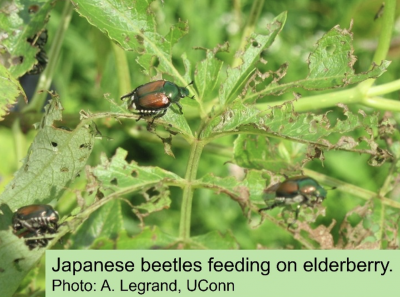
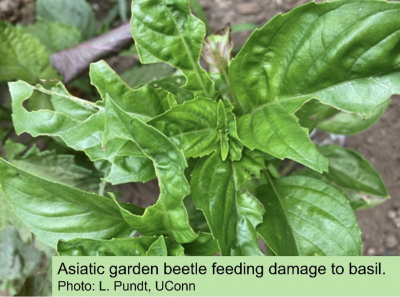
The most infamous of these two beetles are the Japanese beetles and often other scarab beetles get mistaken for them. The AGB, a bit less notorious, is a problem that can catch people by surprise because these beetles are nocturnal and their damage is often incorrectly assigned to other insects as no one sees AGB feeding at night. Unlike the Japanese beetle which skeletonizes leaves as they feed (Figure 1), the AGB goes all in for the leaf leaving mostly the midrib in the worst cases. AGB come out and are active on warm nights (at least and better if above 70oF) well after dusk. During the day, AGB hides in the soil or debris near the base of plants. So, if you suspect AGB damage then you must scout your plants at night when AGB is active or search for them in the soil near the plants during the day. Asiatic garden beetles can be a problem for basil, and Japanese beetles can also be found on basil in addition to beans and sweet corn. The AGB strongly prefers basil over other vegetable crops that have been listed as potential food plants (Figure 2). Last year, we found them on cabbage which is not a preferred food, but it was the crop available when the adults emerged.
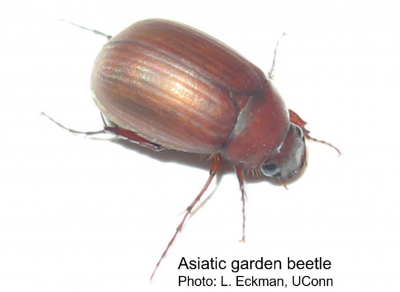
While adult Japanese and Asiatic garden beetles do not share the same feeding time schedule, they do have a similar pattern for development, and the grubs or larvae can co-occur in the same area. AGB adults start appearing in June with a peak of activity in July. The Japanese beetle adults begin to appear late June to first week of July in our area. Females of either species deposit eggs in the soil and the newly hatched larvae feed on plant roots throughout the summer until it is time to overwinter as larvae. In early fall, they descend deep in the soil to overwinter until the next spring when they resume activity and move closer to the surface. These larvae pupate and a few weeks later adult beetles emerge to start the next generation. While it is easy to identify these two species as adults (Figures 1 and 3), the grub identification takes a bit more effort. It pays off to do this well because each species has different degrees of susceptibility to various biocontrol agents and even to some insecticides. Beneficial nematode efficacy, for example, is higher against Japanese beetle grubs followed by oriental beetles with the least efficacy observed in Asiatic garden beetle grubs.
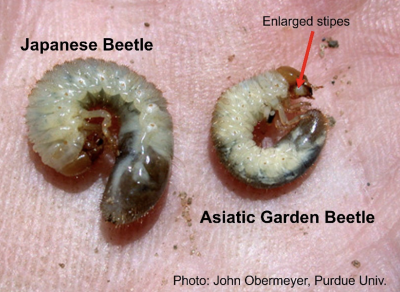
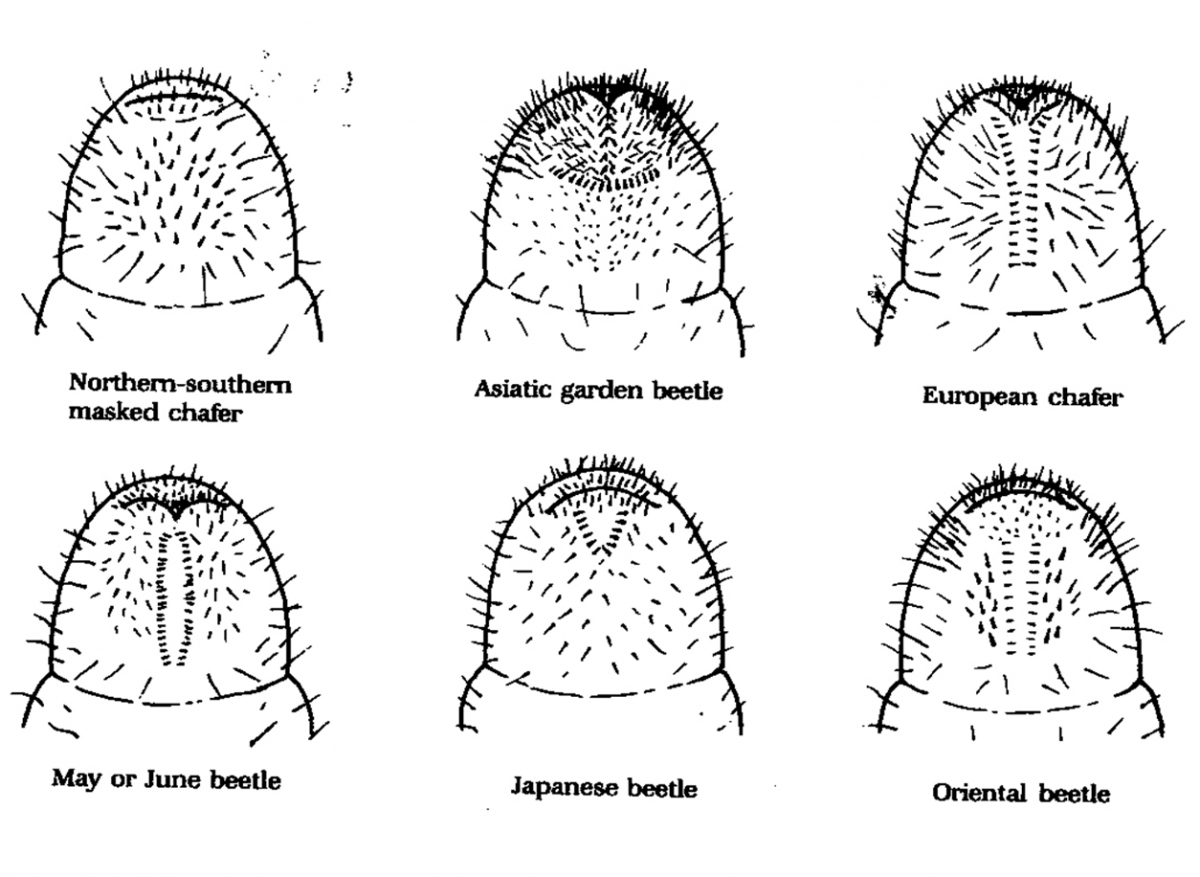
To identify different scarab beetle species when they are larvae, we rely on their raster patterns anal slit shapes and a good magnifying lens (at least 10x). The raster pattern is a pattern made by bristles in the rear end of the grub on the inner side of the C-shaped body. For the Japanese beetle we must look for a ‘V’ shaped raster pattern to be sure about the grub’s identity. There are different raster patterns for other scarab beetles and with practice it becomes easy to look them up using illustrations like Figure 5. Luckily, there is a neat shortcut for AGB grub identification that uses the presence of an enlarged ‘maxillary stipes’ on either side of the head where their mouthparts are (see red arrow pointing to the stipes in Figure 4). The stipes is cream or whitish in color, somewhat round with a pointy end and appears to vibrate rapidly.
References
Hallock, H.C. 1932. Life history and control of the Asiatic garden beetle. United States Department of Agriculture Circular 246: 1-16.
Tashiro, H. 1987. Turfgrass insects of the United States and Canada. Ithaca: Cornell University Press; p. 480.
You will have a chance to learn more about and practice white grub identification during the
UConn Vegetable IPM Field Workshop on July 7, 2026.
Back to Top
Updates from the George Leigh Minor Plant and Soil Health Center
New Modules Added to the Farm Risk Management Course Offerings
UConn’s Farm Risk Management Online Course modules are developed in conjunction with UConn Extension, UConn’s Center for Excellence in Teaching & Learning, and UConn’s Academic Program Development & Support unit, and are funded by a grant from the United States Department of Agriculture (USDA).
Take anywhere from one to all of the online modules. Courses are free, self-paced and offered 100% online and asynchronous. Learn more or register online.
Upcoming Events and Opportunities
Back to Top
Social Media: Branding, File Management, Paid Media, and Advanced Tools Webinar

Tuesday, May 26th
2:00pm - 3:00pm
Join Dave Tschiegg, UConn Extension's Organic Outreach Specialist, for a one-hour workshop to help organic and transitioning farmers take a more strategic and efficient approach to social media. This session will focus on using social media as a marketing tool to clearly communicate your brand, connect with customers, and grow your reach.
Weed Management in Urban Farms
Thursday, May 28th
6:30pm - 7:30pm
Extension Educator Jacqueline Kowalski will facilitate a webinar on Weed management in urban farms centers on keeping growing areas clean and productive by limiting weed growth through mulching, close crop spacing, and routine maintenance. This approach reduces competition and supports efficient, sustainable food production in small spaces.
Solid Ground Summer Skill Share Series
Next up: Caterpillar Tunnel Build Skill Share
Date: May 31st, 2026, 9AM to 1PM
Location: Storrs, CT
Small Farm Innovation Project
Submissions due: May 31st, 2026
The Small Farm Innovation Project, put forward by the UConn Engineering Department in partnership with CT RC&D and NTCTFA, is gearing up for its third year and is looking for farmers interested in problem-solving or prototyping their innovative farm ideas by teaming up with engineering students. Participation and supply stipends available for accepted farmers.
Looking for inspiration? Check out these ideas for farmers! Recently completed projects include: corn kernel cleaner (pictured above); storm water management; automated beehive top bar frame cutter; road development/stabilization; renewable energy siting; and data analytics software updates or module add-ons.
Vegetable IPM Field Workshop
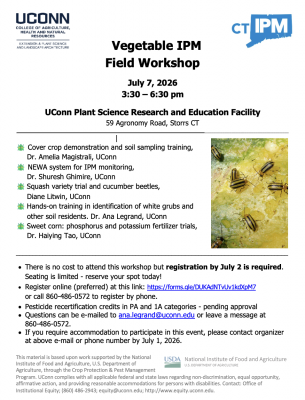
This free workshop, led by UConn specialists, covers a range of agricultural topics and will include a cover crop and soil sampling demonstration, IPM monitoring using the NEWA system, update on squash variety trials and cucumber beetle management, hands-on white grub identification training, and report on sweet corn fertilizer trials. Pesticide recertification credits in PA and 1A categories are pending approval.
Tuesday, July 7th, 2026
3:30pm to 6:30pm
UConn Plant Science Research and Education Facility
Register by July 2 to attend!
Quick Links
This work is supported by the Crop Protection and Pest Management Program [grant nos. 2021-70006-35582 and 2024-70006-43570] from the United States Department of Agriculture’s National Institute of Food and Agriculture. Any opinions, findings, conclusions, or recommendations expressed in this publication are those of the author(s) and should not be construed to represent any official USDA or U.S. Government determination or policy.
The University of Connecticut complies with all applicable federal and state laws regarding non-discrimination, equal opportunity and affirmative action, including the provision of reasonable accommodations for persons with disabilities. Extension program participants with disabilities may request reasonable accommodations to address limitations resulting from a disability. For more information, please contact the UConn Extension Civil Rights Liaison at extensioncivilrights@uconn.edu.
The information in this newsletter is for educational purposes. The recommendations contained are based on the best available knowledge at the time of publication. Any reference to commercial products, trade or brand names is for information only, and no endorsement or approval is intended. The Cooperative Extension System does not guarantee or warrant the standard of any product referenced or imply approval of the product to the exclusion of others which also may be available. All agrichemicals/pesticides listed are registered for suggested uses in accordance with federal and Connecticut state laws and regulations as of the date of printing. If the information does not agree with current labeling, follow the label instructions. The label is the law. Warning! Agrichemicals/pesticides are dangerous. Read and follow all instructions and safety precautions on labels. Carefully handle and store agrichemicals/pesticides in originally labeled containers, out of reach of children, pets and livestock. Dispose of empty containers immediately in a safe manner and place. Contact the Connecticut Department of Environmental Protection for current regulations. The user of this information assumes all risks for personal injury or property damage.