Quick Links
Scouting & Observations
- Imported Cabbageworm
- Cutworms
- Fungus Gnats on Transplants
- Hot Weather Reminders for Vegetable Growers
- Continue to be on the lookout for flea beetles, cabbage root maggot, aphids, thrips, and mites especially on transplants
Upcoming Events & Opportunities
- 5/26 - CT Grown Organic Webinar on Social Media: Branding, File Management, Paid Social Media, and Advanced Tools
- 5/31 - Solid Ground Caterpillar Tunnel Build Skill Share
- 5/31 (Submissions Due) - Small Farms Innovation Project
Imported Cabbageworm
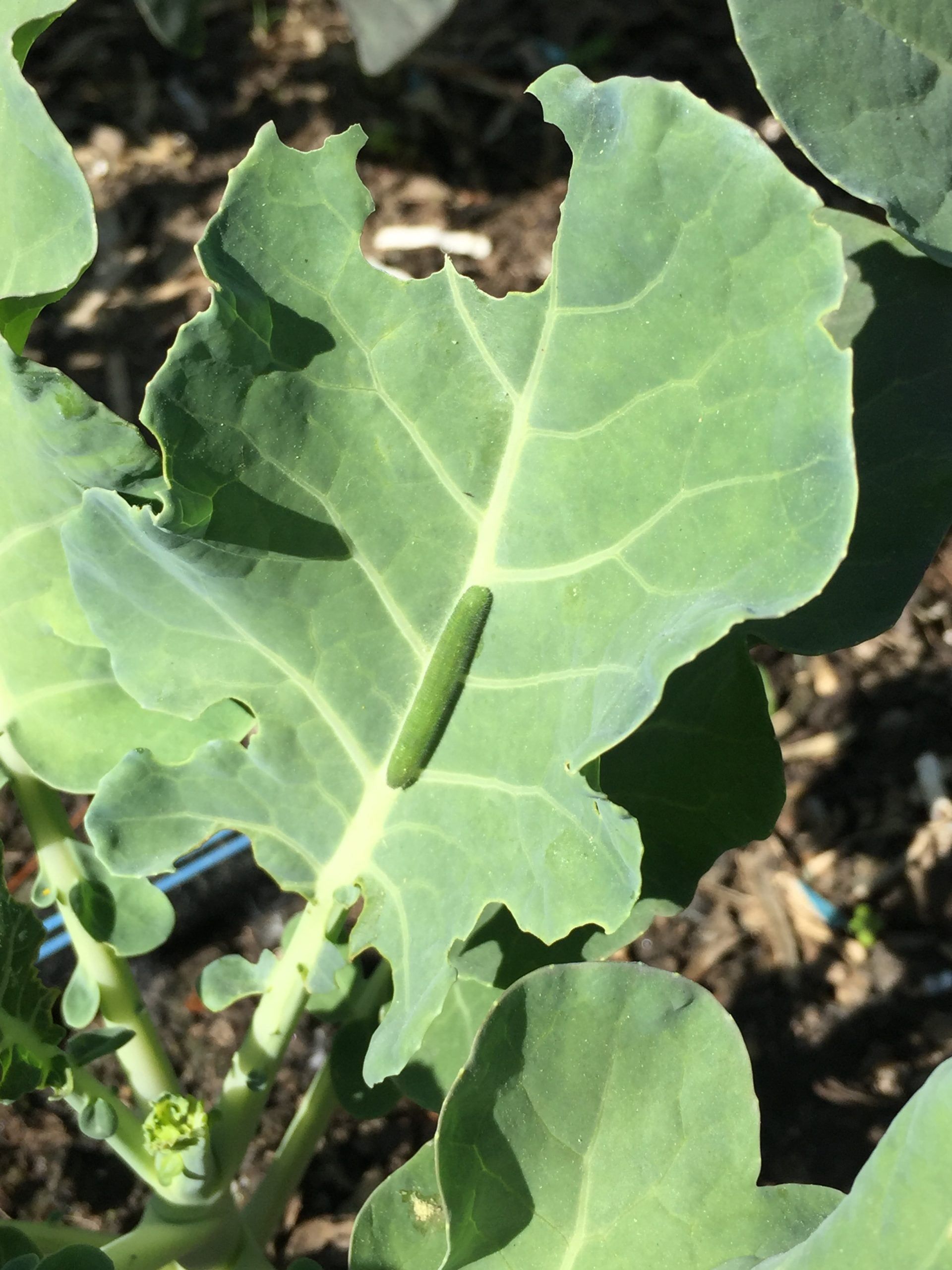
Newly hatched caterpillars are green, slightly fuzzy, and very well camouflaged, often resting along the midrib of leaves. Check plantings closely now, especially in protected culture and uncovered field brassicas. Row cover can still help prevent additional egg-laying in uninfested crops.
If you plan to use insecticides, have materials ready and treat while larvae are small. Labeled conventional options include spinetoram (for example, Radiant), pyrethroids (such as Warrior, Mustang, and others), diamides (Coragen for soil or foliar use; Exirel and Verimark for soil use only). Diamides are more expensive, but they are systemic, provide longer residual control, and help protect against flea beetles and cabbage root maggot. For organic production, Bt products such as Dipel and Xentari are the most effective OMRI-listed materials. A spreader-sticker can improve coverage and help products adhere to waxy brassica leaves.
See the New England Vegetable Management Guide website for more information on insect controls by crop type.
Cutworms
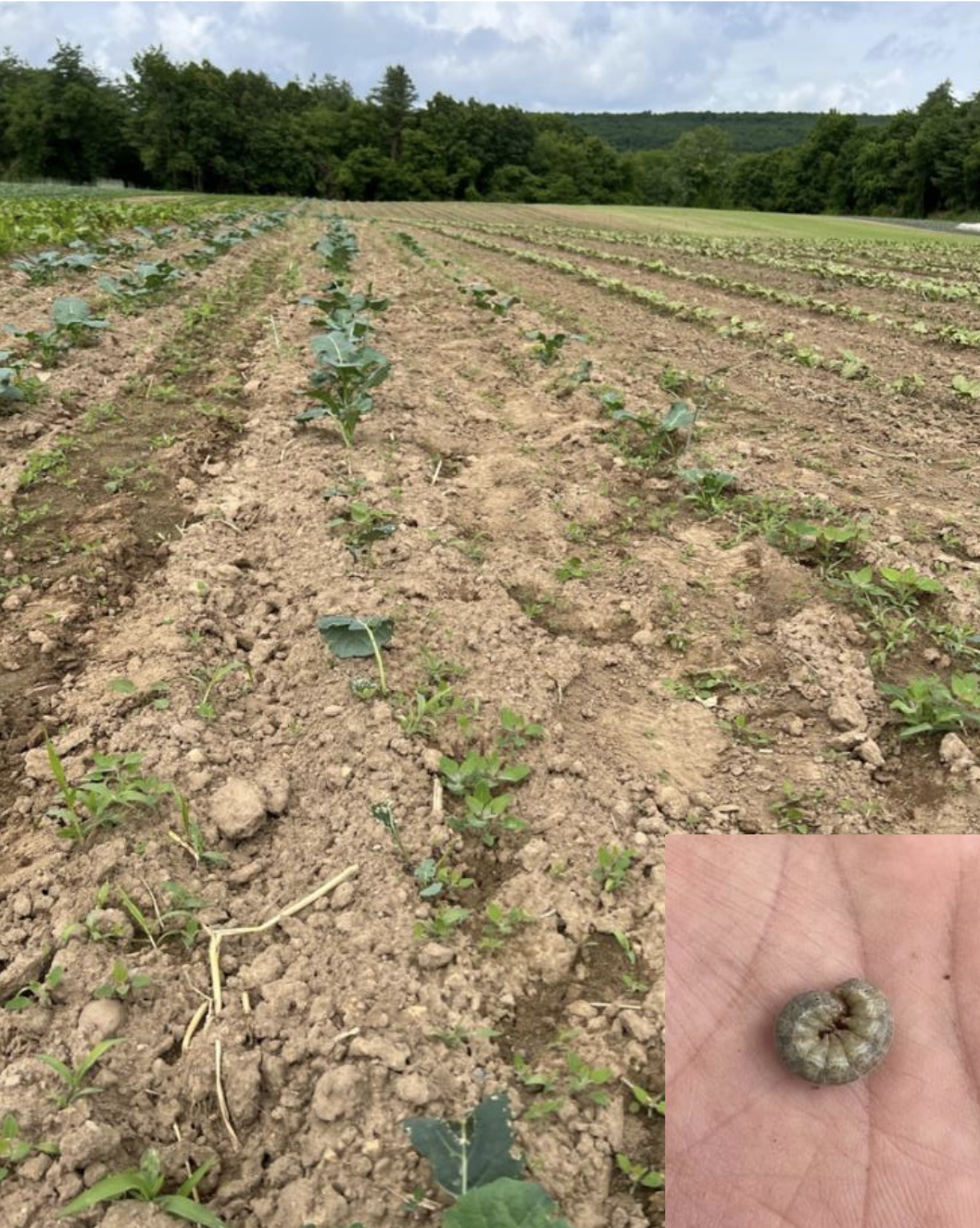
Black cutworm is the most common of the many cutworm species that damage vegetables in New England. Moths from the South arrive between March and June. Eggs are laid mostly on grasses and winter annual weeds. The larvae feed after dark while hiding under the soil surface adjacent to the plant stem during the day. There are 2-3 generations per year, but only the first generation (producing larvae in May and June) damages seedlings.
Ground beetles, parasitic flies and wasps and other general predators help reduce populations. Plantings on plastic mulch experience less cutworm damage, while weedy or reduced-till fields tend to suffer greater damage. Hardening seedlings before transplanting toughens stems and reduces damage.
Spot spray heavily damaged areas or edges of the field if 5% of the plants have been cut down. For best results, make application between midnight and dawn while cutworms are feeding above ground. Venerate, Grandivo, and Seduce are among the labeled pesticides for organic systems, and Mustang and Warrior II are among the labeled pesticides for conventional systems. Foliar-applied rescue treatments are recommended over preventative soil-applied insecticides. For the more comprehensive list, please see the New England Vegetable Management Guide.
Fungus Gnats
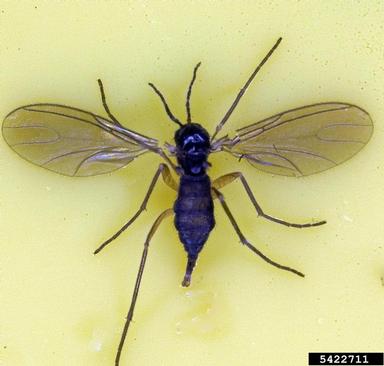
If you've been watering in the greenhouse and distracted by small flies darting in short movements, scurrying across your plant trays or on the planting media, you're likely familiar with fungus gnats. Adult fungus gnats resemble mosquitos and have long legs, long antennae, and distinctive "y" vein on their wings. They are especially attracted to the damp environment in greenhouses.
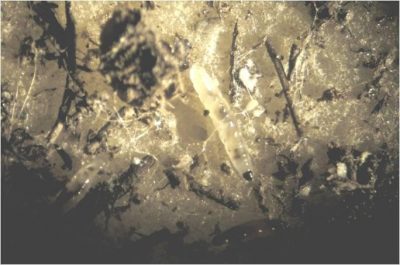
Fungus gnat larvae are translucent, legless, and white with a shiny black head. They feed on fungi and decaying organic matter and are especially damaging to young seedlings. Larvae feed for 12-14 days before pupating. Their feeding can damage plant roots, stems, and even cotyledons or young leaves that come into contact with the soil. Secondary damage is done by the larvae as the feeding injury left behind can provide an entry point for pathogens further threatening the health of transplants.
Choose plants on each bench and inspect the soil surface and around the base of the plant including the stem just below the soil line. Record the location and the level of infestation. You can also monitor for fungus gnat larvae by placing peeled, raw potato chunks on the soil surface. Potato disks cut 1" in diameter and 0.5"-1" thick are effective. Larvae are attracted to the potato chunks and will congregate underneath. Check for the larvae after 2 days for the larvae. Badly infested plants should be removed as they serve as a source of infestation.
Adult fungus gnats can be monitored with yellow sticky cards placed at the base of the plant at the soil line. Weekly inspections of yellow sticky cards can detect the onset of an infestation, and continued recording of the number of adults per card per week can aid in evaluating the efficacy of control efforts.
Scouting and preventative, timely releases of biological controls can be effective in managing fungus gnats, along with aphids, thrips, and spider mites. Limited biopesticide products are available to control fungus gnats due to developed resistance. For a list of effective products, refer to the NEVMG table on Insecticides Labeled for Insects and Mites on Vegetable Transplants.
Hot Weather Reminder for Vegetable Growers
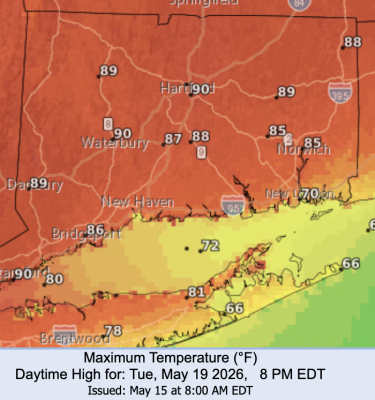
Continue to be on the lookout
The following pests that were covered in the previous pest alerts and are still relevant in current conditions:
- Flea Beetles
- Cabbage Root Maggots
- Aphids
- Thrips
- Mites
Upcoming Events & Opportunities
Social Media: Branding, File Management, Paid Media, and Advanced Tools Webinar
May 26th, 2pm - 3pm
Join Dave Tschiegg, UConn Extension's Organic Outreach Specialist, for a one-hour workshop to help organic and transitioning farmers take a more strategic and efficient approach to social media.
Solid Ground - 2026 Caterpillar Tunnel Build Skill Share
May 31st, 2026, 9AM - 1PM
Work alongside fellow growers as we go from bare ground to finished tunnel — discussing everything from choosing the right site and orienting your tunnel, to driving hoops, securing plastic, and troubleshooting along the way. You'll leave with real skills, practical know-how, and new connections in your farming community. Lunch included!
Small Farms Innovation Project - Financial and Technical Support for Tools, Infrastructure, and Environmental Impact Ideas
Submissions due May 31st, 2026
The Small Farms Innovation Project, put forward by the UConn Engineering Department in partnership with CT RC&D and NCTFA, is gearing up for its third year and is looking for farmers interested in problem-solving or prototyping their innovative farm ideas by teaming up with engineering students. Participation and supply stipends available for accepted farmers.
Save These Dates!

UConn IPM Field Day
Tuesday, July 7th, 2026
3:30PM to 6:30PM
UConn Research Farm

2026 New England
Vegetable & Fruit Conference
December 15, 16, 17, 2026
Manchester, New Hampshire

2027 UConn Extension Vegetable and Small Fruit Growers Conference
Tuesday, January 12th, 2027
UConn Student Union, Storrs, CT
Stay in touch with us
- Share what you see: We're here to assist with identification, management strategies, and guidance on best practices. Send us a photo/message via iMessage at 959-929-1031.
- Facebook Group: UConn Extension moderates a private Facebook group specifically for commercial vegetable producers. It is a space to share photos of insects and diseases you find in your fields, ask questions, share ideas, and stay engaged with growers across the state.
Join the "UConn Extension - Vegetable IPM" Facebook Group - Schedule a consultation: Would you benefit from meeting with an Extension Specialist at your farm to provide insight on pest or disease identification, management strategies, and more? If so, please contact our Vegetable Extension Specialist, Shuresh Ghimire, to setup a farm visit. Contact him at shuresh.ghimire@uconn.edu or 860-870-6933.
Contact Information
Shuresh Ghimire, Vegetable Extension Specialist: shuresh.ghimire@uconn.edu
Nicole Davidow, Vegetable Extension Outreach Assistant: nicole.davidow@uconn.edu
Vegetable IPM Office Phone Number:
860-870-6933
Vegetable IPM Cell Phone Number:
959-929-1031 (feel free to text/iMessage photos)
Any reference to commercial products, trade or brand names is for information only, and no endorsement or approval is intended. Always read the label before using any pesticide. The label is the legal document for product use. Disregard any information if it is in conflict with the label. UConn Extension does not guarantee or warrant the standard of any product referenced or imply approval of the product to the exclusion of others which also may be available. The University of Connecticut, UConn Extension, College of Agriculture, Health and Natural Resources is an equal opportunity program provider.