Gray mold (Botrytis cinerea) is a consistent problem during poinsettia (Euphorbia pulcherrima) production. The pathogen is widespread in greenhouses and produces abundant conidia that spread easily in air currents. Botrytis is able to grow at a wide range of temperatures and can survive as a necrotroph on decaying plant parts. The pathogen produces large masses of gray spores that can be carried by air currents to neighboring plants in the greenhouse. The spores are produced on infected plants or on leaves on the greenhouse bench or floor. Often times, dead leaves that are covered by “spores” are actually Botrytis. Susceptible crops include poinsettia, geranium, carnation, chrysanthemum, rose, and many others. Flowers are an especially good nutrient source for the pathogen. If Botrytis is not controlled an epidemic can develop and cause significant losses.
Cultural Management
• Sanitation, use bleach (10%) or ethanol (70%) to sterilize tools.
• Monitor cuttings regularly during misting and propagation.
• Remove debris from the greenhouse.
• Keep trash containers covered.
• Limit overhead irrigation.
• Reduce leaf wetness.
• Used forced air under benches.
• Heat the greenhouse and ventilate.
• Space plants for air circulation.
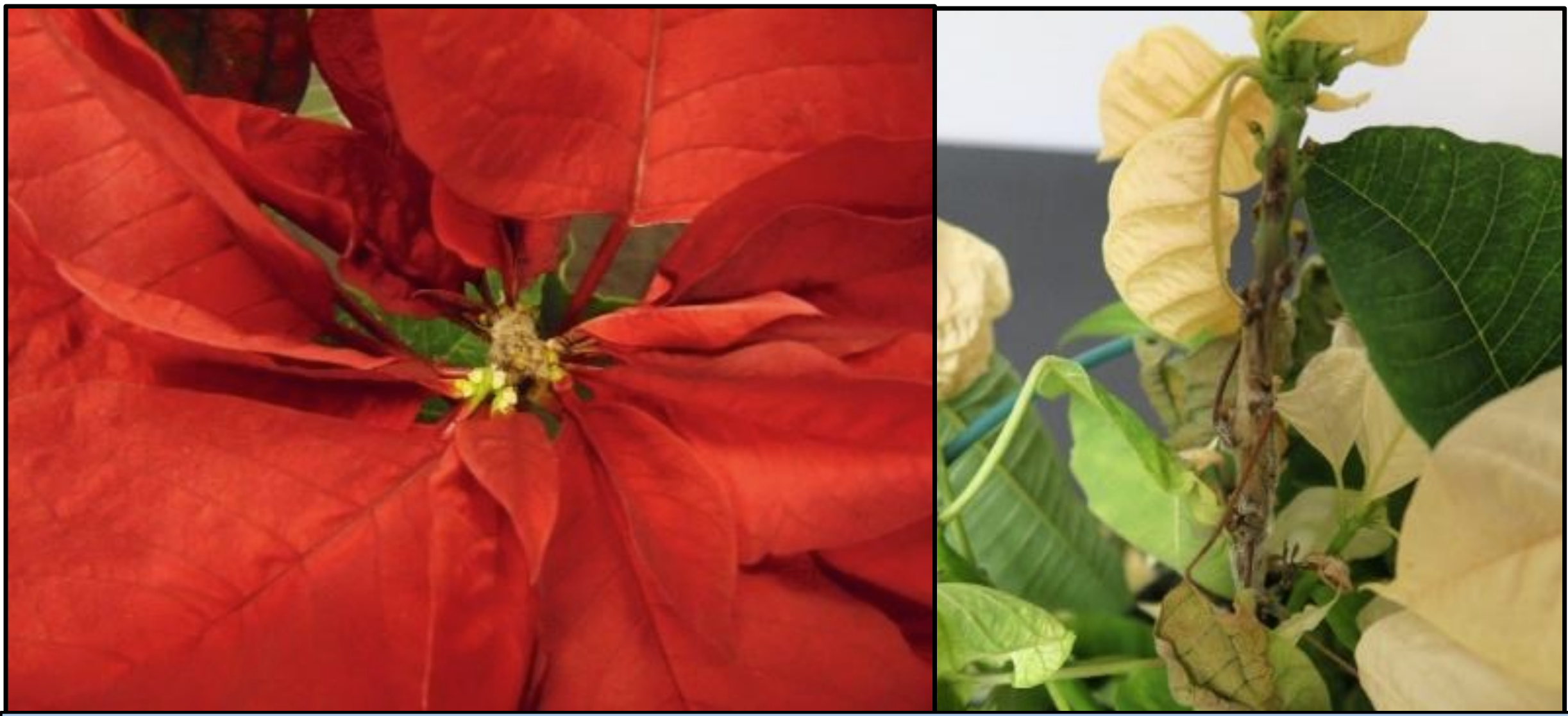
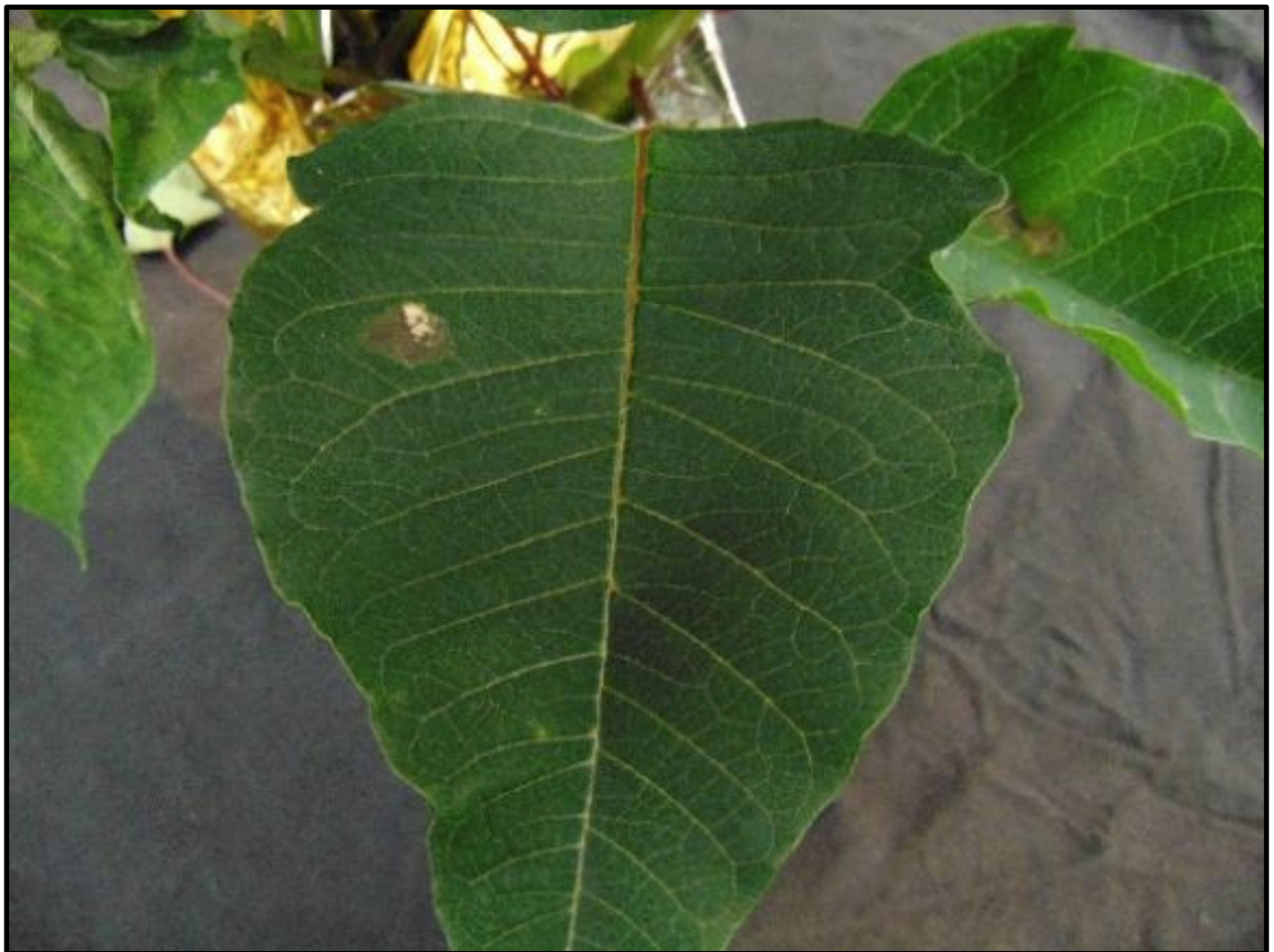
The initial symptoms of gray mold usually appear as a brown lesion on leaves or petals. Infections can start as small spots on the leaves and petals that increase in size rapidly when conditions are favorable. As the pathogen progresses, the entire leaf and stem become covered with brown-gray sporulation. A cloud of gray spores can often be observed from sporulating plant tissue. Mature plants are at high risk of infection, and bracts and cyathia are very susceptible.
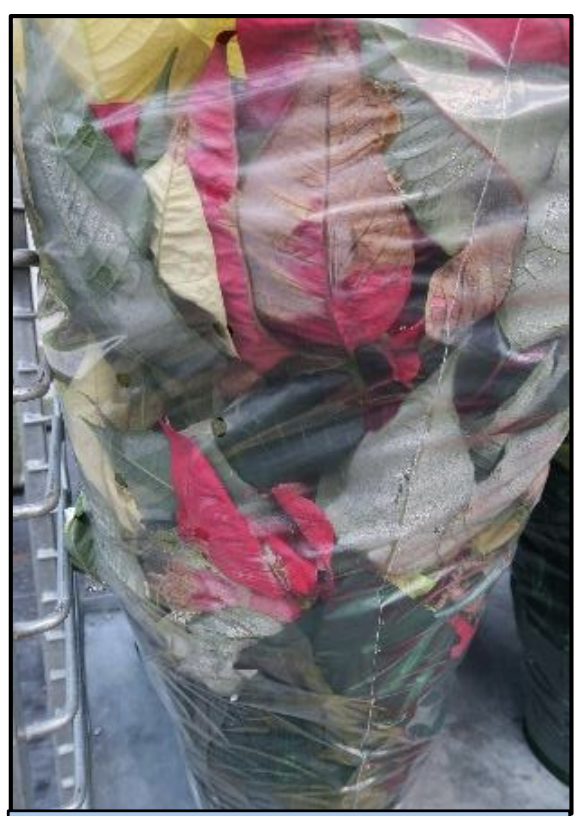
In some cases, Botrytis will infect the stems and crown causing the plant to wilt. Sporulation will appear on diseased stems when humidity is high. During transport and shipping of poinsettia, high humidity and temperature changes can cause condensation in the plastic protective sleeves leading to ideal conditions for the pathogen.
Environmental conditions are a major factor in the success of Botrytis. High relative humidity (>93%) is necessary for
infection to occur. These humidity levels are observed in most greenhouses. Frequent misting during propagation provides an ideal environment for Botrytis, and this is a time when the need for fungicide application is
heightened. Monitor new cuttings that are under mist so the pathogen does not become established. When temperatures are cool and moisture is high, the pathogen can spread rapidly. This can occur in the greenhouse
when temperatures drop in the evening and there is high humidity. One way to control Botrytis is to keep the greenhouse dry and limit condensation. Improving air flow and using forced air can prevent periods of localized high humidity in the plant canopy.
Appropriate plant spacing and avoiding pooling water on flood floors is helpful in reducing high localized relative humidity around the plants.
Fungicides are an important tool for managing gray mold. There are many fungicides currently labeled for Botrytis. Using fungicides will not prevent infection if disease pressure is very high. Rotating among FRAC groups is important to reduce the chances of fungal resistance, making the fungicide ineffective.
Fungicides effective against Botrytis
| Product | Active Ingredient | FRAC Code | |
| Class A | Decree | Fenhexamid | 17 |
| Mural | Azoxystrobin+Benzovindiflupyr | 11/7 | |
| Empress | Pyraclostrobin | 11 | |
| Astun | Isofetamid | 7 | |
| Postiva | Pydiflumetofen+Difenoconazole | 3/7 | |
| Pageant Intrinsic | Pyraclostrobin+Boscalid | 11/7 | |
| Daconil | Chlorothalonil | M5 | |
| Broadform | Fluopyram+Trifloxystrobin | 11/7 | |
| Class A- | Heritage | Azoxystrobin | 11 |
| Palladium | Cyprodinil+Fludioxonil | 9/12 | |
| Orkestra | Fluxapyroxad+Pyraclostrobin | 11/7 | |
| Scala SC | Pyrimethanil | 9 | |
| 3336 | Thiophanate-methyl | 1 | |
| Chipco 26019 | Iprodione | 2 |
*Test fungicides on a limited number of plants to ensure phytotoxicity does not develop.
Disclaimer for Fact Sheets: The information in this document is for educational purposes only. The recommendations
contained are based on the best available knowledge at the time of publication. Any reference to commercial products, trade or brand names is for information only, and no endorsement or approval is intended. UConn Extension does not guarantee or warrant the standard of any product referenced or imply approval of the product to the exclusion of others which also may be available. The University of Connecticut, UConn Extension, College of Agriculture, Health and Natural Resources is an equal opportunity program provider and employer.