Introduction
Black root rot is caused by the fungus Thielaviopsis basicola (AKA Berkleyomyces basicola) and can affect a wide range of greenhouse crops. Affected roots become black and rotted, hence it is common name, black root rot. The target audience of this factsheet is commercial greenhouse and nursery growers.
Favorable Conditions
Favorable conditions include cool temperatures (55-63° F) and growing media with an alkaline pH. Disease development is reduced at pH 5.5 or below; however, not all crops can be grown in such acid growing media. Black root rot can develop over a wide range of moisture levels. Thielaviopsis spreads in the soil and water via spores (conidia). Fungus gnats and shore flies also help spread these spores. Due to the thick-walled overwintering spores, (chlamydospores), black root rot can be difficult to eradicate from a greenhouse with a history of the disease.
Symptoms
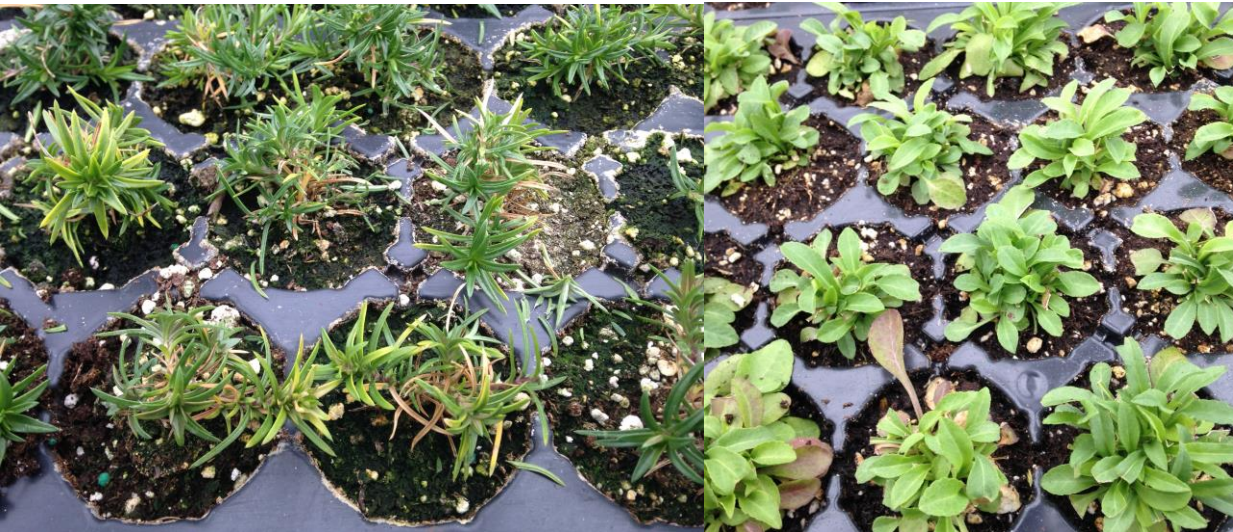
Above ground, symptoms include stunting, chlorosis or yellowing and plant dieback. Roots become black and rotted but are not as brown, soft or water-soaked as may occur with Pythium or Fusarium root rot infections. Thielaviopsis can also produce toxins that adversely affect plant growth. At first, plants may look yellow and off-color, resembling nitrogen deficiency.
Scouting
Annual vinca (Catharanthus), calibrachoa (million bells), coleus, Diascia, fuchsia, pansy, petunia, salvia, verbena, and viola are some of the most common annual hosts. Herbaceous perennials such as Aquilegia, Astilbe, Dianthus, Dicentra, hardy geraniums, Heuchera, Gaillardia, Leucanthemum, Lithodora, Phlox subulata, and Tiarella are also susceptible.
At first, plants may appear that they are just suffering from an abiotic disorder or lack of fertilizer; however, with abiotic disorders or cultural mistakes, the pattern is more uniform. Roots and lower stems may be shriveled, dark-brown to black in color, and underdeveloped. Plants may be uneven in height.
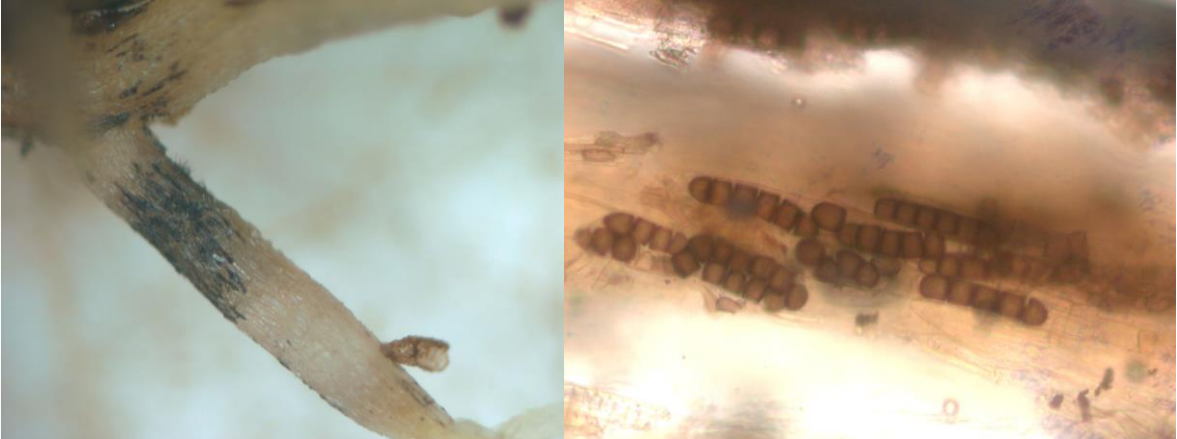
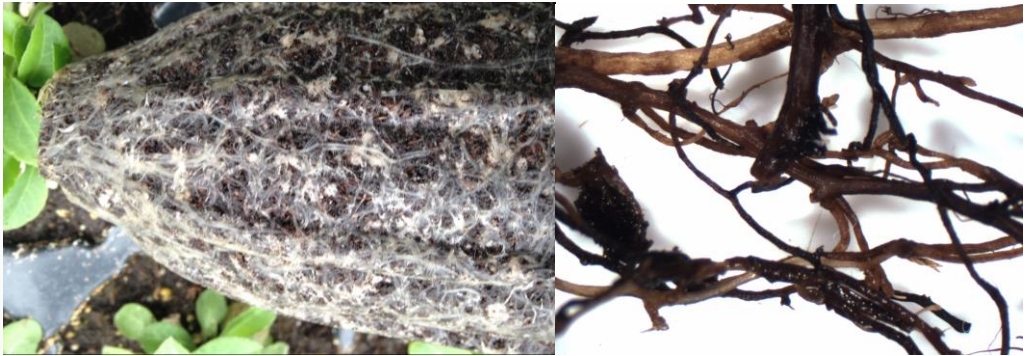
The characteristic black roots can be seen by washing the infected roots free of growing media and then viewing them with magnification. Look for the black, longitudinal areas on infected roots. Root tips may also be blackened. Look for the characteristic dark brown to black thick-walled overwintering spores known as chlamydospores resembling tootsie rolls.
Management
- Choose less susceptible cultivars whenever possible, especially among calibrachoa and pansy. In a trial conducted at Cornell University, the most resistant calibrachoa cultivar was Chameleon Blueberry Scone and the most susceptible was Cabaret Blue Sky. The pansy cultivars Fama Silver Blue, Clear Sky White, Clear Sky White, Crown Golden, Fama Blue Angel, Fama Dark-Eyed White, and Happy Face were also reported to be more resistant (Benson and Parker 2000).
- If the crops you are growing can tolerate a low pH, lower the growing media pH to 5.5.
- Use acid reacting ammonium-based fertilizers to help reduce disease incidence compared to the more basic calcium nitrate type fertilizers
- Purchase pathogen-free plants. This can be challenging as incoming plugs can appear healthy until they are subject to some type of stress.
- Control fungus gnats and shore flies that can spread the spores.
- Reused pots, especially plug trays, may harbor the pathogen. If you are considering reusing containers, select those crops less susceptible to Thielaviopsis for replanting in reused containers. Powerful rinsing is needed to remove organic debris that can harbor Thielaviopsis prior to disinfecting.
- Use a disinfectant to thoroughly clean the pots and plug trays. The greenhouse disinfectant hydrogen dioxide (XeroTol) or a 10% solution of chlorine bleach was found to be most effective as disinfectants for plug trays.
- Discard infested plants and growing media. If a hanging basket or flat has infected plants, the whole basket or flat and infested growing media should be discarded because fungicides will not eradicate the disease.
- At the end of the growing season, do a thorough cleanup of the greenhouse. The fungus can survive as resistant chlamydospores on the soil floor and in wooden benches.
- Proper diagnosis is needed to determine an effective management program. Not all fungicides labeled for root rots are effective against Thielaviopsis. Fungicides will only help protect healthy plants from becoming infected. If you have a history of the disease, treat preventively with fungicides. See the latest edition of New York and New England Management Guidelines for Greenhouse Floriculture and Herbaceous Ornamentals for more specific up-to-date recommendations.
Careful attention to preventive sanitation measures, scouting, managing the pH, and preventive use of fungicides are all needed to manage black root rot on susceptible crops.
Disclaimer for Fact Sheets: The information in this document is for educational purposes only. The recommendations
contained are based on the best available knowledge at the time of publication. Any reference to commercial products, trade or brand names is for information only, and no endorsement or approval is intended. UConn Extension does not guarantee or warrant the standard of any product referenced or imply approval of the product to the exclusion of others which also may be available. The University of Connecticut, UConn Extension, College of Agriculture, Health and Natural Resources is an equal opportunity program provider and employer.