Quick Links
Scouting & Observations
- ALM, Flea Beetles, and Seedcorn Maggot Are Active
- Keep the Row Cover On!
- UConn Extension IPM Webinars on YouTube
Upcoming Events & Opportunities
- Job Opening: Food Systems Communications & Outreach Assistant
- 5/2 - Leaf Shredding For Sustainable Mulch Workshop
- 5/7 - Small-Scale Poultry Processing Webinar
- 5/16 - Northeast SARE Programs and Practice Guidance on Vegetable Growing and Pest Management
- 5/21 - UConn Extension Diversified Livestock Conference
- 5/28 and 5/29 - FSMA Produce Safety Rule/PSA Grower Training Course
- 5/31 (Submissions Due) - Small Farms Innovation Project
ALM, Flea Beetles, and Seedcorn Maggot Are Active
A couple weeks ago we mentioned growing degree days (GDD) indicated common early spring insect pests were on their way, and sure enough, they have arrived. We received reports this week that allium leafminer, flea beetles, and seedcorn maggots are active and feeding right now. See descriptions below for more information on what you can do to continue to protect your crops and mitigate damage from these pests.
Allium Leafminer
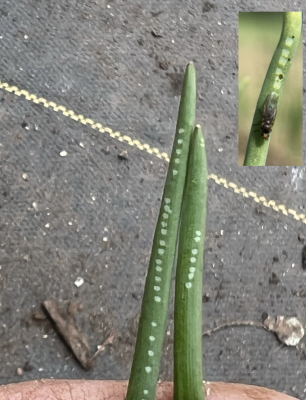
A report came in from a farm in Enfield, CT earlier this week regarding allium leafminer (ALM) activity. Adult ALM lay eggs in the top of an allium leaf making punctures. Scout for characteristic oviposition marks, as displayed in the image on the right. The larva mine the leaves, creating tunnels of damage as they eat. These tunnels provide good entryways for fungal and bacterial pathogens to cause more damage to the plant.
Foliar chemical applications have been shown to be effective for reducing ALM damage. Two or three well-timed applications of an insecticide should provide an acceptable level of ALM control as long as the first application is 2- 3 weeks after initial detection of ALM flies and subsequent sprays are timed at 1–2-week intervals. Examples of highly effective insecticides applied as a foliar spray include dinotefuran (e.g., Scorpion), spinetoram (Radiant) and cyantraniliprole (Exirel). One OMRI- labeled option that works well is spinosad (Entrust). Other insecticides such as abamectin (Agri-Mek) and cyromazine (Trigard) can also help reduce ALM densities.
Flea Beetles
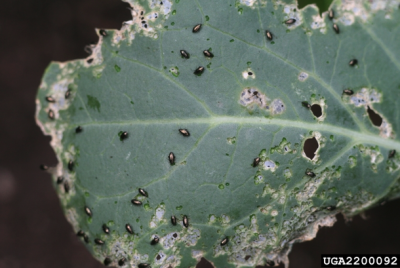
Brassica flea beetles have started their search for host crops, feeding on leaves and stems and leaving behind small round pits and holes. Crops with waxier leaves like cabbage, broccoli and kale are less attractive than crops with glossier leaves such as bok choy, Napa cabbage and mustard greens. The latter crops will remain susceptible to flea beetle damage from planting to harvest.
Scout across the field by counting beetles from above, then under the leaves, and estimating the percent of leaf damage. Because brassica crops differ greatly in susceptibility and attractiveness there is no fixed economic threshold that applies to all crops and crop stages. A working threshold of 1 beetle per plant or >10% average leaf damage on 50% of the plants has proved effective in leafy greens and early stages of heading brassicas.
Several synthetic pyrethroids, carbamates, neonicotinoids, and diamides are labeled for flea beetles in brassicas. Repeated applications may be needed if pressure is high.
Seedcorn Maggot
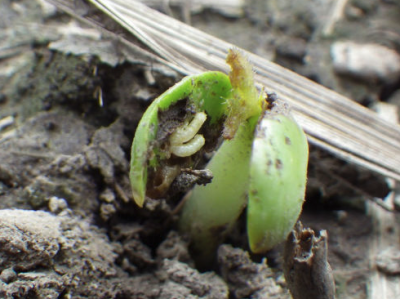
Seedcorn maggot flies are the first maggot flies to become active in the early spring. The adults look like small, gray houseflies with a slightly hump-backed shape. The seedcorn maggot larva is yellow-white, up to 1/4" long, legless, and has a wedge-shaped head. Pupae are oblong, brown, and about 4-5 mm long. The larvae feed on the seeds and early seedlings of large-seeded crops such as corn, beans, and peas, and are attracted to other crops such as spinach, onion, brassica, tomato, and cucurbit seedlings as well.
The first symptoms are usually poor emergence of seeds or wilting of transplants that have lost their roots to feeding. Look for maggots and feeding tunnels inside seeds or stems to help distinguish damage from wireworm feeding or damping-off. Crops that are planted in wet soil, or soil that is too cool to support quick germination and seedling growth, are especially susceptible to damage. Warmer soils and moderate moisture will help seeds germinate faster and get established before damage can occur.
Check soil temperatures and use forecasts before direct seeding in the field. If you need to replant, check the size of the maggots to determine how long to wait. If maggots are a quarter inch long, wait at least 5 days. If they are smaller than a quarter inch, wait at least 10 days to ensure existing maggots will not damage new seeds. Preventive chemical treatments include commercially applied systemic seed treatments and in-furrow applications of insecticides.
See the New England Vegetable Management Guide website for more information on insect controls by crop type.
Keep the Row Cover On!
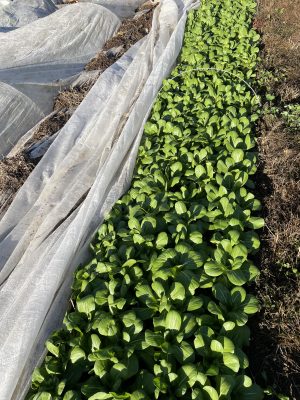
As we flip the calendar into the month of May, it can be tempting to get warm season crops planted out in the field. However, prior season experience reminds us that a mid- to late-May frost event is always a risk. A cold snap can significantly stress a warm season plant, halting any early growth the plant put on and slowing the plant's growth moving forward. Plants protected from temperature stress grow much more consistently and will be healthier overall. Our caution to enthusiastic growers: don't put warm season crops out yet unless you will be protecting them with row cover.
Covers vary in their insulation characteristics, but they can generally add 3 to 5 degrees to the ambient air temperature, helping to protect plants against low temperatures. Medium and lightweight row cover can be used during warmer periods when coverage is needed for pest control. However, be mindful of the potential for excessive heating on warm days if the row cover isn't opened. Row covers must also be removed at bloom for fruiting crops to encourage bee or wind pollination.
The efficacy and durability of row cover is contingent upon its proper use. Row cover can tear or rip easily or get picked up by the wind if not properly secured. Pests can also become trapped beneath cover or overwinter in the soil and emerge without you being able to notice. Weeds similarly benefit from the use of row cover. Removal and replacement of the cover to scout for pests or hand weed is necessary for sufficient control.
UConn Extension IPM Webinars on YouTube!
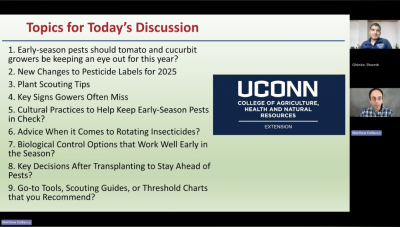
Early Season Vegetable Pest Management
As we get further into the growing season, it’s important for vegetable producers to stay ahead of early-season pest pressures. In this presentation, Matt DeBacco sits down with Shuresh Ghimire to discuss key early-season insect pests and practical tips for scouting and cultural management. They explore common signs growers often overlook, effective strategies for rotating insecticides, and biological control options that work well early in the season. The conversation also covers critical decisions after transplanting and highlights go-to scouting guides to support timely, informed pest management.
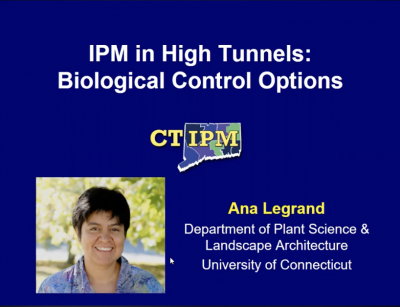
IPM in High Tunnels: Biological Control Options
Dr. Ana Legrand, UConn Department of Plant Science and Landscape architecture, explores the use of beneficial insects and other biocontrol agents for insect pest management in high tunnels. This presentation reviews arthropod predators and insect parasitoids available for growers to purchase and release against key pests in high tunnels. She also addresses the benefits and limitations of these biocontrol agents and mentions other tools from the IPM toolbox including microbial pesticides.
Upcoming Events & Opportunities
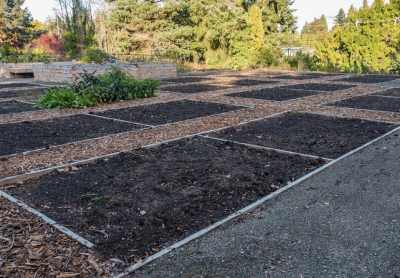
Leaf Shredding for Sustainable Mulch Workshop
Saturday, May 2nd
2:00PM to 3:00PM
Keney Park, 183 Windsor Ave, Windsor
Join Sarah Rose from Samad Gardens Initiative for a demonstration and application of an electric leaf shredder for easy leaf mulch application. Participants will see the leaf shredder in action, learn how to assemble and use it, and produce bagged mulch to spread on the prepped planting beds at Keney Park Sustainability Project. Participants will also discuss tools and options for practical application of leaf mulches to garden beds, and the benefits to soil health and farm and garden success. Parking is available at the Windsor entrance to Keney Park. Free street parking on Norman Ave.
Small-Scale Poultry Processing Webinar
Thursday, May 7th
3:00PM to 4:00PM
Virtual Event
Many people are interested in opening a poultry processing facility to meet this need, but many things need to be considered before proceeding to do so. Dr. Indu Upadhyaya will discuss common issues and important considerations for small-scale processing.
Northeast SARE Learning Opportunity
10:00 AM – 1:00 PM
Mashantucket Pequot Tribal Nation Community Center
Join us for a FREE workshop focused on Northeast SARE programs and opportunities, along with practical guidance on Vegetable Growing & Pest Management. Learn about grant opportunities, funding programs, and resources available to support farmers, growers, and community projects.Additional topics include:
- Growing strong, healthy vegetables all season
- Managing pests with effective, low-impact methods
- Tools and support available for growers
Email jwhipple@ewoodlandsolutionsllc.com to register.
This workshop is open to Tribal and non-Tribal community members, as well as the general public. Lunch will be provided during the Q&A session.
Come learn how to access funding, strengthen your growing practices, and connect with available resources. Feel free to share!
UConn Extension Diversified Livestock Conference
Thursday, May 21st
9:00AM to 5:00PM
Tolland Agricultural Center
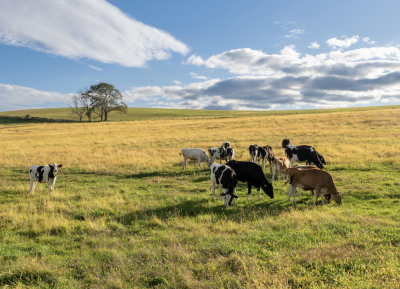
In partnership with Berkshire Agricultural Ventures, please join us for the first UConn Extension Diversified Livestock Conference! The day will feature presentations on meat processing, prescribed grazing, small-scale poultry production, sheep farming in CT, and a deep dive into product taste testing.
FSMA Produce Safety Rule/Produce Safety Alliance (PSA) Approved Grower Training Course
May 28th and 29th, 2026
9:00AM to 3:00PM
The Produce Safety Alliance (PSA) Grower Training Course has been designed to provide a foundation of Good Agricultural Practices knowledge that includes emphasis on co-management of food safety and environmental management goals, while outlining the requirements of the Food Safety Modernization Act (FSMA) Produce Safety Rule.
Cost to attend: $50. Technology required: Computer software for ZOOM, audio, video, and internet.
Small Farms Innovation Project - Financial and Technical Support for Tools, Infrastructure, and Environmental Impact Ideas
Submissions due May 31st, 2026
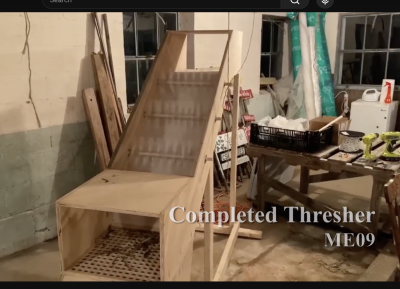
The Small Farms Innovation Project, put forward by the UConn Engineering Department in partnership with CT RC&D and NCTFA, is gearing up for its third year and is looking for farmers interested in problem-solving or prototyping their innovative farm ideas by teaming up with engineering students. Participation and supply stipends available for accepted farmers.
Save These Dates!

UConn IPM Field Day
Tuesday, July 7th, 2026
3:30PM to 6:30PM
UConn Research Farm

2026 New England
Vegetable & Fruit Conference
December 15, 16, 17, 2026
Manchester, New Hampshire

2027 UConn Extension Vegetable and Small Fruit Growers Conference
Tuesday, January 12th, 2027
UConn Student Union, Storrs, CT
Stay in touch with us
- Share what you see: We're here to assist with identification, management strategies, and guidance on best practices. Send us a photo/message via iMessage at 959-929-1031.
- Facebook Group: UConn Extension moderates a private Facebook group specifically for commercial vegetable producers. It is a space to share photos of insects and diseases you find in your fields, ask questions, share ideas, and stay engaged with growers across the state.
Join the "UConn Extension - Vegetable IPM" Facebook Group - Schedule a consultation: Would you benefit from meeting with an Extension Specialist at your farm to provide insight on pest or disease identification, management strategies, and more? If so, please contact our Vegetable Extension Specialist, Shuresh Ghimire, to setup a farm visit. Contact him at shuresh.ghimire@uconn.edu or 860-870-6933.
Contact Information
Shuresh Ghimire, Vegetable Extension Specialist: shuresh.ghimire@uconn.edu
Nicole Davidow, Vegetable Extension Outreach Assistant: nicole.davidow@uconn.edu
Vegetable IPM Office Phone Number:
860-870-6933
Vegetable IPM Cell Phone Number:
959-929-1031 (feel free to text/iMessage photos)
Any reference to commercial products, trade or brand names is for information only, and no endorsement or approval is intended. Always read the label before using any pesticide. The label is the legal document for product use. Disregard any information if it is in conflict with the label. UConn Extension does not guarantee or warrant the standard of any product referenced or imply approval of the product to the exclusion of others which also may be available. The University of Connecticut, UConn Extension, College of Agriculture, Health and Natural Resources is an equal opportunity program provider.