Introduction
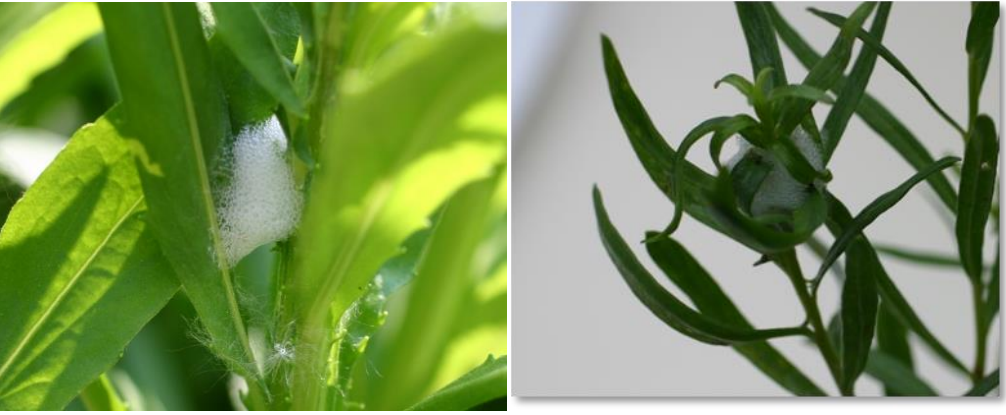
Spittlebugs are known for the frothy spittle mass they produce while feeding on plants. One of the most common species found is the meadow spittlebug (Philaenus spumarius). The target audience of the fact sheet is commercial greenhouse growers and retailers.
Feeding Damage
Their distinctive, white frothy mass resembling "spittle" surrounds the small, (1/4 of an inch long) light-greenish, immature nymphs. This foam helps protect the nymphs from desiccation and predation from enemies. The damage is only cosmetic and does not harm the plant. However, your customers may object to the presence of the spittle even though it does not harm the plant.
Biology and Life Cycle
Spittle masses usually persist for about 3 or 4 weeks. The adults are 1/4 of an inch long with a short, stout appearance. Because they look like a small frog, they are known as "froghoppers". Adults lay eggs in late August and September. They overwinter in the egg stage. There is only one generation per year.
Scouting
Meadow spittlebugs can be an occasionally found on many different herbaceous perennials such as Achillea, Coreopsis, Phlox, Boltonia, Potentilla and many others. Unfortunately, they often appear during peak sales in the spring.
Cultural Controls
If only a few spittlebugs are present, one can use a gloved hand to remove the spittle. A forceful jet of water will also help dislodge the spittle.
Disclaimer for Fact Sheets: The information in this document is for educational purposes only. The recommendations contained are based on the best available knowledge at the time of publication. Any reference commercial products, trade or brand names is for information only, and no endorsement or approval is intended. UConn Extension does not guarantee or warrant the standard of any product referenced or imply approval of the product to the exclusion of others which also may be available. The University of Connecticut, UConn Extension, College of Agriculture, Health and Natural Resources is an equal opportunity program provider and employer.