Introduction
Biological control is the using of living organisms such as insects, mites, fungi, or bacteria to manage pests. Biological control agents (BCA’s) are best used preventatively, early in the cropping cycle, when plants are small, and when pest numbers are very low. The target audience of this fact sheet is commercial greenhouse growers.
Some of the advantages of using biological control agents include:
- Less worker exposure to toxic pesticide residues.
- Less chance of plant damage from sprays.
- Improved plant quality.
- No re-entry intervals (REI) to follow.
- Part of “sustainability” marketing.
- Preserving the effective life of pesticides by removing the selection pressure for development of resistance.
Biological control programs use living organisms – so extra care and effort is needed to for these programs to work. Commitment, patience (BCAs do not work as quickly as pesticides), and a desire to learn are all needed. The commitment of owner, and management with a dedicated staff is very important. Proper communication among everyone is needed for the program to succeed.
Types of Natural Enemies
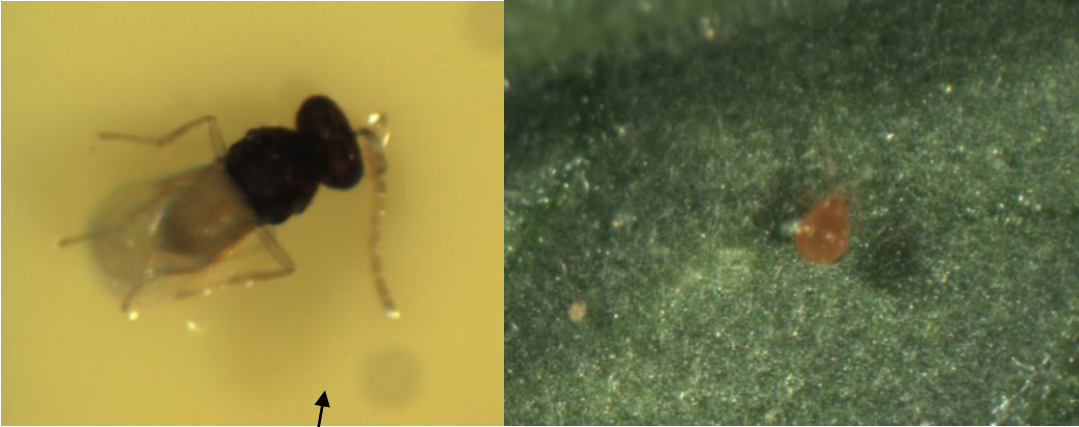
Commercially available natural enemies commercially include parasitic wasps or flies, predators, pathogens and entomopathogenic i.e. (insect-killing) nematodes.
Parasitic wasps
Lay their eggs inside the host and kill the host as the newly hatched larvae begin to feed. They are very host-specific and require one host to complete their development for they kill the host in this process. Correct identification of the host prey is needed to determine the specific parasitic wasp to use. Different species of parasitic wasps are available for use against aphids, whiteflies, and leafminers. These miniparasitic wasps do not have a stinger so are not harmful to humans.
Predators
Are more generalist feeders and are less host-specific than parasitic wasps. There are many different species of predatory mites that prey upon spider mites and thrips.
Entomopathogenic (insect-killing) nematodes
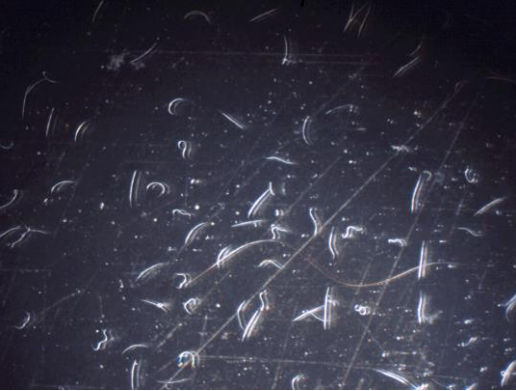
Are microscopic roundworms that enter the insect's body through openings in the exoskeleton. The nematodes multiply inside the host insect and release a bacterium that is toxic to the host. Steinernema feltiae is used against fungus gnat
larvae and thrips pupae in the growing media. Steinernema carpocapsae is used to suppress shore fly larvae.
Pathogens
Include insect-killing fungi such as Beauveria bassiana and Cordyceps fumosoroseus that use enzymes to dissolve the insect’s cuticle and use the insect as a food source.
Starting a Biological Control Program
1. Gather resources
It takes time and commitment to learn the biology and life cycles of the insect and mite pests and their natural enemies. Put together a list of resources and personal contacts (biological control suppliers, other growers) that can help you.
2. Plan ahead
Start planning 6 months to one year in advance. Contact suppliers, review your current pesticide use, and transition toward using pesticides with a shorter residual. Develop a spreadsheet of dates when cuttings and plugs arrive, your planting schedule, and when production will begin so you can pre-order biological control agents. Additional BCA’s can be ordered if hot spots develop. Schedule delivery and decide whether a standing order or week by week order is needed.
3. Review past pest problems
Review your past pest problems. Because many BCAs are host-specific, it is important to know the specific pest species present.
4. Review pesticide use
Many insecticide residues, especially pyrethrins or organophosphates can adversely affect natural enemies for up to three to four months after their application. Review your pesticide use for the past 3 to 4 months before starting a biological control program.
Both direct contact and pesticide residues on containers, benches, and greenhouse plastic may be directly toxic to natural enemies or effect how well they survive and reproduce. Some of the newer, more selective insecticides and miticides are compatible with some, but not all, natural enemies. Effective BCAs are not available for every pest you may have, so an integrated program is needed, incorporating compatible pesticides as needed.
Consult with your supplier, and with online side effect databases maintained by Koppert, Biobest and Bioline Agrosciences. Using pesticides compatible with biological control agents helps ensure its success.
Because of the “zero tolerance” of pests on ornamentals, cuttings and plugs may be treated with long residual pesticides that are not compatible with BCAs. When receiving incoming plant material, always ask your plant supplier for a list of pesticides applied to those plants.
5. Have a Regular Consistent Scouting Program in Place
This helps you anticipate when the various pest populations are of concern, so you can plan to release the natural enemies in sufficient time. You will also know where there are potential hot spots of pest activity. Evaluate the effectiveness of the BCAs. Keep good records.
Yellow sticky cards will attract many parasitic wasps, so reduce the number of sticky cards used or wait a few days after your releases before putting the sticky cards in place.
6. Transition into biological controls
Start in a small, isolated area or separate greenhouse as a trial area before releasing BCAs in your entire production area. Decide what crops make the most sense for you to begin a program. It may be a retail growing area, propagation house or houses where vegetable and herb bedding plants are grown. As your experience and comfort level expands, you can expand your use of biological controls.
7. Use proper cultural controls and sanitation practices
- Start clean and stay clean.
- A fallow period (with greenhouses completely empty of plant material) of at least 4 weeks may help reduce pest pressure for the spring growing season.
- Remove unsold “pet plants” especially from propagation houses.
- Keep the inside and outside of greenhouses weed-free.
- Discard heavily infested plants.
- Keep cull piles as far as possible from production greenhouses.
- Avoid over-fertilizing crops, because the tender lush growth is more prone to aphids, whiteflies, and other sucking pests.
Biological controls are more likely to be successful if they are integrated with proper cultural controls.
8. Establish a Good Relationship with your suppliers
Establishing a good relationship with your suppliers is critical. They want you to succeed, so should be able to supply you with technical information and advice. The Association of Natural Biocontrol Producers (ANBP) has a membership directory that can help you find a supplier.
9. Release Rates and Timing
Work with your supplier to determine the appropriate release rates and timing based upon pest activity (determined by regular monitoring), effectiveness of the biological controls and the crops grown. Are the rates for a preventative or curative treatment?
10. Evaluating Shipments Received
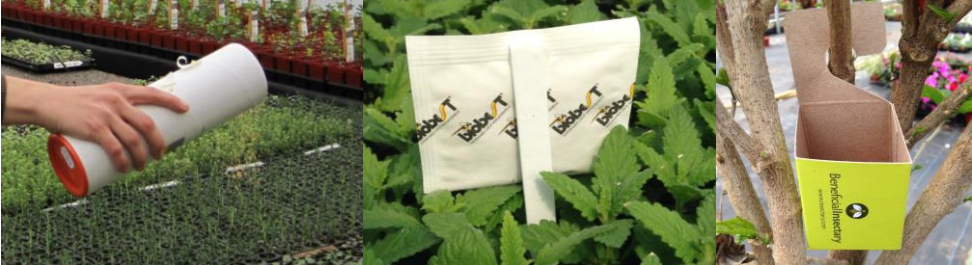
BCAs are living organisms that must be handled and stored carefully to maximize survival and to sustain their viability. In general, shipments of natural enemies should be received within four days after placing an order. Predatory mites such as Phytoseiulus persimilis that are shipped without a food source should be received after an overnight delivery.
The package containing the BCAs must be shipped in a sturdy container such as a polystyrene box that minimizes exposure to high and low temperatures. Request that your supplier include ice packs and a data logger (if possible). Make sure the container is secured with good packing material during shipment.
When received, check the temperature within the shipping box with an infrared thermometer. A moldy odor or condensation is of concern. Good communication is important so the production staff knows when the BCAs arrive so they can be handled properly.
Ask your biological control supplier(s) how to best evaluate incoming shipments. They will often send a description of what to look for when receiving BCAs. In addition, see Grower Guide: Quality Assurance of Biocontrol Products compiled by Dr. Rose Buitenhuis from Vineland Research and Innovation Centre for specific guidelines.
Most BCAs should be released immediately upon arrival. Consult with your supplier for information on how to best store them if needed and what are the maximum storage times are for each natural enemy.
11. Be patient
Programs need to be developed and changed over time as the specific pests and their numbers change. Programs continually need to be fine-tuned and adapted.
Disclaimer for Fact Sheets: The information in this document is for educational purposes only. The recommendations contained are based on the best available knowledge at the time of publication. Any reference to commercial products, trade or brand names is for information only, and no endorsement or approval is intended. UConn Extension does not guarantee or warrant the standard of any product referenced or imply approval of the product to the exclusion of others which also may be available. The University of Connecticut, UConn Extension, College of Agriculture, Health and Natural Resources is an equal opportunity program provider and employer.