Mealybugs can be very difficult to control, so if only a few plants are heavily infested, it is best to destroy the infested plants to minimize further spread. Generalist predators are commercially available for use against mealybugs. The target audience of this fact sheet is commercial greenhouse growers.
Biological Control Agents
Generalist predators are commercially available include Cryptolaemus montrouzieri and lacewings.
Cryptolaemus montrouzieri
Is an Australian ladybird beetle, commonly known as the mealybug destroyer that is released against citrus mealybugs. Cryptolamus can also feed on soft scales and aphids but prefers mealybugs. The mealybug destroyer only reproduces on mealybugs that produce egg masses so is not effective against the longtailed mealybugs. Mealybug destroyer adults and larvae are predacious, seizing, and consuming prey.
Adults are shiny black beetles with a reddish head and thorax. At first glance, the predaceous larvae resemble mealybugs. However, the mealybug destroyer larvae are longer and more mobile than mealybugs with longer wax threads than mealybug larvae.
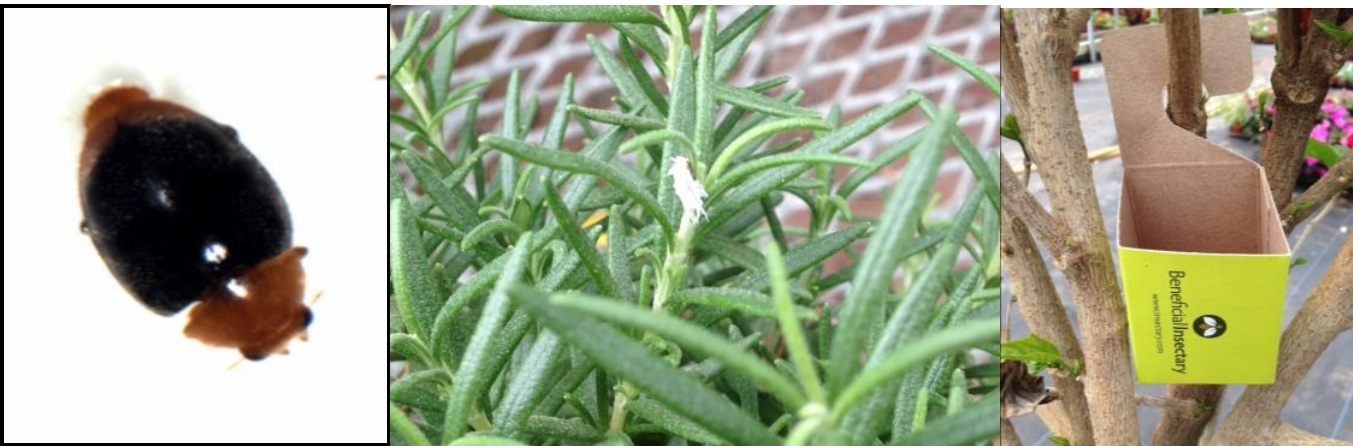
Optimum temperatures are between 72 and 77° F with a relative humidity of 70 to 80 %. Mealybug destroyer eggs are deposited within the egg sac of mealybugs. Mealybug destroyers are most active during warmer, sunny days and are less active during shorter, cooler winter days. Cryptolamus are most effective when mealybug density is high and may fly off in search of new prey when mealybug densities are low.
Cryptolaemus montrouzieri are commercially available as adults packed in plastic tubes with a carrier. They are also available as larvae that can be released among infected foliage or placed in a distribution box. It is helpful to release both larvae and adults, according to Dr. Sarah Jandricic, Greenhouse Floriculture IPM Specialist from the Ontario Ministry of Agriculture, Food and Rural Affairs (OMAFRA). Larvae attack all mealybug life stages and are effective in hot spots, but do not disperse very far.
Tips for using Cryptolaemus montrouzieri
- Release adults in the evening when vents are closed.
- Gently tap beetles out of container onto foliage of infested plants.
- Beetles are attracted to white, so you can place white 3 by 5 cards next to mealybug hot spots.
- Release larvae in the evening among infected foliage.
- It is helpful to release both larvae and adults.
- Control ants before releasing the beetles as they protect will their source of honeydew (mealybugs) from the mealybug destroyers.
Lacewings
LGreen lacewings (Chrysoperla sp.), are better known as aphid predators, hence their common name, “aphid lion”, but they can also feed upon mealybug larvae. Only the larval stage is predacious, and lacewing adults feed upon pollen, honeydew, or nectar. Repeated releases are often needed to help suppress mealybugs.
Green lacewings are commercially available as eggs glued onto cards, or loose in an inert mixture of rice hulls or as larvae in small individual cells so they do not eat each other. They are also available as adults in a cardboard tube that is screened at both ends. Lacewings are active during a wide range of temperatures from 54 to 95˚ F. Consult with supplier on recommended release rates.
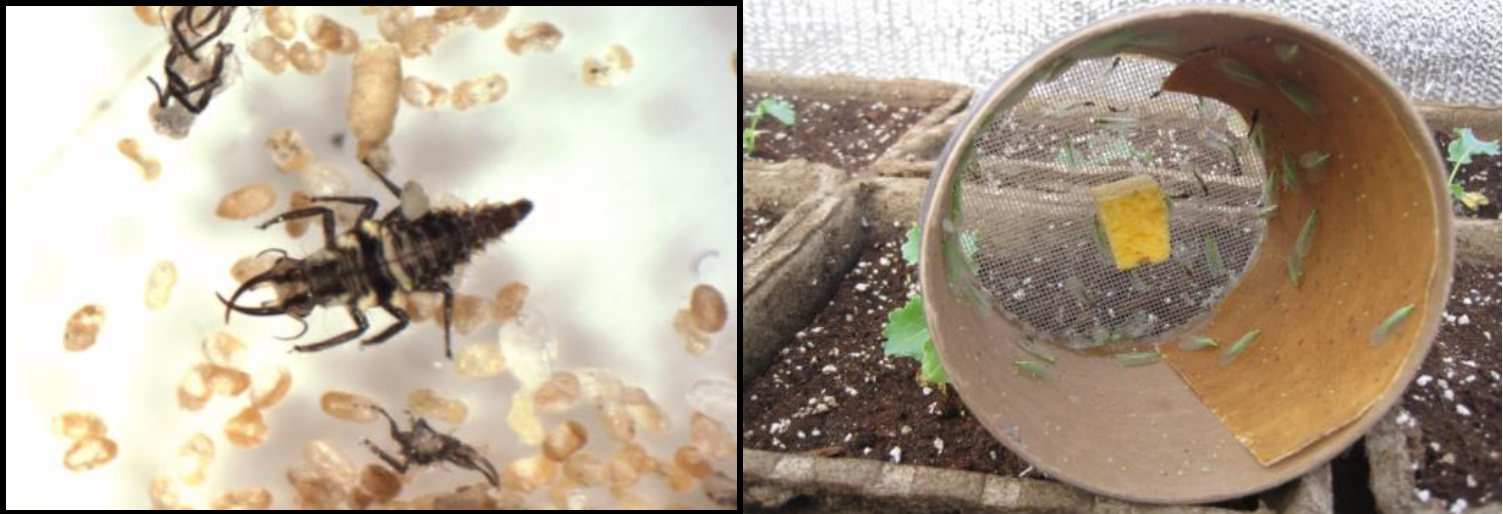
Tips for using Green Lacewings
- Release in the early morning.
- Larvae are cannibalistic, so spread over a wide area.
- Control ants and slugs. They will eat lacewing eggs off the cards.
Ants will protect mealybugs from natural enemies, to feed upon honeydew, so identify the type of ant species so you can determine the best type of bait to use.
Mealybug destroyers and lacewings can help suppress mealybug populations. It may be necessary to spot treat with a compatible pesticide to manage mealybugs or destroy heavily infested plants.
Disclaimer for Fact Sheets: The information in this document is for educational purposes only. The recommendations contained are based on the best available knowledge at the time of publication. Any reference to commercial products, trade or brand names is for information only, and no endorsement or approval is intended. UConn Extension does not guarantee or warrant the standard of any product referenced or imply approval of the product to the exclusion of others which also may be available. The University of Connecticut, UConn Extension, College of Agriculture, Health and Natural Resources is an equal opportunity program provider and employer.