A frequent question we receive is, what about using wild collected lady beetles (a. k. a., ladybirds, or ladybugs) for aphid control? When starting out using biocontrol agents, many growers consider using the well-known and familiar "ladybug" for aphid control. These generalist predators can feed upon aphids, soft scale, small caterpillars, and other small insects, as well as pollen and nectar. Ladybird beetles are relatively inexpensive and can be stored in the refrigerator. The target audience for this fact sheet is commercial greenhouse growers.
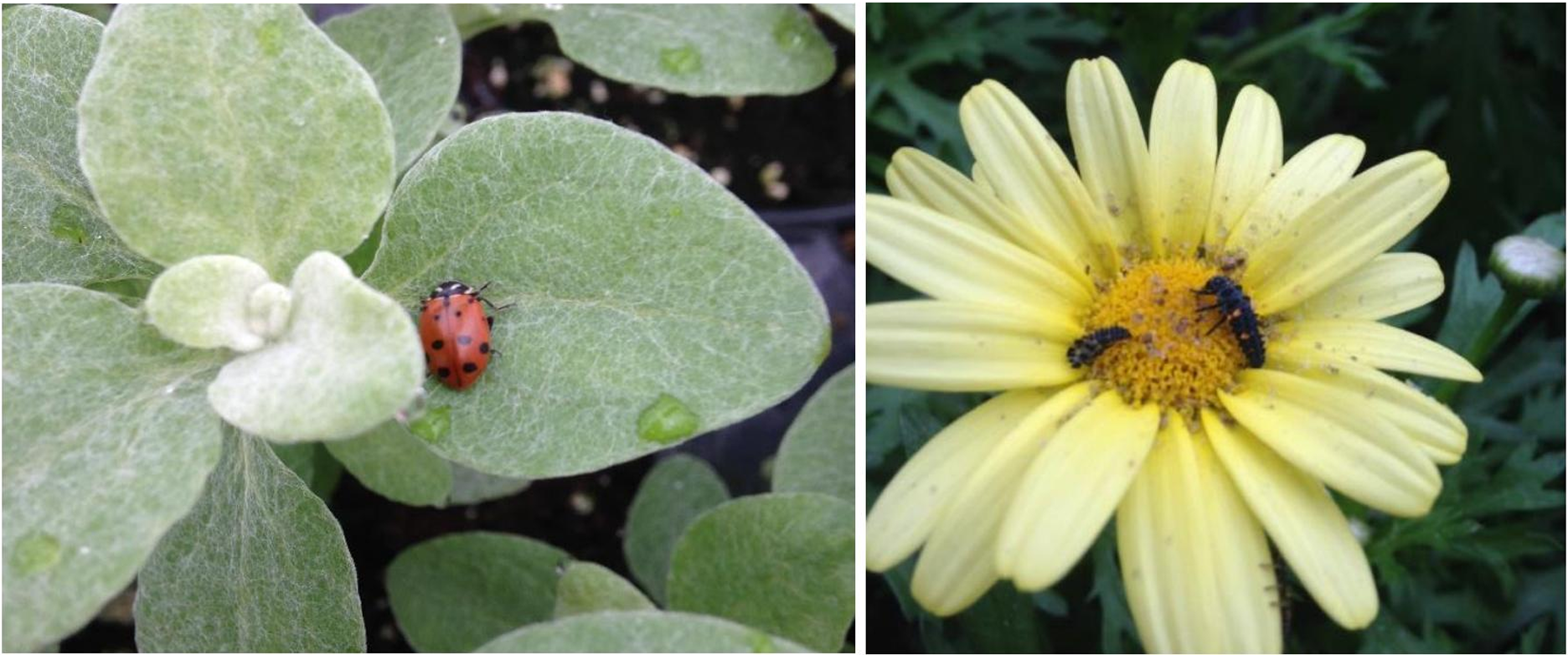
However, wild collected lady beetles such as Hippodamia convergens are gathered from the mountainous areas of the west coast where the ladybird beetles migrate and aggregate in large masses. This removes lady beetles from their native habitat. Because they are field-collected and not mass-produced, quality control guidelines for H. convergens have not been developed.
Adult ladybird beetles are highly dispersive and once released in greenhouses may leave. They are also poor at searching out pests so need to be released when there are hot spots of aphids. If wild harvested from natural winter aggregation sites, these beetles may inadvertently carry endoparasites and pathogens that can potentially affect native ladybird beetles. A small wasp (Dinocampus coccinellae) that develops as an internal parasite may have parasitized wild collected ladybird beetles. A microsporidium, Nosema hippodamiae, has also been detected in some shipments that shortens their lifespan and reduces the number of eggs laid. There is the possibility that these parasites and pathogens may affect native ladybird beetles.
There is a need for a more cost-effective rearing system for ladybird beetles since the cost of producing them is high. The two-spotted ladybird beetle, Adalia bipunctata, is reared at commercial insectaries and feeds upon all aphid species. Other more specialized ladybird beetles commercially reared include Delphastus pusillus (a whitefly predator), Cryptolaemus montrouzieri (a mealybug predator) and Stethorus punctillum (a spider mite predator).
Disclaimer for Fact Sheets: The information in this document is for educational purposes only. The recommendations contained are based on the best available knowledge at the time of publication. Any reference to commercial products, trade or brand names is for information only, and no endorsement or approval is intended. UConn Extension does not guarantee or warrant the standard of any product referenced or imply approval of the product to the exclusion of others which also may be available. The University of Connecticut, UConn Extension, College of Agriculture, Health and Natural Resources is an equal opportunity program provider and employer.