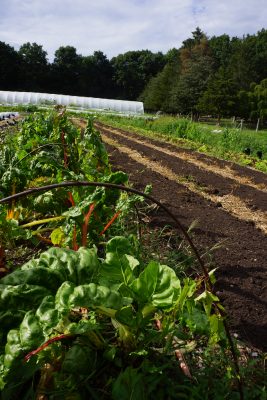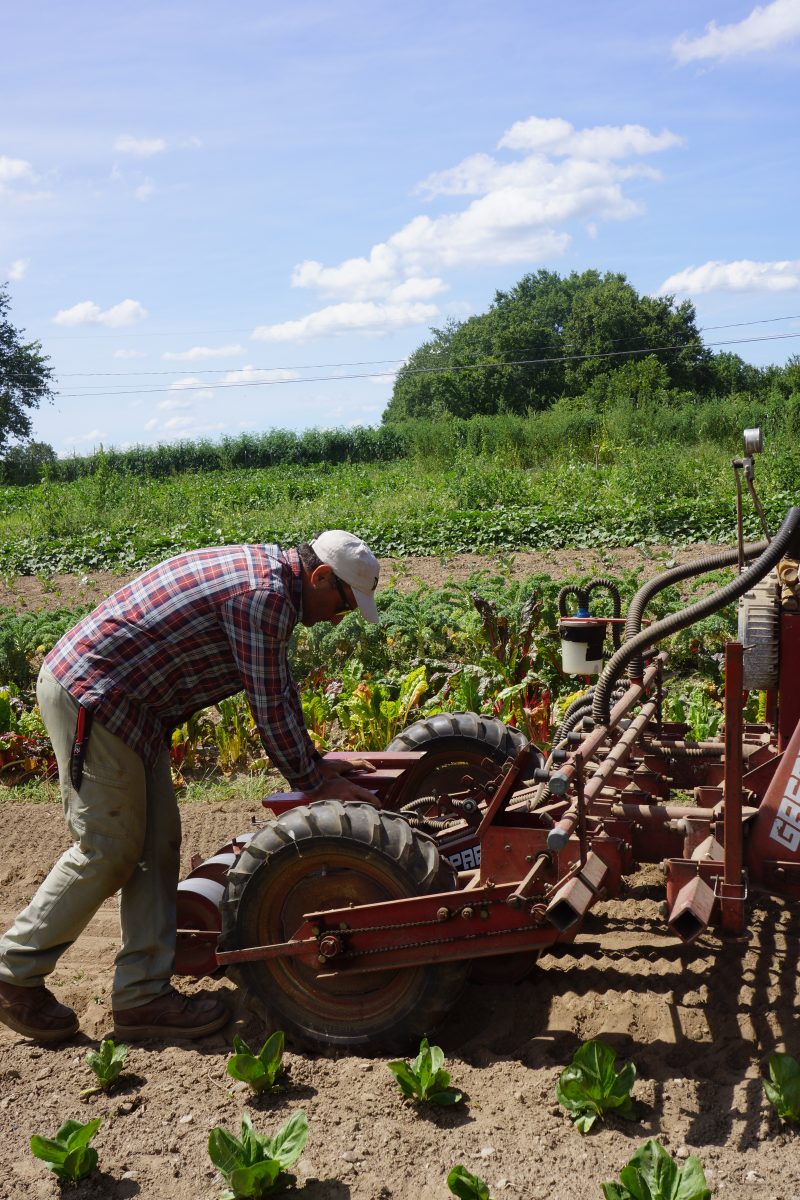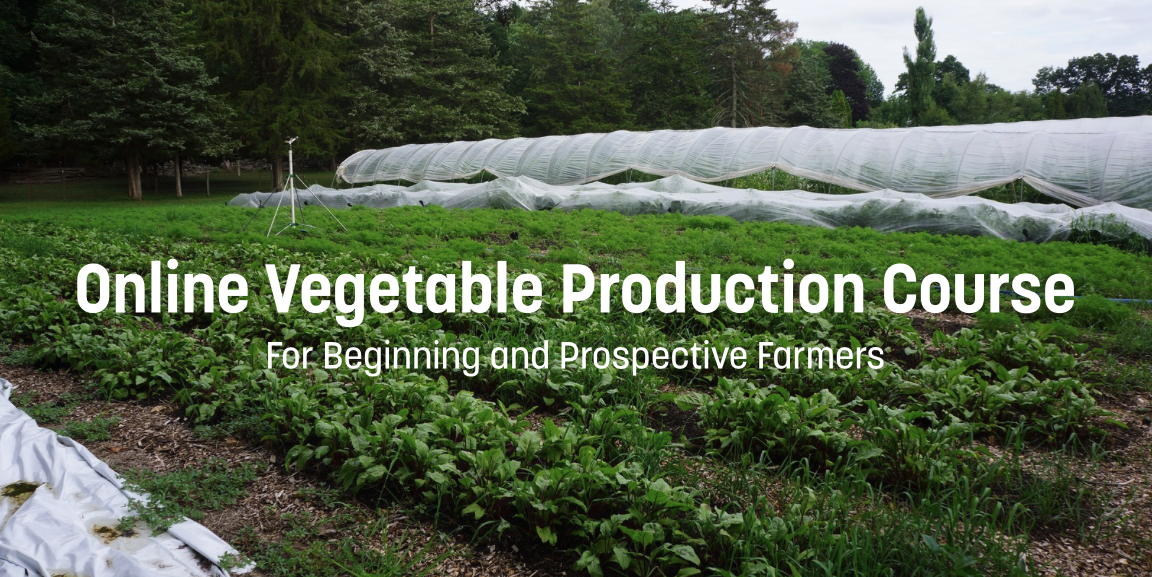
Curious about what it takes to start a vegetable farm? Interested in getting closer to achieving your goal?
Sign up for UConn Extension's Vegetable Production Course to build foundational knowledge and practical skills as it relates to growing healthy food, building a farm business, and becoming part of Connecticut's local food system.
- Fully online course, making it easy to learn from anywhere and at your own pace.
- The course will open in late January 2026 and certificates will be available for all students that complete the course by April 2026.
- Industry professionals and experienced farmers facilitate learning.
- Course cost: $149
- Course registration will remain open until February 1st.
- Group registration is available. To enroll multiple students, please contact nicole.davidow@uconn.edu.
A note for the course registration: You’ll be prompted to create an account for accessing the course material when you go to register. When asked to select an ‘affiliation’ for your account setup, choose "UConn > College of Agriculture, Health, and Natural Resources".
Hear from the Course Coordinator:
Course Description
This vegetable production course is designed to benefit beginner vegetable producers who have 0-3 years of vegetable growing experience or no formal training in agriculture. The participants will learn answers to the basic questions about farm business planning, planning and preparing for a vegetable farm, warm and cool-season vegetable production techniques, season extension, identification of biotic and abiotic issues, and marketing.
Course Learning Objectives
At the end of this course, you will be able to:
- Develop a farm business plan, which will help you keep records, manage time more effectively, and price products.
- Explain the characteristics of a suitable site for commercial vegetable crop production and adjust as needed.
- Perform soil sampling protocols for nutrient analysis.
- Explain full season tasks involved in vegetable farming including planting, in-season care, harvesting, and post-harvest considerations for the warm-season and cool-season vegetables.
- Scout and identify biotic and abiotic issues.
- Explain tools for season extension.
- Understand different strategies, resources, options, and models for direct-to-consumer retail.
- Identify additional reliable and fact-based informational resources on topics related to vegetable farming.
Course Content
- Pretest: 25 questions
- Module 1: Farm Business
- What a business plan is and its importance in helping to achieve business success.
- The components of a business plan.
- Information included in a business plan.
- How to develop and write a business plan.
- The importance of keeping a business plan updated.
- Module 2: Planning and Preparing for the Vegetable Farm
- Identify the characteristics of a suitable site for commercial vegetable crop production.
- Navigate and use the NRCS USDA Soil Survey website.
- Identify web resources to assist in the evaluation of the site and using cover crops to protect soil health and enhance vegetable production.
- Check the characteristics of soils and other site conditions at the chosen commercial vegetable farm site of interest.
- Adjust site and soil conditions when necessary to overcome limitations, protect resources, and ensure the site meets the needs for a commercial vegetable farm.
- Perform soil sampling protocols for nutrient analysis.
- Identify web resources to assist in the evaluation of the site and using cover crops to protect soil health and enhance vegetable production.
- Module 3: Warm Season Vegetables
- Identify vegetable crops that are suitable for growing in warm season.
- Explain germination and growing requirements for warm season crops.
- Explain full season tasks involved in tomato production from planting to harvesting, and post-harvest handling.
- Identify additional web resources about growing warm season vegetables.
- Module 4: Cool Season Vegetables
- Identify vegetable crops that are suitable for growing in cool season.
- Explain germination and growing requirements for cool season crops.
- Explain full season tasks involved in broccoli production from planting to harvesting, and post-harvest handling.
- Identify additional web resources about growing cool season vegetables.
- Module 5: Pest Identification and Abiotic Diagnostics
- Discuss the three components of the disease triangle, and their roles in disease development.
- Name the differences between biotic diseases, abiotic disorders, insect infestations, and the patterns associated with each.
- Execute the diagnostic process when identifying plant health issues in the field.
- Name important disease and insect pests that affect several crop types in New England.
- Execute disease and insect management practices that will contribute overall plant health.
- Module 6: Season Extension
- Identify the tools and materials needed to extend the growing season.
- Understand the differences between low, high, moveable and caterpillar tunnels. Identify opportunities, challenges or limitations each type of tunnel has for crop production.
- Understand site and soil factors to consider prior to putting up a structure.
- Identify potential weather/climate hazards for season extension.
- Identify strategies to mitigate potential structural damage and/or crop loss.
- Identify a number of crops that can be grown in CT using season extension tools and techniques.
- Understand potential adjustments to crop planting and sowing dates to allow for season extension.
- Module 7: Finding Your Markets
- Understand the different options for direct-to-consumer marketing.
- Have confidence in evaluating your own strengths and preferences before selecting which direct-to-consumer marketing channel(s) is best.
- Recognize the advantages and challenges of different direct-to-consumer marketing channels.
- Understand the importance of building a brand for direct-to-consumer marketing.
- Gain new knowledge in ways to sell your produce to low income consumers.
- Post-test: 25 questions
You will need to score 100% on each quiz to gain access to the Post-Course test.
A score of 75% or greater is required on the Post-Course quiz to achieve the course completion certificate
Participants will also have access to:
- Technical assistance from UConn Extension staff
- Access to resources and tools to support your learning
- A network overview of CT agriculture
Students Have Said
"I found it very, very informative and interesting, and I appreciate all the links & resources provided!"
"This class provided confidence in making a garden and proper business development for the homestead/farm plan."
"I really enjoyed the class and found the modules informative and helpful!"
"The course helped me a great deal in many ways. I was a backyard novice gardener, not knowing what I was doing. I didn’t know the difference between a cool season crop or a warm season crop, and the course really helped me to learn these details and to know you could be wasting your time trying this method or that. It brought me here to this point of feeling a little more confident in starting something. I think I have a lot of challenges, but there are great resources available to me that I’m taking advantage of through the course, and it’s hopefully going to get me to the next level."
Questions? Contact Us
- Course logistics, including registration and technical issues: Nicole Davidow, Outreach Assistant, UConn Extension, nicole.davidow@uconn.edu
- Vegetable farming questions and course content: Shuresh Ghimire, Vegetable Specialist, UConn Extension, shuresh.ghimire@uconn.edu, 959-929-1031